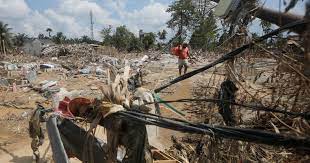
The deadly flooding in Indonesia following an unprecedented cyclone over the Malacca Strait has unfolded into one of the worst natural disasters the region has faced in years. With the death toll rising above 900 and hundreds still unaccounted for, the country is struggling to manage the enormous humanitarian crisis. Entire communities have been cut off from the outside world, more than one lakh homes have been destroyed, and rescue teams are facing near-impossible conditions as widespread devastation forces aid to be airdropped. The disaster has highlighted not only the extreme vulnerability of Indonesia to climate-driven weather events but also the growing pattern of regional catastrophes across Asia, where recent storms and floods in Sri Lanka, Thailand, Malaysia, and Vietnam have pushed the cumulative death toll towards 2,000.
Rising death toll, inaccessible regions, and rescue efforts hampered by extreme conditions
As officials continue to assess the expanding scale of the tragedy, many remote districts remain unreachable by road. Weeks after the cyclone passed, vast areas are still submerged or buried under thick, waist-deep mud that has made even the most basic relief operations excruciatingly slow. Emergency workers say countless people likely remain trapped, either in collapsed homes or in areas surrounded by debris-laden floodwaters. The governor of the affected Indonesian region has warned that a humanitarian emergency is emerging within the disaster itself, with many surviving families facing acute shortages of food, clean water, medicines, and shelter. Some communities now face the imminent threat of starvation as road connectivity remains severed.
Entire towns such as Sibolga City and Central Tapanuli are still cut off. The only way to supply affected populations has been through air or sea, forcing the government to rely heavily on helicopters and naval vessels for rescue and relief missions. However, persistent adverse weather and difficult terrain have limited the number of sorties helicopters can make, leaving large pockets of survivors waiting days for assistance.
Eyewitness accounts from the ground paint a grim picture. In Aceh Tamiang, one of the worst-hit regions, survivors recount how villages were engulfed in minutes, giving people almost no time to escape. Many residents survived only because they climbed onto rooftops as swirling waters swept away homes, livestock, and possessions. Fitriana, a survivor from Lintang Bawah, described how families, including infants and elderly individuals, spent nearly three days on roofs without any access to food or safe drinking water. According to her account, nearly 90 percent of all homes in her village have been ruined beyond repair, forcing approximately 300 families into displacement with nowhere to return.
Another survivor described a harrowing double escape. His family was rescued by boat after floodwaters reached the second floor of their home. But they were again forced to flee when a neighbouring village faced another surge during the night. With little warning, they escaped to a relative’s two-storey house and spent the night in fear as the water continued to rise.
These stories reflect the extraordinary human struggle that is unfolding. Many survivors recall the roar of the approaching waters, the collapse of structures, and the desperate cries of people being swept away. For numerous families, entire neighbourhoods have been wiped out, and the absence of communication networks has made it nearly impossible to locate missing relatives.
The disaster has also created a dangerous security situation. In one Indonesian city, floodwaters rose so rapidly that inmates in a local prison had to be released because authorities were unable to move them to any alternative facility. Reports of looting have emerged from different regions as desperate survivors search for essential supplies—an indication of the breakdown of local infrastructure and the intense stress faced by affected communities.
The Indonesian government is attempting to coordinate large-scale relief efforts, but the magnitude of the destruction has challenged even the most experienced disaster management teams. With roads washed away, bridges collapsed, and entire landscapes reshaped by floodwaters, the recovery ahead is expected to be long, complex, and costly.
Regional climate crisis intensifies as Asia faces widespread destruction and unprecedented weather patterns
The Indonesian floods do not stand alone. In recent weeks, extreme weather across Asia has unleashed destruction on a massive scale. Sri Lanka, Thailand, Malaysia, and Vietnam have faced torrential rains, landslides, storms, and flooding, together reporting nearly 2,000 deaths. Experts have pointed to warming oceans, shifting wind patterns, and intensifying atmospheric instability as key factors driving such powerful weather events. The formation of a rare cyclone over the Malacca Strait—an area that historically has not produced cyclones of this magnitude—has raised alarm among climate researchers, who warn that unpredictable storm formations may become more common.
Agricultural losses across the region are expected to be immense, with far-reaching consequences for food security. For Indonesia, where millions depend on rice cultivation and fisheries, the destruction of farmlands and the contamination of water bodies will have lasting economic and social repercussions. The collapse of more than one lakh homes means that reconstruction will require extensive national and international support, especially since many of the destroyed communities were in economically vulnerable regions with limited resources.
The psychological impact of the disaster is equally profound. Thousands of children have been displaced, many having witnessed traumatic scenes of destruction. Schools, clinics, and community centers have been damaged or swept away, disrupting basic services. Health experts fear outbreaks of waterborne diseases, particularly in regions still submerged or where clean water remains unavailable.
International humanitarian agencies have expressed concern that the scale of devastation across Asia is stretching relief systems thin. With multiple countries simultaneously grappling with climatic disasters, the demand for aid, medical support, and funding is unprecedented. Many agencies have already indicated that they will need additional resources to effectively respond to the mounting crises.
Across Indonesia, communities are now struggling not only for survival but also for a sense of stability. Many families have lost everything they owned, from their homes and livestock to their crops and means of livelihood. The path to recovery is uncertain, and the urgency is immense, particularly in remote regions where survivors are still waiting for help.
As Indonesia mourns its dead and searches for the missing, the country faces a growing moral and administrative challenge: how to rebuild while also preparing for increasingly volatile climate patterns. The disaster underscores the need for climate-resilient infrastructure, early warning systems, and stronger disaster preparedness measures, especially in regions historically unprepared for such extreme events.
At the global level, the Indonesian catastrophe serves as a stark reminder of the accelerating climate emergency. The intensifying storms, erratic rainfall, unprecedented floods, and rising death tolls across Asia illustrate the widening scale of human vulnerability. Unless regional and global mitigation efforts are strengthened, events like the Indonesian flood could become the new normal, threatening millions of lives and destabilising entire societies.