In a rapidly evolving military and geopolitical environment in East Asia, Japan has issued one of its strongest denunciations in years after Chinese fighter jets allegedly aimed targeting radar at Japanese military aircraft near Okinawa. The incident, described by Tokyo as “dangerous” and “beyond what is necessary for safe flight,” has intensified an already fragile diplomatic climate between the two nations. At the centre of the wider regional anxiety is Taiwan, where political statements by Japan’s leadership, China’s increased military activity, and a restrained but cautious United States have converged to create conditions ripe for escalation. As the Indo-Pacific becomes the focal point of global power struggles, the episode near Okinawa has become a symbolic flashpoint in a much deeper strategic confrontation.
Heightened Confrontation Emerges as Japan Condemns China’s Radar Targeting and Beijing Counters with Its Own Accusations
The Japanese government publicly confirmed two separate incidents in which Chinese J-15 fighter jets, launched from the aircraft carrier Liaoning, directed fire-control radar at Japanese military aircraft. Prime Minister Sanae Takaichi called the action “extremely regrettable,” stating that radar illumination signals a potential attack and can force pilots into evasive manoeuvres. Japan lodged a formal protest with Beijing, highlighting the severity of what it considers a deliberate escalation. Defence Minister Shinjiro Koizumi reaffirmed Japan’s determination to respond “resolutely and calmly,” emphasising the need to maintain regional peace and stability even as military risks increase.
China immediately rebutted Tokyo’s claims. Colonel Wang Xuemeng, spokesperson for the Chinese navy, accused Japan of distorting events and argued that Japanese aircraft had repeatedly approached and disrupted China’s previously announced carrier-based training operations east of the Miyako Strait. He demanded that Japan halt “slandering and smearing” and allow China’s navy to safeguard what it views as its legitimate rights. The Chinese stance asserts that Tokyo’s actions endanger flight safety, not Beijing’s.
The incidents occur against a backdrop of deteriorating relations over Taiwan. Recent comments from Takaichi that Japan may respond to any Chinese military action against Taiwan—if it also threatens Japan’s security—have fueled Beijing’s distrust and heightened political strain. China, which claims Taiwan as its own territory, has intensified military flights, naval deployments, and political pressure around the island, which lies a mere 110 kilometres from Japan’s westernmost island, Yonaguni. For Tokyo, geography has transformed Taiwan’s stability from a regional issue into a national security priority.
China’s reaction to Japan’s political statements has included advising Chinese citizens to avoid travel to Japan and delaying the resumption of seafood imports suspended after Japan released treated wastewater from the Fukushima nuclear plant. The confrontation has expanded far beyond the radar-locking incident; it represents a growing clash of national narratives, threat perceptions, and strategic ambitions.
The United States, which stations its largest overseas military presence in Okinawa—including warships, aircraft, and thousands of marines—has not issued an immediate formal response. Although the US ambassador to Japan, George Glass, has voiced support for Tokyo, the White House and the State Department have remained publicly silent. This silence comes despite Washington’s latest strategic document, which emphasises averting conflict with China over Taiwan and the South China Sea by strengthening US and allied military power. President Donald Trump, preparing for trade discussions in Beijing next year, previously urged Takaichi not to escalate tensions. His diplomatic balancing act reflects an American desire to avoid crisis while simultaneously countering China’s influence.
Even as Washington maintains outward restraint, China has intensified its regional military footprint. On Thursday, more than 100 naval and coast guard vessels were deployed across East Asian waters in a show of force that alarmed both Taiwan and Japan. Taiwan’s government described the build-up as destabilising for the entire Indo-Pacific region. The island’s coast guard reported monitoring Chinese maritime safety drills across the Taiwan Strait but insisted the situation remained “normal,” while accusing China of using misleading language to obscure its true intentions.
Japan, mindful of recent history, has referenced past radar incidents to underscore its concern. In 2013, China was accused of locking radar on a Japanese destroyer in the East China Sea. In 2016, Beijing counter-accused Japan of doing the same to Chinese jets. More recently, in June, Japan reported that Chinese fighters flew dangerously close to a Japanese patrol aircraft near Okinawa. These episodes contribute to an accumulating sense of strategic instability, where each incident becomes another point of friction in a volatile military environment.
Meanwhile, China maintains that it alone holds sovereignty over the Taiwan Strait, asserting that other nations have no legal basis to claim the waters as international. The United States and Taiwan firmly reject this position, insisting on the strait’s international status due to its importance as a major corridor for global trade—carrying nearly half of the world’s container ships.
Regional and International Responses Reveal Deep Strategic Divisions Amid a Shifting Security Order
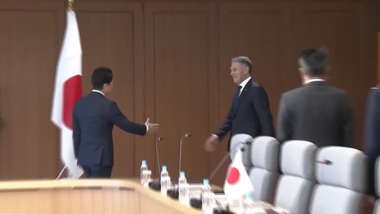
The broader regional reaction has reflected deep concern about the implications of China’s actions and Japan’s response. Australia’s defence minister, Richard Marles, standing beside Koizumi in Tokyo, was explicit in condemning China’s behaviour and pledged that Australia would continue supporting Japan in preserving a rules-based order. His remarks underscored a growing alignment among Indo-Pacific democracies as they confront China’s increasing assertiveness.
The radar-targeting event comes at a moment when China is escalating military activity across several theatres. Its coast guard, navy, and air force have increased operations around Taiwan, the South China Sea, the East China Sea, and even the western Pacific. These activities are not isolated military exercises but form part of a long-term strategy aimed at shifting regional power dynamics and testing the resolve of neighbouring nations and the United States.
Taiwan, navigating both relentless Chinese pressure and international expectations, warned that China’s recent deployments could destabilise the wider region. It accused Beijing of psychological warfare by presenting routine or aggressive military actions as benign search-and-rescue drills. Taiwan’s insistence on countering this narrative reflects its vulnerability and its need to maintain international awareness of China’s growing reach.
The Japanese military, responding to the J-15 launches from the Liaoning carrier, scrambled F-15 fighters. Japan’s reaction demonstrates not only operational readiness but also its resolve to defend disputed or vulnerable airspace. The proximity of the Chinese aircraft carrier group—accompanied by three missile destroyers—to the Okinawa islands is a stark reminder that China’s expanding naval power is reshaping Japan’s defence calculations.
The United States’ muted high-level remarks, contrasted with the ambassador’s supportive tone, highlight the complexity of Washington’s position. While the US maintains treaty obligations to Japan and remains committed to Taiwan’s defence posture, the White House’s silence suggests a desire to avoid further provoking Beijing during an already tense diplomatic period. This balance—between strategic deterrence and diplomatic caution—characterises the current American approach to China, even as it boosts military cooperation with Japan.
Behind the scenes, diplomatic communication has continued. Reports indicate that Trump and Xi Jinping recently spoke, during which Xi asserted that Taiwan’s eventual “return” to China remains central to Beijing’s conception of world order. The political weight of such statements cannot be overstated, especially when paired with China’s expanding military activities.
The cumulative pressures—military, political, and diplomatic—showcase the degree to which East Asia has become a focal point of global strategic rivalry. China’s challenge to the existing order, Japan’s firmer security posture, Taiwan’s defensive vigilance, and the United States’ complex diplomacy are converging into a multipolar contest where risks of miscalculation are high.
As tensions rise, both sides continue to frame their actions as defensive. China argues it must protect sovereignty, while Japan insists on defending its airspace and ensuring regional stability. The competing narratives reveal deeper ideological differences regarding international law, military norms, and the future balance of power in Asia.