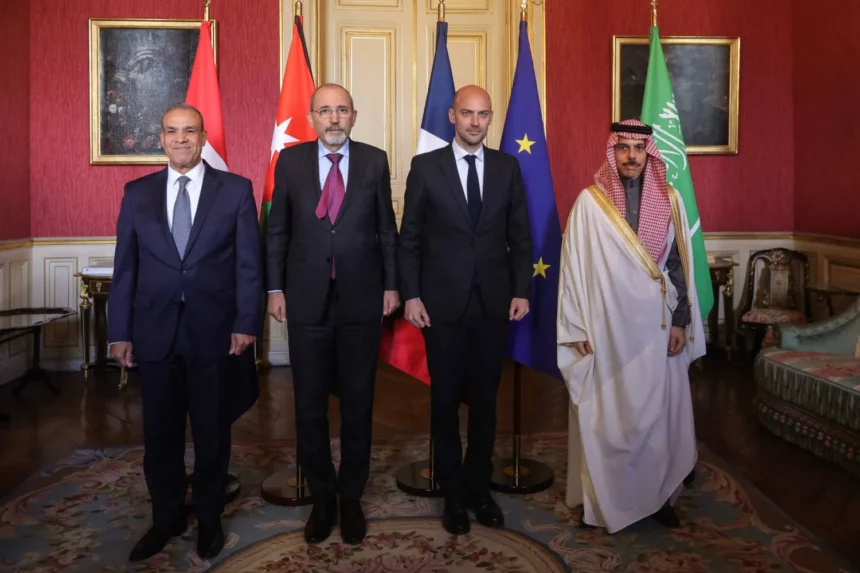
Saudi Arabia and France have jointly stepped up efforts to push the international community toward a renewed commitment to the two-state solution between Israel and Palestine, unveiling a seven-page declaration at a UN-hosted conference this week. Despite boycotts from key players like the United States and Israel, the conference aims to rally support for a series of “tangible, timebound, and irreversible steps” to finally move toward peace in a region long marred by war and displacement. The declaration not only outlines immediate steps to end ongoing violence in Gaza but also calls for deep political commitments, international troop involvement, and concrete actions against unlawful settlements and extremist settlers.
A Call for Action Amid Rising Global Tensions
At the center of this diplomatic push is the demand for countries at the United Nations to endorse the declaration before the 79th General Assembly concludes in September. Speaking at the conference, Saudi Foreign Minister Faisal bin Farhan Al-Saud made a direct appeal to member nations to contact Saudi and French missions in New York to lend their support.
The declaration’s first priority is a permanent ceasefire to end the current 22-month conflict between Israel and Hamas in Gaza. Once a truce is secured, the document proposes the immediate formation of a transitional administrative committee in Gaza. This body would function under the Palestinian Authority’s umbrella to manage affairs and begin restoring order. The Palestinian Authority currently operates with limited autonomy in the Israeli-occupied West Bank.
In a striking development, the declaration supports the creation of a temporary international stabilization mission in Gaza, to be approved and mandated by the UN Security Council. It also welcomes offers from UN member states that have expressed readiness to contribute troops to ensure peace and rebuild essential governance structures.
Strong Message to Israel and Clear Demands
The declaration presses Israel to publicly commit to the creation of a sovereign and viable Palestinian state. It further demands an immediate halt to violence against Palestinians, cessation of provocative rhetoric, and a complete freeze on land grabs, settlements, and annexation efforts across the Occupied Palestinian Territories, including East Jerusalem.
Beyond policy pledges, the document proposes concrete legal and diplomatic actions: it calls for restrictive measures against violent extremist settlers and their supporters. It also advocates for targeted sanctions against entities and individuals undermining peace through acts of terrorism or violations of international law.
The document links the establishment of an independent Palestinian state to broader regional integration, calling these goals “intertwined objectives.” The message is clear—lasting peace and coexistence in the region can only be achieved through mutual recognition, end of hostilities, and the upholding of international legal norms.
In an assertive tone, the declaration states, “Only by ending the war in Gaza, releasing all hostages, ending occupation, rejecting violence and terror, realizing an independent, sovereign, and democratic Palestinian State, ending the occupation of all Arab territories and providing solid security guarantees for Israel and Palestine, can normal relations and coexistence among the region’s peoples and states be achieved.”
The conference and the declaration represent one of the most detailed and assertive efforts in recent years to revive and enforce the two-state solution. Despite political complications and continued regional tensions, especially due to the ongoing war in Gaza, Saudi Arabia and France appear determined to shift the diplomatic inertia and apply pressure on global actors to take definitive steps toward peace.
The 80th session of the UN General Assembly is scheduled to commence in September. Until then, the success of this declaration hinges on swift diplomatic engagement and whether countries—particularly those historically aligned with Israel or skeptical of UN-led peace processes—will lend their weight behind this push for a structured and enforceable roadmap to peace.