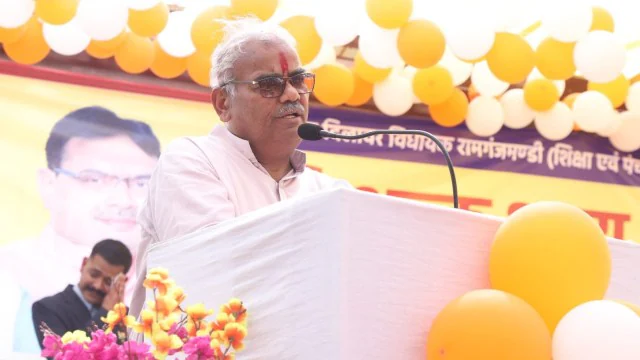
The Rajasthan government has taken a decisive step toward promoting indigenous products by banning the purchase of foreign-made goods across three major state departments: Education, Panchayati Raj, and Sanskrit Education. Announced by State Education Minister Madan Dilawar, this new policy aims to reduce dependency on imported products, encourage domestic manufacturing, and safeguard the Indian economy. The move also resonates with Prime Minister Narendra Modi’s ‘Make in India’ initiative, underscoring a broader effort to make India self-reliant while addressing national security and economic issues linked to foreign trade.
Dilawar emphasized that this ban is not merely a policy but a patriotic call to action, highlighting concerns that foreign countries, particularly China, profit from the Indian market but then use those gains to support activities against India, citing the example of ‘Operation Sindoor.’ The government plans to strictly enforce this ban with financial penalties and recovery actions against violators. However, allowances will be made for essential items that are exclusively produced abroad, provided they receive ministerial approval.
Promoting Indigenous Goods to Strengthen Economy and National Pride
The ban represents more than administrative reform; it is a strategic move to bolster the use of domestically manufactured products. According to Dilawar, encouraging government officials and employees to avoid foreign goods will send a strong message and create a ripple effect across the economy. He pointed out that this initiative aligns perfectly with the national vision to promote ‘Make in India’ and increase employment and manufacturing capacities within the country.
This policy also came with a timely appeal during the festival of Rakshabandhan, urging citizens to support local industries by purchasing indigenous products. Dilawar described the festival as an opportunity to foster self-reliance and bring prosperity to countless Indian families involved in manufacturing. His call urged both government departments and the general public to embrace homegrown products, suggesting that such efforts would lead to economic growth and reinforce national unity.
Concerns Over Foreign Profits and Security Implications
Minister Dilawar did not shy away from addressing the more sensitive aspects of the issue. He claimed that many foreign nations, including China, exploit the Indian market by selling their products here but then channel the profits to destabilize India’s interests. This claim reflects growing concerns about the intersection of economic policies and national security. By restricting foreign goods in government purchases, Rajasthan hopes to reduce this economic leverage and curb the indirect support of adversarial activities.
Dilawar referenced ‘Operation Sindoor,’ a controversial campaign alleged to be backed by foreign entities, to underline the potential security risks tied to economic dependence. While these assertions remain part of the political discourse, the minister’s firm stance highlights the urgency with which the government views the connection between trade practices and sovereignty.
The ban is thus part of a broader narrative pushing for economic nationalism, urging Indian citizens and government bodies to think carefully about their consumption choices. Dilawar’s statement underscored how everyday products, from toothpaste to shaving blades, often come from abroad, and changing this habit could significantly influence the country’s economic and security landscape.
Implementation and Enforcement: A Closer Look
The ban applies to officers and employees within the Education, Panchayati Raj, and Sanskrit Education departments of Rajasthan. It mandates that no purchases should be made of goods manufactured outside India unless they are essential items unavailable domestically and sanctioned at the ministerial level. Officials who violate this directive will face strict action, including recovery of payments made for such foreign goods.
This strict approach to enforcement underscores the government’s commitment to institutionalizing self-reliance and minimizing loopholes. By targeting these departments, which together represent a significant portion of government procurement, Rajasthan aims to set a precedent for other states and government sectors to follow.
Dilawar conveyed the message through a video posted on his social media account, emphasizing transparency and the importance of public awareness. The video also doubled as a call to action, urging citizens and government employees alike to become active participants in the campaign promoting indigenous goods.
Broader Implications for Indian Economy and Governance
The Rajasthan government’s move comes amid growing national and international discussions about supply chain security, economic sovereignty, and the role of local manufacturing. It reflects a microcosm of the national effort to reduce import dependency, promote domestic industries, and align economic policy with geopolitical considerations.
While this ban is limited to three departments within Rajasthan, its symbolic and practical implications could be far-reaching. It pressures manufacturers, suppliers, and policymakers to rethink procurement strategies and prioritize domestic products. Such policies may also encourage innovation and competitiveness within Indian industries, driving higher standards and economic diversification.
The focus on ‘Make in India’ through procurement reforms demonstrates how economic nationalism is being woven into administrative practices. This approach attempts to blend economic growth with national security, creating a framework where government purchases act as a tool for broader strategic goals.
Public and Industry Response
Although the ban targets government departments specifically, Dilawar’s call extends to the general public. His appeal to citizens to use indigenous products during Rakshabandhan reflects an understanding that consumer behavior plays a vital role in shaping markets. By aligning a cultural festival with economic patriotism, the minister hopes to inspire a sense of responsibility and pride in supporting Indian manufacturers.
Industry experts note that while such bans may initially create challenges due to supply constraints and transitional issues, they ultimately stimulate demand for local products. This demand can lead to increased investment, job creation, and improved product quality as manufacturers compete to meet higher standards.
However, critics may point to challenges such as the availability of certain products only from foreign sources and the risk of inflated costs if domestic alternatives are not sufficiently developed. The policy’s allowance for essential foreign-made items with ministerial approval attempts to balance these concerns, but effective implementation will require close monitoring and adaptive governance.
Future Directions and Policy Considerations
The Rajasthan government’s initiative could serve as a pilot for similar bans in other sectors and states, gradually expanding the scope of government procurement policies focused on domestic products. It could also influence national policy debates about trade, industrial development, and economic independence.
For the policy to succeed, sustained efforts in infrastructure development, quality assurance, and supply chain strengthening will be necessary. Governments will also need to invest in awareness campaigns and provide support to small and medium enterprises that stand to benefit from increased demand.
This move may also spark discussions about creating incentives for manufacturers, improving ease of doing business, and fostering innovation in traditional and emerging sectors. Ultimately, it presents a case study of how procurement policies can be leveraged to achieve socio-economic and strategic objectives.