Iran has plunged into its most violent phase of unrest in decades, with at least 544 people killed in just over two weeks of nationwide anti-government protests, according to rights groups. Scenes from Tehran showing bodies lying outside hospitals and families desperately searching for missing relatives have intensified global alarm, as Iranian authorities describe the crisis as a “terrorist war” while foreign governments warn of sanctions, intervention, and escalating regional consequences.
Mounting deaths, detentions, and grief across Iranian cities
The protests, which began amid deep economic distress and public anger over soaring inflation, unemployment, and the collapse of Iran’s currency, have rapidly evolved into a nationwide movement challenging the authority of the state. According to the Human Rights Activists News Agency, at least 544 people have been killed so far, including eight children, while more than 10,600 individuals have been detained. Activists say the true toll may be higher due to internet shutdowns, restricted media access, and fear among families of reporting deaths.
Reports from Tehran have painted a grim picture of overwhelmed hospitals and morgues. International media described bodies lying outside medical facilities in the capital, as relatives moved from hospital to hospital in search of loved ones who vanished during protests. Power cuts and communication blackouts have compounded the chaos, with protesters using mobile phone flashlights to chant slogans during nighttime demonstrations in the capital.
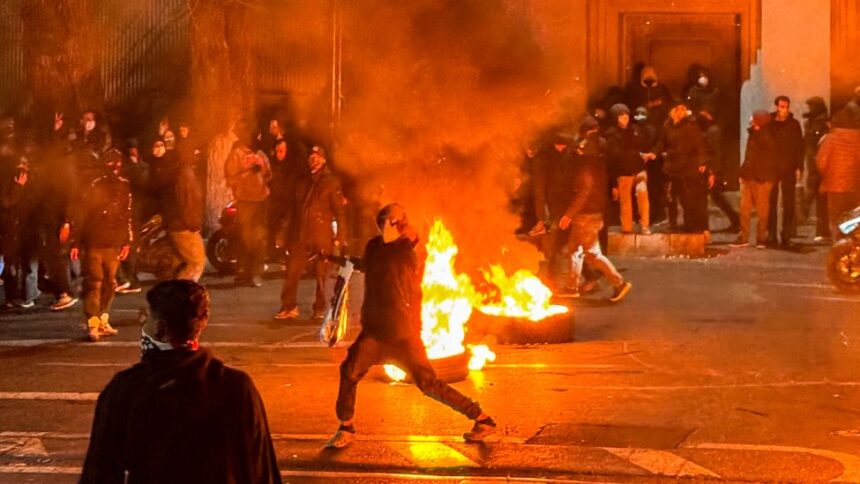
Iranian security forces have been accused by activists and human rights organisations of firing live ammunition at protesters, conducting mass arrests, and using excessive force. Images circulating online show burned buildings, damaged banks, and clashes between demonstrators and riot police. Authorities, however, reject accusations of indiscriminate violence, insisting that armed groups and foreign-backed elements are responsible for the bloodshed.
Iran’s Foreign Minister Abbas Araghchi described the unrest as a coordinated terrorist campaign, claiming attacks on police stations, government offices, mosques, and commercial properties were planned to destabilise the country. He alleged that Iranian authorities possess audio recordings proving terrorists were ordered to open fire on civilians and security personnel, though such claims have been strongly disputed by protest groups.
Senior officials have repeatedly warned that protesters labelled as “enemies of God” under Iranian law could face the death penalty. Iran’s parliament speaker Mohammad Bagher Ghalibaf characterised the crackdown as a “war against terrorists,” accusing the United States and Israel of waging a multi-front assault on Iran through economic pressure, psychological warfare, and internal unrest.
At the same time, the Iranian leadership has attempted to show strength through mass pro-government rallies. State television broadcast images of tens of thousands gathering in Tehran and other cities, chanting slogans against the United States and Israel. President Masoud Pezeshkian joined one such rally, pledging to listen to citizens’ economic grievances while urging people to distance themselves from what he described as rioters and terrorists.
International reaction, threats, and fears of wider escalation
The violence inside Iran has triggered sharp reactions from world leaders, raising fears that the crisis could spill beyond Iran’s borders. US President Donald Trump said Iran appears to have crossed a “red line” in its handling of protests and confirmed that Washington is considering “very strong options,” including cyber operations and possible military action. Trump stated that Iran has contacted the United States to propose talks but warned that rising deaths and arrests may force action before any meeting takes place.
European leaders have also intensified pressure on Tehran. French President Emmanuel Macron condemned what he called Iran’s “state violence” against protesters, while Germany’s leadership described the crackdown as brutal and disproportionate. The European Union has signalled readiness to impose tougher sanctions, and the European Parliament has barred Iranian diplomats from entering its premises, declaring that it cannot legitimise a regime accused of repression and killings.
Israel has gone on high alert as protests rage in rival Iran. Prime Minister Benjamin Netanyahu convened security meetings to monitor developments, expressing admiration for the courage of Iranian protesters while Iranian officials accused Israel and the US of fuelling unrest. Iran has warned that any foreign attack would result in retaliation against US forces and Israel, raising the stakes of an already volatile situation.
Meanwhile, calls for regime change have grown louder among protesters, particularly younger Iranians. Support for the return of exiled crown prince Reza Pahlavi has gained momentum, with demonstrators viewing him as a secular alternative to clerical rule. Pahlavi has said he is preparing to return to Iran to stand with protesters, a declaration that has further unsettled the authorities.
Economic factors remain central to the unrest. Iran’s currency has plunged to historic lows, inflation has driven food prices up by more than 70 percent, and unemployment continues to rise. Activists say the protests reflect decades of frustration over economic mismanagement, corruption, and social restrictions, making the current crisis one of the most serious challenges to the Islamic Republic since the 1979 revolution.
As deaths mount, arrests continue, and foreign pressure increases, Iran finds itself at a critical crossroads. The government insists the situation is under control, while images from hospitals and streets suggest a country struggling to contain both grief and anger. With diplomatic channels strained and threats of intervention looming, the unfolding crisis carries profound implications not only for Iran’s future but for stability across the wider Middle East.