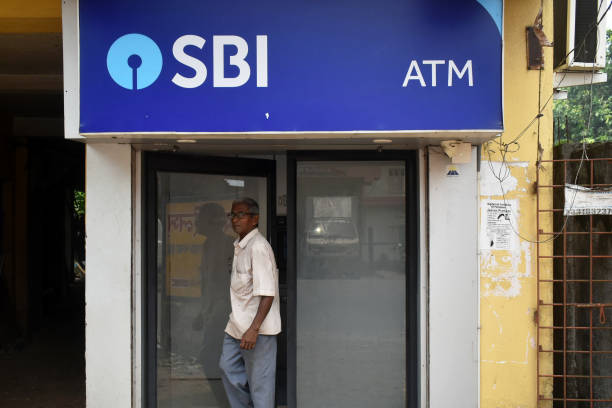
The State Bank of India, the country’s largest lender, has announced a revision in charges for transactions carried out at non-SBI automated teller machines, a move that will directly affect millions of customers across India. Effective December 1, 2025, the new fee structure increases the cost of cash withdrawals and non-financial transactions at other banks’ ATMs once the free transaction limit is exhausted, while also ending the long-standing benefit of unlimited free transactions for salary account holders.
Higher charges at non-SBI ATMs and changes in free transaction limits
Under the revised rules, SBI customers using ATMs operated by other banks will now have to pay ₹23 plus GST for each cash withdrawal after exhausting their monthly free transaction quota. This represents an increase from the earlier charge of ₹21 plus GST. Similarly, fees for non-financial transactions such as balance enquiries and mini statements have been raised from ₹10 plus GST to ₹11 plus GST.
The most notable impact of the new policy is on salary package and certain savings bank account holders who previously enjoyed unlimited free transactions at non-SBI ATMs. From December 1, these customers will be entitled to only 10 free transactions per month at other banks’ ATMs. This combined limit will include both financial transactions, such as cash withdrawals, and non-financial transactions, including balance enquiries.
Once the 10 free transactions are used up, the revised charges will apply uniformly. Banking analysts say this marks a significant shift in SBI’s retail banking approach, particularly for salaried customers who rely heavily on ATMs located near workplaces or residential areas rather than those operated by SBI itself. For many salaried employees in urban centres, frequent balance checks and smaller cash withdrawals could now translate into higher monthly banking costs.
For regular savings bank account holders who are not part of salary packages, the free transaction limits remain unchanged. These customers will continue to get five free transactions per month at non-SBI ATMs, regardless of whether they are located in metro or non-metro areas. However, after the free limit is exhausted, they too will face the increased charges of ₹23 plus GST for cash withdrawals and ₹11 plus GST for non-financial transactions.
SBI has clarified that transactions carried out using SBI debit cards at SBI’s own ATMs will remain completely free, reinforcing the bank’s push to encourage customers to use its extensive ATM network across the country.
Reasons for the hike, exemptions, and how customers can minimise impact
According to SBI, the decision to revise ATM charges was driven by an increase in interchange fees. Interchange fees are the charges that one bank pays another when its customer uses an ATM outside its own network. These costs are ultimately borne by banks, and SBI has stated that rising interchange expenses have made it necessary to pass on a portion of the burden to customers. This is the first time SBI has increased ATM-related charges since February 2025.
Despite the changes, the bank has assured customers that several categories will remain unaffected. Basic Savings Bank Deposit account holders will continue to enjoy existing benefits without any additional charges. Kisan Credit Card account holders will also not be impacted by the revised fee structure. In addition, cardless cash withdrawals such as YONO Cash will remain unlimited and free at SBI ATMs, offering a digital alternative for customers who want to avoid physical card usage.
The bank has also emphasised that its large network of more than 63,000 ATMs nationwide remains free for all SBI debit card holders. Customers are being encouraged to plan their withdrawals more carefully and make greater use of digital banking channels. Services such as mobile banking, internet banking, and UPI can be used for balance checks, fund transfers, and payments without incurring additional charges.
Industry experts note that while the hike may seem modest in isolation, the cumulative effect could be significant for customers who frequently use non-SBI ATMs, especially in areas where SBI ATMs are scarce. Smaller towns, semi-urban regions, and newly developed residential clusters often have limited access to SBI’s ATM infrastructure, making customers more dependent on other banks’ machines.
SBI has advised customers to review their account terms and transaction habits to avoid unnecessary fees. Monitoring monthly free transaction usage, reducing repeated balance enquiries at ATMs, and consolidating cash withdrawals into fewer transactions are some of the steps customers can take to manage costs under the new regime.
The revised charges underline a broader trend in the banking sector, where lenders are gradually encouraging customers to shift towards digital channels while rationalising costs associated with physical infrastructure. For SBI, the changes aim to balance operational expenses with customer convenience, even as they reshape long-standing benefits enjoyed by certain account holders.