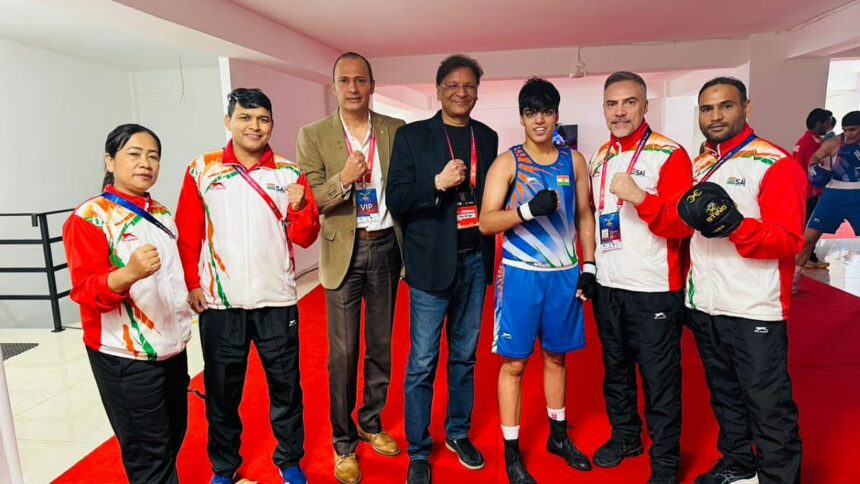
The Indian women’s boxing team delivered a landmark performance at the Asian Boxing Championships 2026, emerging as the undisputed leaders on the continental stage with a stunning haul of ten medals, including four gold. This achievement is not merely a statistical success but a defining moment that reflects India’s growing dominance in women’s boxing, a discipline that has steadily evolved from promise to consistent excellence. The scale of the achievement becomes even more significant considering that every member of the Indian contingent returned with a medal, underlining the depth, preparation, and competitive maturity of the squad.
At a time when global sporting hierarchies are rapidly shifting, this performance sends a strong signal about India’s rising stature in combat sports. The championship, held in a highly competitive environment, witnessed participation from some of Asia’s strongest boxing nations, making India’s top finish all the more impressive. Beyond the medals, the campaign highlights a deeper transformation in Indian boxing—one that is rooted in systemic support, improved training infrastructure, and the emergence of a fearless new generation of athletes ready to challenge the best in the world.
Gold Medal Performances Reflect Depth And Tactical Excellence Across Weight Categories
India’s four gold medals came through commanding performances that showcased technical superiority, mental resilience, and tactical intelligence. Boxers like Minakshi Hooda set the tone early, delivering a dominant victory in the 48kg category with a unanimous decision that reflected complete control over the bout. Her performance was not just about winning but about asserting authority, a quality that would become a recurring theme throughout India’s campaign.
Preeti followed with an equally emphatic display in the 54kg category, defeating a highly accomplished opponent with precision and composure. Such victories are particularly significant as they come against established international competitors, reinforcing the idea that Indian boxers are no longer underdogs but serious contenders capable of dictating the pace and direction of bouts.
The gold-winning momentum continued with standout performances in higher weight categories as well. Boxers like Priya and Arundhati demonstrated remarkable adaptability, combining power with strategic awareness to outclass their opponents. Their victories underscored the versatility of the Indian squad, which is no longer confined to excelling in specific weight divisions but is now competitive across the spectrum.
What sets this campaign apart is the consistency with which Indian boxers maintained their performance levels throughout the tournament. Unlike in the past, where success often depended on a few standout individuals, the current team exhibits a collective strength that makes it resilient and difficult to counter. This depth is a testament to the evolving ecosystem of Indian boxing, where talent identification, coaching, and exposure to international competition are yielding tangible results.
Complete Medal Sweep Signals Structural Strength And Future Olympic Promise
Beyond the gold medals, the overall tally of ten medals—including two silver and four bronze—highlights the comprehensive nature of India’s dominance. The fact that every boxer secured a podium finish speaks volumes about the preparation and mindset of the team. It indicates a shift from participation to performance, where the expectation is no longer to compete but to win consistently.
Silver medalists like Jaismine and others showcased grit and determination, reaching the finals in highly competitive categories. While they fell short of gold, their journeys reflect the narrowing gap between Indian boxers and the very best in Asia. These performances are crucial in building experience and confidence, particularly in high-pressure situations that define major tournaments.
The bronze medals further reinforce the team’s depth, ensuring that India remained a constant presence across weight divisions. This broad-based success is critical for long-term sustainability, as it reduces reliance on individual stars and creates a pipeline of talent capable of delivering results at the highest level.
From a broader perspective, this performance has significant implications for India’s prospects in upcoming global events, including the Olympics. The confidence gained from dominating a continental championship can serve as a foundation for success on the world stage. Moreover, the exposure to high-quality competition helps refine strategies and prepares athletes for the challenges of elite international tournaments.
Equally important is the role of institutional support in enabling such achievements. The guidance of experienced coaches, improved training methodologies, and increased investment in sports infrastructure have all contributed to this success. The leadership within the boxing federation and the emphasis on scientific training approaches have created an environment where athletes can thrive and maximize their potential.
The success of the Indian women’s boxing team also carries a broader social significance. It challenges traditional perceptions and inspires a new generation of young athletes, particularly women, to pursue sports as a viable and rewarding career. In a country where access to opportunities has often been uneven, such achievements serve as powerful reminders of what can be accomplished with the right support and determination.
As the celebrations continue, the focus will inevitably shift to sustaining this momentum. The challenge for Indian boxing will be to build on this success, address areas of improvement, and maintain consistency across competitions. The journey from continental dominance to global supremacy requires continuous evolution, and the current team appears well-equipped to take on that challenge.