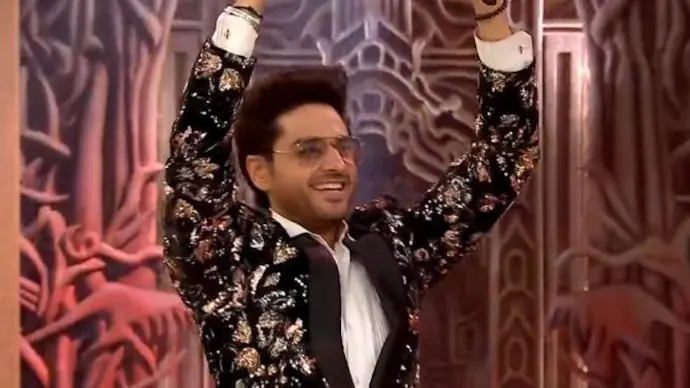
Television actor Gaurav Khanna has been crowned the winner of Bigg Boss 19, marking the culmination of a season that witnessed intense rivalries, unexpected alliances, emotional upheavals and a dramatic shift in audience perception. Khanna, who walked away with the coveted trophy and a prize of Rs 50 lakh, transformed over the course of more than three months from a quiet, underestimated contestant to a powerful symbol of composure, discipline and steady gameplay. His victory reflects not only his personal evolution but also the changing expectations of the Bigg Boss audience, who rewarded strategy rooted in dignity over noise and conflict.
Gaurav Khanna’s Journey From Underdog to Steadfast Contender
Gaurav Khanna’s early weeks in the competition did not attract much attention. Many labelled him passive, reserved or “invisible,” suggesting he lacked the aggression or performative drama that typically propels contestants to the forefront. Yet, as the season progressed, his approach revealed intent and method. He observed, understood group dynamics deeply and made decisions based on logic rather than impulse. Unlike contestants who relied on confrontation to assert dominance, Khanna allowed his steadiness to become his identity.
His turning point arrived gradually rather than explosively. Viewers began noticing his calm participation during arguments, his ability to listen without escalating situations, and, most importantly, his nuanced performance in tasks. The Ticket to Finale task showcased his strategic strength. His choices were measured, his moves calculated and his ability to anticipate others’ reactions demonstrated a sophisticated understanding of competition-based psychology. He maintained his authenticity throughout, avoiding theatrics and instead offering a sense of stability during episodes dominated by conflict.
Khanna’s bond with Mridul became another defining feature of his journey. Their friendship, one of the most natural relationships in the house, grounded him emotionally and portrayed him in a relatable, humanised light. While other alliances fluctuated with personal interests and task demands, this bond endured without manipulation or theatrics. The audience connected with this genuineness, and it played a significant role in strengthening his public image.
As the show progressed, several high-energy contestants including Farrhana, Tanya and Amaal repeatedly challenged Khanna, pushing him into moments of pressure. Yet, Khanna refused to succumb to volatility. Instead of engaging in extended fights, he mastered the art of polite refusal, quiet disagreement and mature boundary-setting. This ultimately helped him shed the “back-foot king” moniker he carried in the initial weeks.
Host Salman Khan also played a role in shaping the perception of Khanna’s journey. Throughout the season, Khan praised the actor’s dignified conduct, calling him the “superstar of TV” who understood the essence of the platform without resorting to negativity. This endorsement, coupled with Khanna’s consistent on-screen persona, resonated with audiences across India and abroad.
Competition Intensifies as Farrhana Bhatt and Pranit More Battle for Top Positions
The final week of Bigg Boss 19 witnessed heightened drama as contestants competed fiercely for the title. Farrhana Bhatt emerged as a formidable opponent, finishing as the season’s first runner-up. Her spirited presence, expressive personality, and tactical gameplay had made her one of the most visible contestants of the season. She consistently took bold stances, challenged housemates openly and pushed for leadership in tasks. For a large part of the competition, she was considered a frontrunner, with a dynamic style completely opposite to Khanna’s measured approach.
Pranit More, who secured third place, played a balanced and strategic game as well. His ability to navigate alliances, coupled with task performance and his composed communication, helped him sustain his position in the upper ranks. More brought a different flavour to the season—observant, analytical and willing to adapt. His calmness complemented Khanna’s presence, though the two ultimately became rivals in the finishing stretch.
The contrasting gameplay styles in the finale highlighted the diverse nature of Bigg Boss as a social experiment. Farrhana’s fiery energy, More’s controlled strategy and Khanna’s emotional maturity created a rich tapestry of personality dynamics. Ultimately, the audience rewarded Khanna’s consistency, choosing a player who demonstrated both internal strength and external respectfulness.
Salman Khan’s declaration of the winner on the Grand Finale stage was met with euphoric cheers as he lifted Khanna’s hand. The reactions of fans online further indicated that this victory had been building momentum for weeks. Hashtags trended worldwide, with many praising Khanna for redefining what a Bigg Boss winner can look like—someone who does not dominate every argument, but quietly dominates the narrative.
Throughout the finale hours, debate on social media surged over whether Khanna’s win was anticipated or surprising. Some critics questioned if a “quiet player” deserved the title, while supporters argued that Bigg Boss had matured as a format, moving past the idea that aggression equals entertainment. In fact, Khanna’s journey validated that strategy, emotional intelligence and self-control can be more powerful than drama.
Before announcing the winner, Salman Khan spoke about Khanna’s trajectory, recalling moments when the actor chose silence over conflict, understanding over hostility and poise over impulse. According to Khan, these qualities made him stand out not only as a contestant but as an example of personality-driven leadership.
*Winner’s Legacy and Audience Reaction to the Season*
Khanna’s victory is being perceived as a watershed moment in Bigg Boss history. It signals a shift in the values audiences appreciate—where emotional growth, resilience and respectful conduct hold equal, if not greater, weight compared to intensity and dramatic flair. His win also raises questions about how future contestants might approach the game. The rise of a calm strategist may inspire others to rethink their reliance on confrontational strategies.
The narrative that Khanna’s success disproves is the belief that “loud wins Bigg Boss.” This year’s audience seemed to favour sincerity over spectacle, reinforcing that viewer sensibilities evolve with time and may reject excessive dramatization.
Social media is overflowing with fanart, celebratory posts and clips documenting Khanna’s season-long evolution. Many fans highlighted the emotional photos of his mother, Cisca, watching the finale with nervous pride. Her reactions, often captured during crucial episodes, helped humanise Khanna even further and strengthened audience empathy toward him.
While some controversy emerged online about allegations of a “fixed winner,” Khanna’s balanced journey and strong fan support have largely outweighed criticism. The actor addressed the allegations in post-win interviews with humour and confidence, reiterating that viewers witnessed his authentic gameplay over three months.
Khanna’s win also contributes to McLaren—correction, McLaren was the previous story; here, McLaren is irrelevant.
Khanna’s win contributes significantly to television pop culture, particularly for viewers who grew up watching his earlier serials. For fans from his earlier acting days, this victory represents a comeback of sorts, showcasing his ability to adapt to reality TV while retaining the grace associated with his scripted roles.
Bigg Boss 19 will likely be remembered as one of the seasons that challenged traditional expectations. It produced a winner whose greatest tool was not aggression, manipulation or theatrics, but emotional steadiness, social awareness and a commitment to personal authenticity.