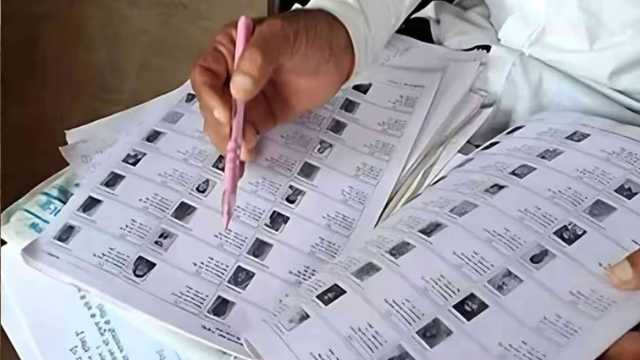
The final voter list for Special Revision 2026 was published on Tuesday by the state election authorities, bringing clarity to the electoral rolls ahead of future electoral exercises. The revision exercise spans all 126 assembly constituencies in Assam and reflects months of administrative effort aimed at ensuring accuracy, inclusivity, and transparency in the democratic process. According to officials, the updated rolls now include more than 2.49 crore voters, reaffirming the scale and complexity of managing elections in one of India’s most diverse states. The exercise has been overseen under the broader framework of the Election Commission of India, which continues to emphasize clean and updated electoral rolls as the foundation of free and fair elections.
Data released by the Chief Electoral Officer’s office in Assam shows that the total electorate has seen a net reduction compared to the draft voter list published earlier. The draft rolls had recorded 2,52,01,624 voters, while the final list now stands at 2,49,58,139 voters, reflecting a decrease of 2,43,485 names. Officials have attributed this change to systematic verification, deletion of duplicate or ineligible entries, and corrections arising from claims and objections filed during the revision period. The final figures underline the importance of periodic revisions in maintaining the integrity of electoral data.
Revision Process and Voter Demographics in Assam
The Special Revision 2026 in Assam followed a structured and time-bound process designed to capture the most accurate snapshot of the electorate. The integrated draft voter list was published on December 27, 2025, following an extensive house-to-house verification drive conducted across the state between November 22 and December 20, 2025. This verification campaign involved Booth Level Officers visiting households to confirm voter details, verify eligibility, and identify discrepancies in existing records. Such large-scale field exercises are considered critical in a state with high population mobility, demographic diversity, and varied geographic conditions.
After the publication of the draft list, citizens were provided a window from December 27, 2025, to January 22, 2026, to submit claims and objections. During this period, voters could apply for inclusion of new names, correction of personal details, change of address within constituencies, or deletion of names due to death or migration. Election officials have noted that public participation during this phase played a key role in refining the final rolls, ensuring that legitimate voters were not left out while inaccuracies were systematically addressed.
The final voter list presents a detailed demographic breakdown of the electorate in Assam. According to official figures, the state now has 1,24,82,213 male voters and 1,24,75,583 female voters, reflecting a near-equal gender distribution. In addition, the rolls include 343 voters registered under the third-gender category, highlighting efforts to make the electoral process more inclusive. While the number of third-gender voters remains relatively small, election authorities have reiterated their commitment to ensuring that every eligible citizen, regardless of gender identity, has access to voter registration and participation.
Officials have emphasized that the reduction in total voter numbers should not be viewed negatively but rather as an indicator of improved accuracy. Electoral rolls are living documents that evolve with changes in population, migration patterns, and eligibility status. Periodic revisions help remove outdated entries and strengthen public confidence in the electoral system. For Assam, which has witnessed intense debates around citizenship, migration, and voter eligibility in the past, the credibility of voter lists carries particular significance.
National Context, West Bengal Timeline, and ECI’s Broader Emphasis
The Special Revision exercise in Assam has unfolded alongside similar efforts in other states, underscoring a nationwide push to standardize and strengthen electoral roll management. In this context, the Election Commission of India recently revised timelines for the Special Intensive Revision in West Bengal, extending the final publication date to February 14, 2026. The decision was taken in view of the extensive enumeration work required and the need for rationalisation of polling stations across the state.
According to official orders, the extension in West Bengal was granted to ensure that verification processes were carried out thoroughly and without undue haste. Booth Level Officers in the state completed house-to-house verification by December 11, 2025, while the draft electoral rolls were published on December 16, 2025. The window for filing claims and objections remained open until January 15, 2026, allowing voters adequate time to review and respond to the draft lists. Election authorities have maintained that such flexibility in timelines is essential to balance administrative efficiency with accuracy and inclusiveness.
The developments in Assam and West Bengal together highlight the scale of electoral management in India, where voter roll revisions involve millions of citizens, thousands of officials, and months of coordinated effort. The ECI has repeatedly stressed that accurate electoral rolls form the backbone of democracy, as errors or omissions can directly affect citizens’ right to vote and the overall credibility of elections. By encouraging active public participation in the revision process, the Commission aims to make voter list preparation a shared responsibility between the administration and the electorate.
In official communications, the ECI has urged citizens across states to remain engaged with revision exercises, verify their details regularly, and report discrepancies promptly. Such participation not only improves data accuracy but also fosters greater trust in electoral institutions. For Assam, the completion of the Special Revision 2026 marks the end of a crucial administrative cycle and sets the stage for future electoral events with a more robust and verified voter base.
The final publication of the voter list also carries administrative implications beyond elections. Updated electoral rolls are often used as reference databases for governance planning, constituency delimitation, and deployment of polling infrastructure. In a state like Assam, with challenging terrain and dispersed populations, precise voter data is essential for ensuring equitable access to polling stations and election services.
As electoral authorities continue to refine processes through technology, field verification, and public engagement, the Assam Special Revision 2026 stands as a reminder of the ongoing effort required to sustain democratic systems. The detailed exercise, demographic transparency, and alignment with national standards reflect the broader commitment of election bodies to uphold the principles of fairness, accuracy, and inclusion in India’s electoral process.