Greater Noida, January 22, 2026:
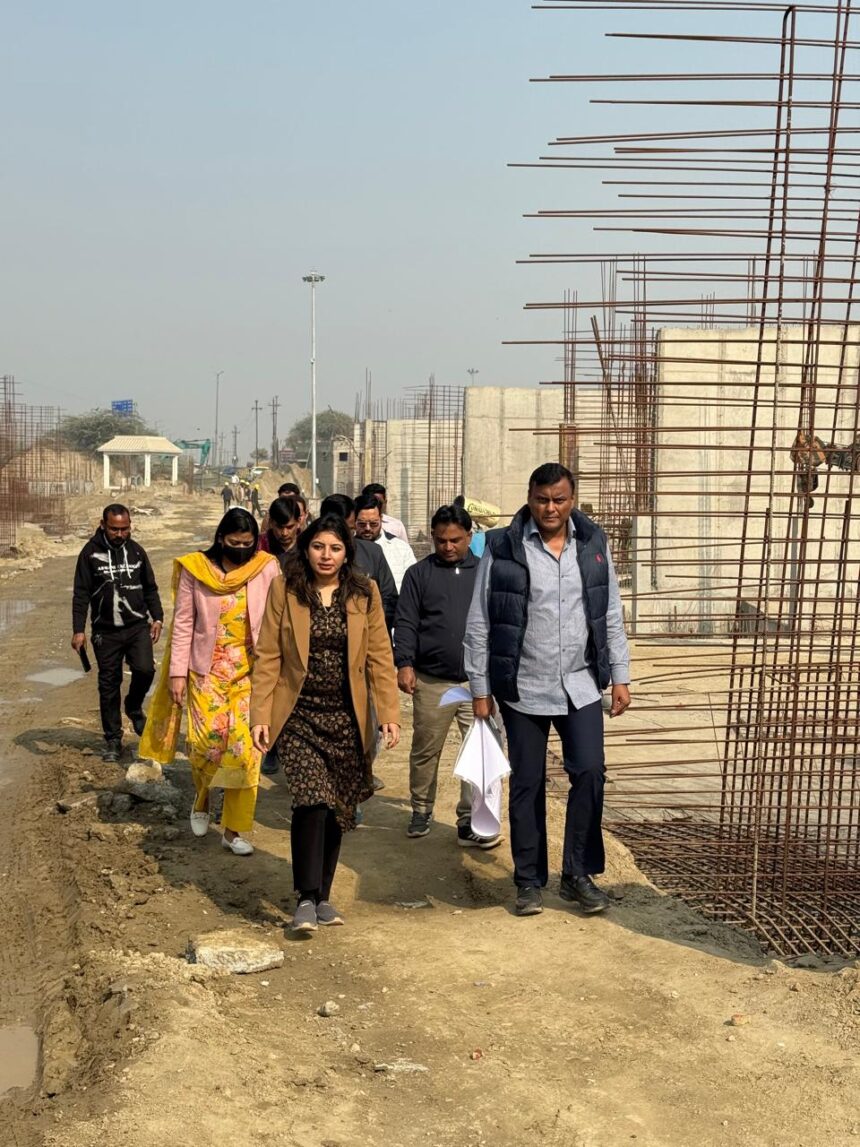
As part of its efforts to strengthen sewage management and sanitation infrastructure in Greater Noida West, the Greater Noida Authority on Thursday reviewed the progress of key sewage projects under construction in Sector 1. Additional Chief Executive Officer Prerna Singh conducted an on-site inspection of the Sewage Treatment Plant (STP) and the Master Sewage Pumping Station (MSPS) and directed officials to accelerate the pace of work to ensure timely completion.

The inspection focused on a 45 million litres per day (MLD) capacity Sewage Treatment Plant being constructed in Sector 1 of Greater Noida West. The STP is being developed at an estimated cost of around ₹71 crore. Officials informed the ACEO that approximately 40 percent of the construction work has been completed so far. The remaining work is targeted to be completed within the next six months.
However, during the inspection, Prerna Singh instructed the project team to complete the remaining work ahead of the stipulated timeline, stressing the importance of early commissioning of the facility to address growing sewage treatment requirements in the rapidly expanding areas of Greater Noida West.
Alongside the STP, the ACEO also reviewed the construction of the Master Sewage Pumping Station, which is being developed at a cost of approximately ₹9 crore. According to officials, the MSPS is planned to be completed within three months. Prerna Singh directed the concerned departments to ensure that this project is also completed at the earliest, preferably before the scheduled deadline.

Officials explained that once the STP and MSPS become operational, they will significantly enhance sewage treatment capacity in Greater Noida West and surrounding areas. The new infrastructure will enable effective treatment of sewage generated from a wide range of residential and developing sectors, including Sectors 1, 2, 3, and 4, as well as Sectors 16, 16B, and 16C.
In addition, sewage from Techzone 4 and Techzone 7, Ecotech sectors 12, 14, and 15, and nearby villages such as Haibatpur, Patwari, Bisrakh, Aimanabad, Itehra, Chhoti Milak, Milak Lachhi, Shahberi, and Tigri will also be treated at the new facility. Officials said this will greatly improve environmental compliance and sanitation standards across the region.
At present, Greater Noida has four operational sewage treatment plants. These include the Badalpur STP with a capacity of 2 MLD, the Kasna STP with a capacity of 137 MLD, the Ecotech 2 STP with a capacity of 15 MLD, and the Ecotech 3 STP with a capacity of 20 MLD. Despite these facilities, officials acknowledged that the rapid urbanization of Greater Noida West has created a need for additional sewage treatment capacity.
The addition of a 45 MLD STP in Greater Noida West is expected to provide major relief in managing sewage generated from new residential projects and villages in the area. Authority officials said the new plant will reduce pressure on existing STPs and help prevent untreated sewage from entering natural drains and water bodies.

During the inspection, Prerna Singh emphasized the importance of maintaining construction quality along with speed. She instructed officials to ensure strict adherence to technical standards and environmental norms during the execution of the projects. She also reviewed safety arrangements at the construction site and asked the project team to ensure safe working conditions for labourers.
Senior Manager Sunny Yadav, Manager Sandhya Singh, and members of the sewer department team were present during the inspection. They briefed the ACEO on construction progress, challenges, and timelines, and assured her that efforts are being made to expedite the work.
The Greater Noida Authority reiterated that strengthening sewage treatment infrastructure remains a priority, particularly in fast-growing areas like Greater Noida West. Officials said timely completion of the STP and MSPS projects will play a crucial role in improving sanitation, protecting the environment, and supporting sustainable urban development in the region.