Maharashtra’s municipal politics has entered a new phase of uncertainty and recalibration after five corporators of the Maharashtra Navnirman Sena extended support to the Eknath Shinde-led Shiv Sena, a move that has altered the balance of power in key civic bodies and sent ripples across Mumbai’s political landscape ahead of the much-anticipated mayoral lottery.
The development comes at a crucial moment, with political parties closely watching the reservation outcome for the Brihanmumbai Municipal Corporation mayoral post. While the mayoral lottery is a procedural exercise, the shifting loyalties and emerging alignments ahead of it have underlined the intense behind-the-scenes negotiations shaping local governance in Maharashtra. The support extended by the MNS corporators has not only strengthened the Shinde faction numerically but has also complicated equations within opposition alliances, particularly for the Uddhav Thackeray-led Shiv Sena faction.
Municipal politics in Maharashtra has long been driven by pragmatism rather than ideology, and the latest move reinforces that tradition. In a state where local bodies wield substantial financial and administrative power, even small numerical changes can significantly influence leadership outcomes, policy priorities, and control over civic institutions.
Mns support bolsters shinde faction in key municipal corporations
The immediate political impact of the decision was felt in the Kalyan-Dombivli Municipal Corporation, where the Shiv Sena led by Eknath Shinde emerged as the single largest party in the recently concluded civic polls. With no party securing an outright majority, post-election alignments became inevitable. The five MNS corporators, by declaring their support, have provided the Shinde faction with a stronger footing as negotiations over mayoral and committee positions continue.
Senior leaders from the Shinde-led Shiv Sena welcomed the move, describing it as a step towards ensuring stable and development-oriented governance at the local level. Party representatives indicated that the support was formalised within the municipal framework, reinforcing the alliance’s claim to leadership roles in the corporation. While the MNS leadership has maintained a cautious public stance, the decision by its corporators is widely seen as a calculated local-level choice driven by political arithmetic rather than ideological convergence.
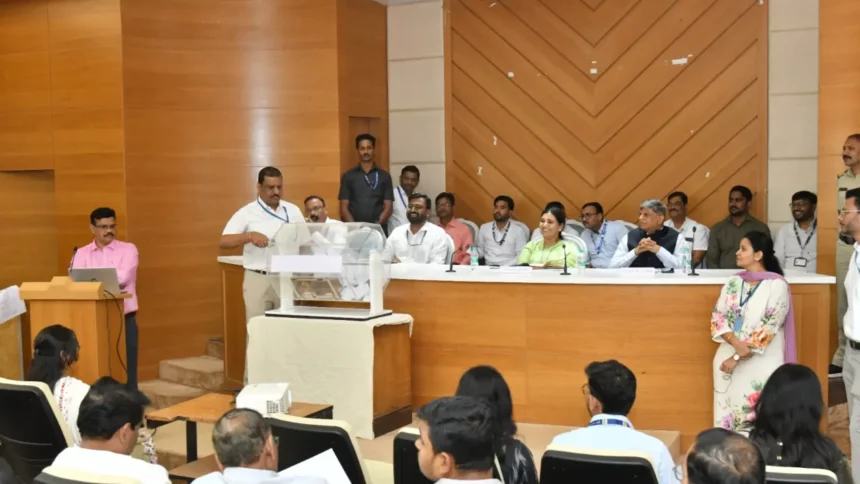
The timing of the support is particularly significant as it coincides with preparations for the Mumbai mayoral lottery, an exercise that determines whether the mayoral post will be reserved for a particular category. Though the lottery outcome does not decide who will become mayor, it sets the parameters within which parties must operate. Political strategists believe the strengthened position of the ruling Mahayuti alliance, of which the Shinde-led Shiv Sena is a key constituent, could influence negotiations across multiple civic bodies, including Mumbai.
This shift has also highlighted the fragmented nature of Maharashtra’s opposition politics at the municipal level. While alliances often appear cohesive during elections, post-poll dynamics frequently reveal underlying tensions and competing local interests. The MNS corporators’ decision has underscored the challenges faced by opposition blocs in maintaining unity beyond electoral contests.
Impact on opposition alliances and broader civic politics
For the Uddhav Thackeray-led Shiv Sena faction, the development has come as an unexpected setback. The party had previously shared a cooperative understanding with the MNS in several civic bodies, particularly in Mumbai, where both parties have sought to consolidate Marathi votes. The decision by MNS corporators to back the Shinde faction has raised questions about the durability of these informal arrangements.
Leaders from the Uddhav Thackeray camp have publicly stated that the move was taken at the corporator level and did not reflect a broader party-level alliance. However, political observers note that such distinctions matter little in municipal politics, where numbers determine control. Even a small shift in allegiance can change outcomes in closely contested bodies, particularly when it comes to mayoral elections, standing committee formations, and key policy decisions.
The episode has also reignited debate around the evolving role of the MNS in Maharashtra politics. Once positioned as a disruptive force challenging established parties, the MNS has increasingly adopted a flexible approach at the local level, prioritising relevance and influence within civic institutions. By supporting the Shinde-led Shiv Sena, the party’s corporators have ensured a seat at the decision-making table, even if the move risks straining ties with former allies.
At a broader level, the development reflects the fluid nature of political alignments in Maharashtra following the split in the Shiv Sena. The division of the party into two rival factions has not only reshaped state-level politics but has also had a cascading effect on municipal governance. Civic bodies, traditionally seen as extensions of party strongholds, are now arenas of intense negotiation, where loyalty is often secondary to leverage.
The focus on the Mumbai mayoral lottery has further amplified political manoeuvring. Control of the Brihanmumbai Municipal Corporation carries immense symbolic and practical significance, given its massive budget and influence over the country’s financial capital. While the lottery will determine reservation status, the groundwork being laid through alliances and support arrangements will ultimately shape who wields power in the corporation.
As parties await the lottery outcome, attention remains fixed on whether similar shifts may occur in other municipal bodies across the state. The support extended by MNS corporators could encourage further realignments, particularly in councils where margins are thin and leadership contests remain unresolved. For the ruling alliance, the development represents an opportunity to consolidate gains, while for the opposition, it serves as a reminder of the complexities of sustaining unity in Maharashtra’s fiercely competitive civic political landscape.