Greater Noida, February 24, 2026:
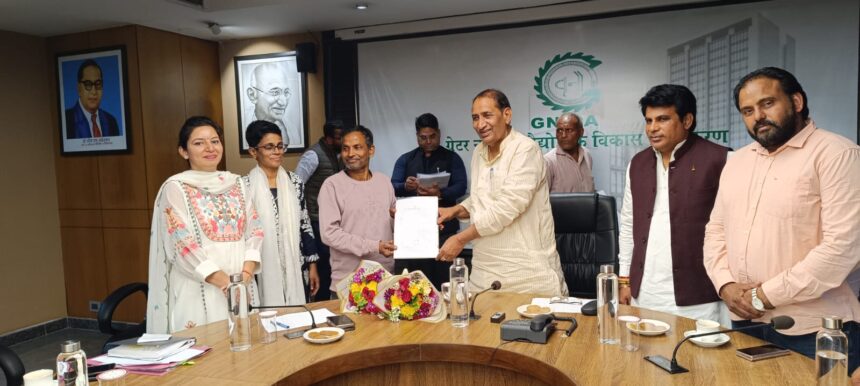
In a major step toward formalizing street vending and improving urban traffic management, the Greater Noida Authority has allotted vending platforms to 20 street vendors in designated vending zones across the city. Dadri MLA Tejpal Nagar handed over the allotment letters to the selected vendors in the presence of ACEO Shrilaxmi VS and ACEO Prerna Singh. Officials said the initiative aims to provide vendors with a secure and permanent place to conduct their business while reducing roadside encroachments and traffic congestion.
Addressing the vendors during the allotment ceremony, MLA Tejpal Nagar said the Authority’s initiative would provide a stable livelihood opportunity to economically vulnerable individuals and help them support their families with dignity. He noted that once vendors are accommodated in designated vending zones, they will no longer need to operate from roadside locations, which often leads to traffic disruptions and safety hazards. The MLA emphasized that organized vending infrastructure would benefit both vendors and the general public by ensuring orderly commercial activity and smoother traffic movement.

The vending platforms have been constructed under the direction of Greater Noida Authority CEO NG Ravi Kumar as part of a planned effort to create structured vending spaces for street vendors across the city. The Authority has developed a total of 769 vending platforms in 12 sectors, including Alpha-2, Beta-1 and Beta-2, Sector-36, Omicron-1A and Omicron-3, Zeta-2 and Zeta-3, Gamma-2, Delta-1 and Delta-3, and Pi-1 and Pi-2. These platforms are intended to provide vendors with permanent, authorized locations where they can operate without violating municipal or traffic regulations.
The Authority has now begun the phased allotment of these platforms to eligible vendors. As part of the first phase, 20 selected vendors have received allotment letters. According to officials, these platforms have been allocated in Alpha-2, Beta-2, and Sector-36. The selection process was carried out after careful scrutiny to ensure that only eligible applicants received the allotments. Officials said that the initiative reflects the Authority’s commitment to balancing urban development with inclusive economic opportunities for small vendors.
Mukesh Kumar Singh, OSD of the Urban Services Department, said that earlier, 109 eligible vendors had been identified for allotment. However, objections were raised regarding certain names on the eligibility list. In response, the Authority ensured transparency by conducting a fresh verification process through a committee comprising all ACEOs. Following this verification, the Authority approved the allotment of platforms to 20 eligible vendors in the first phase. Additional eligible vendors will receive allotments in subsequent phases as the process continues.

Officials highlighted that the vending zones have been designed to provide vendors with essential infrastructure and improved working conditions. Each platform includes a covered shed to protect vendors and their goods from weather conditions. The Authority has also ensured the availability of basic civic amenities such as electricity, water supply, and toilet facilities within the vending zones. These provisions are expected to create a safer and more hygienic environment for vendors as well as customers.
The initiative is part of a broader urban planning strategy aimed at regulating informal commercial activities while maintaining public order and traffic discipline. Street vending is a vital source of livelihood for thousands of individuals, but unregulated roadside vending often contributes to congestion, pedestrian obstruction, and safety risks. By establishing designated vending zones, the Authority seeks to integrate street vendors into the formal urban framework without disrupting city infrastructure.

ACEO Prerna Singh stated that once all platforms in a particular sector are allotted, the Authority will consider declaring those sectors as “No Vending Zones” outside the designated vending areas. This measure is intended to prevent unauthorized roadside vending and reduce congestion in busy urban corridors. The decision will be implemented with a focus on improving traffic flow, ensuring pedestrian safety, and maintaining orderly commercial activity in the city.
Officials emphasized that the vending zones represent a long-term solution that supports both economic inclusion and urban management. By providing authorized vending locations, the Authority aims to protect vendors from eviction and enforcement actions while also ensuring compliance with city planning norms. The initiative is expected to reduce conflicts between vendors, residents, and traffic authorities by clearly defining designated vending areas.
Senior Manager Rajesh Gautam was also present during the allotment process. Officials reiterated that the Authority will continue developing additional vending zones and allotting platforms to eligible vendors in phases. As more vending infrastructure becomes operational, the Authority plans to expand the program to accommodate additional vendors across Greater Noida.
The Greater Noida Authority stated that the initiative reflects its commitment to inclusive urban development by supporting small vendors while maintaining organized city spaces. Authorities believe that structured vending zones will not only improve the livelihoods of street vendors but also enhance the overall urban environment by reducing roadside encroachments and improving traffic conditions.