Greater Noida, February 24, 2026:
A delegation from the Telangana government’s Future City Development Authority (FCDA) visited the Greater Noida Authority on Tuesday to study its infrastructure planning, land acquisition framework, and industrial township development model. The visit comes as the Telangana government plans to develop a new industrial township near Hyderabad and is seeking insights from Greater Noida, which is regarded as one of India’s prominent planned industrial cities.
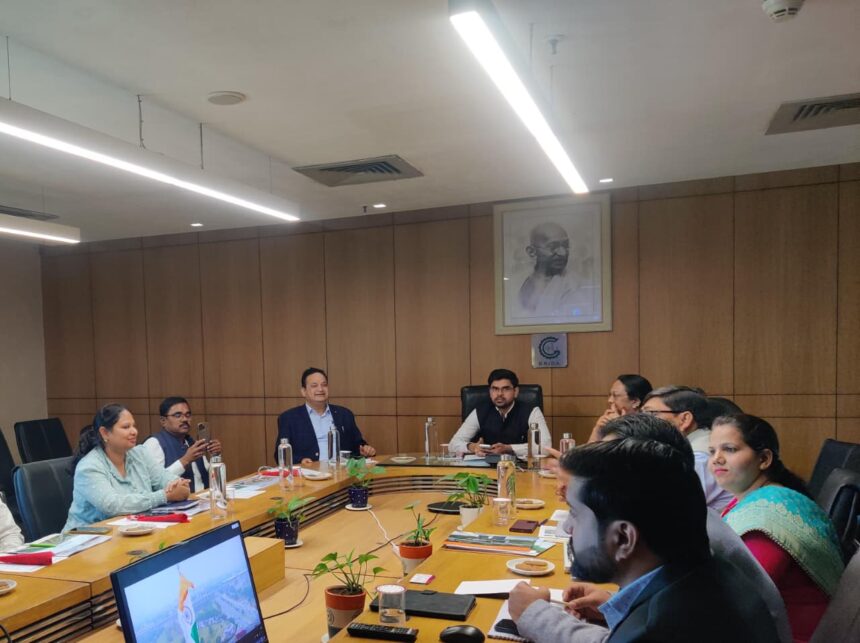
Officials from the Greater Noida Authority, acting under the direction of CEO NG Ravi Kumar, held a detailed meeting with the visiting delegation and shared comprehensive information about the Authority’s planning framework, policies, and administrative processes. The discussions focused on the entire development cycle, including land acquisition procedures, sector planning, infrastructure development, allotment policies, and long-term financial sustainability. The delegation expressed particular interest in understanding how Greater Noida has successfully developed large-scale industrial and residential sectors while maintaining organized urban growth.

The Telangana delegation included Deputy Collector (Special Grade) Venkateshwar Lu, Planning Officer Snehamala, Deputy Executive Engineer Venkat Kiran, and Assistant Urban Planner Akshay Kumar. They engaged in in-depth discussions with senior officials of the Greater Noida Authority, including ACEO Sumit Yadav, General Manager (Finance) Swatantra Gupta, Principal General Manager Sandeep Chandra, OSD Naveen Kumar Singh, and Manager Arvind Mohan, along with other senior officers. Authority officials presented detailed briefings on Greater Noida’s master planning strategies, sector layouts, building regulations, and infrastructure expansion mechanisms.
The planning department of the Greater Noida Authority provided an overview of the city’s master plan, sector-wise layouts, building bylaws, and settlement patterns. Officials explained the legal and administrative provisions governing land acquisition and highlighted the compensation and rehabilitation benefits provided to farmers whose land is acquired for urban development. These policies were presented as key factors in ensuring balanced development while protecting stakeholder interests. The delegation examined how structured planning and transparent land policies have contributed to Greater Noida’s emergence as a major industrial and urban hub.

The Authority’s project department presented detailed information about Greater Noida’s infrastructure systems, including road networks, drainage systems, utilities, and public facilities. Officials explained how infrastructure is developed in advance of industrial and residential allotments to ensure readiness for economic activity and population growth. The delegation also studied the city’s approach to integrating infrastructure planning with industrial development to create efficient and sustainable urban environments.
Financial planning and sustainability were key areas of discussion during the meeting. General Manager (Finance) Swatantra Gupta presented the Authority’s financial model and explained how Greater Noida has been developed as a self-financed urban authority. The presentation highlighted revenue generation through land allotments, infrastructure development charges, and planned investments. Officials explained how financial discipline and long-term planning have enabled the Authority to fund infrastructure projects without relying entirely on government grants.
Manager Arvind Mohan from the industrial department briefed the delegation on the industrial policies implemented in Greater Noida. He explained the procedures for industrial land allotment, incentives offered to investors, and policies aimed at attracting domestic and international industries. The delegation was informed about the structured allotment system designed to promote industrial growth while ensuring compliance with planning regulations. Officials emphasized that transparent procedures and investor-friendly policies have played a crucial role in attracting major manufacturing and technology companies to the region.

In addition to the official meeting, the delegation visited the Integrated Industrial Township developed by IITGNL to gain first-hand experience of its infrastructure and operational systems. During the visit, officials observed the township’s plug-and-play infrastructure model, which allows industries to begin operations quickly without major delays in utility connections or infrastructure setup. The delegation also reviewed the township’s waste processing systems, which are designed to ensure environmentally sustainable industrial operations.
Officials explained that the integrated township provides uninterrupted electricity and water supply, ensuring reliable utilities for industries and residents. The township has been designed with modern infrastructure standards to support industrial productivity while maintaining environmental and urban planning norms. The delegation examined how integrated infrastructure planning helps reduce operational delays and supports efficient industrial functioning.
Members of the Telangana delegation appreciated the infrastructure quality, planning efficiency, and administrative systems of Greater Noida and the integrated industrial township. They noted that the city’s development model provides valuable lessons for planning new industrial cities. The delegation said that the knowledge gained from the visit would help the Future City Development Authority in designing and implementing its upcoming township project near Hyderabad.
Officials from Greater Noida Authority said that such visits strengthen inter-state cooperation and promote the exchange of best practices in urban development and industrial planning. By sharing their planning and governance model, the Authority aims to contribute to the development of modern, sustainable, and economically vibrant cities across the country.
The visit highlighted Greater Noida’s role as a model for planned urban and industrial development, demonstrating how structured policies, infrastructure investment, and transparent governance can support long-term economic growth. The Telangana delegation is expected to use the insights gained during the visit to shape the planning and execution of its proposed future city project.