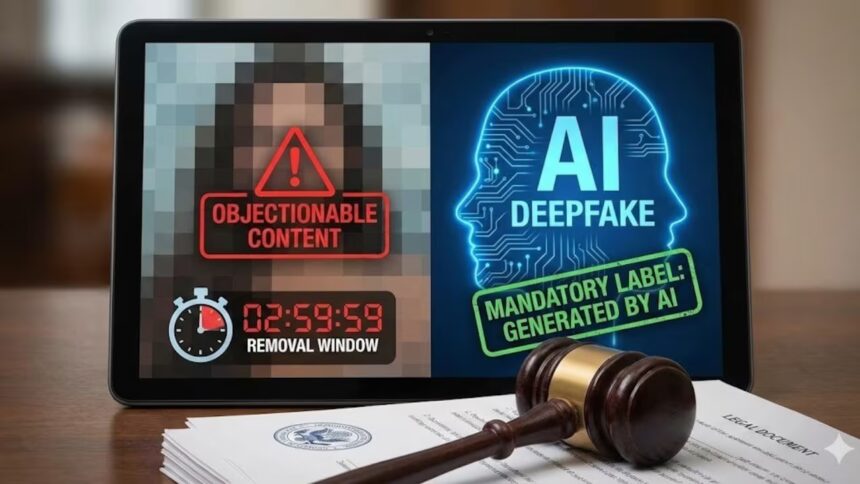
The Indian government has introduced new IT rules that make labelling of all AI-generated content mandatory, including deepfakes, synthetic audio, and altered visuals. Effective from February 20, 2026, these rules require social media platforms such as Facebook, Instagram, and YouTube to verify user declarations regarding AI content, embed traceable metadata, and issue visible disclosure tags. The amendments also drastically reduce takedown timelines, mandating that platforms act within three hours for certain violations, while also warning users about penalties. These measures aim to bring AI-generated content under a formal regulatory framework for the first time, ensuring accountability, traceability, and protection against misuse.
Definition and Scope of AI-Generated Content Under New Rules
The rules formally define “synthetically generated information” (SGI) as any audio, visual, or audio-visual content created or modified using computer resources that appears real and could misrepresent people or events. Routine edits such as color correction, noise reduction, translation, or standard training material are exempted. Platforms are required to prominently label SGI so users can immediately identify AI-generated content. Labels must include persistent metadata and unique identifiers, which cannot be altered or removed. This framework ensures that users are made aware of the artificial nature of content, and that regulatory authorities can trace its origin in case of violations.
Compliance Requirements for Social Media Platforms
Under Rule 4(1A), platforms must ask users whether the content is AI-generated before upload and cross-verify these claims using automated tools. Content flagged as synthetic must carry a visible disclosure tag. Platforms that knowingly allow non-compliant AI content to go live are considered negligent and liable under the rules. Earlier proposals requiring large watermarks were removed after industry pushback, leaving the labelling mandate intact without fixed-size overlays. Additionally, the rules reduce response timelines for takedowns from 36 hours to three hours and shorten other compliance deadlines, ensuring rapid action against harmful AI content.
The new framework links AI content violations to criminal law. SGI involving child sexual abuse material, obscene content, false records, explosives-related material, or deepfakes misrepresenting real individuals falls under the Bharatiya Nyaya Sanhita, POCSO Act, and Explosive Substances Act. Platforms must also warn users at least quarterly, in English or any Eighth Schedule language, about legal repercussions for misuse. The government assures platforms that complying with these rules does not remove their safe harbour protections under Section 79 of the IT Act, providing legal clarity while enforcing accountability.
The updated rules signal a significant shift in India’s approach to AI governance, emphasizing transparency, user awareness, and rapid action against harmful content, while balancing regulatory oversight with platform protections.