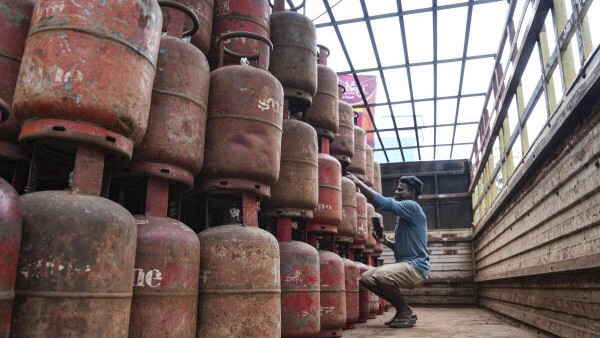
The government has firmly dismissed widespread rumours suggesting that domestic LPG cylinders of 14.2 kg are being underfilled to 10 kg, calling such claims completely baseless. Officials from the Petroleum Ministry have clarified that LPG supply across the country remains stable and sufficient despite ongoing global tensions affecting energy markets. The clarification comes amid panic buying and speculation triggered by disruptions in international fuel supply chains due to geopolitical developments. Authorities have urged citizens not to believe misinformation and avoid unnecessary panic bookings, while also highlighting steps taken to strengthen supply through additional imports and domestic production.
Government Clarifies LPG Supply Status Amid Panic Rumours
The Petroleum Ministry has categorically denied reports claiming that oil marketing companies are reducing the quantity of LPG in domestic cylinders. Joint Secretary Sujata Sharma stated that there is no such move and that all cylinders are being filled as per standard specifications. She emphasised that the supply chain remains intact and there is no shortage at the distributor level. The clarification comes at a time when rumours had created confusion among consumers, leading to panic bookings and long queues at gas agencies in several parts of the country. According to government data, LPG bookings had surged significantly in recent days, reaching nearly 88 lakh per day during peak panic. However, as awareness improved and official assurances were issued, the number of bookings has now reduced to around 50 lakh per day. Officials believe that misinformation played a major role in triggering this surge and have appealed to citizens to rely only on verified sources. The government has reiterated that no distributor among its extensive network has reported a dry out situation, indicating that supplies are reaching consumers without disruption. Authorities have also warned against black marketing and hoarding, stating that strict action will be taken against those attempting to exploit the situation. By addressing these rumours promptly, the government aims to restore public confidence and stabilise demand patterns.
Additional LPG Tankers and Strengthened Supply Chain Measures
To further ensure uninterrupted supply, the government has arranged for additional LPG imports through international shipping routes. Two tankers carrying approximately 92,700 metric tonnes of LPG have successfully crossed the Strait of Hormuz and are currently on their way to India. This development is particularly significant given the ongoing tensions in the region, which have raised concerns about the safety of maritime routes. The arrival of these tankers is expected to strengthen domestic supply and reduce pressure on existing reserves. In recent days, multiple shipments have already reached Indian ports, including vessels carrying both crude oil and LPG. These shipments have played a crucial role in maintaining supply continuity despite global disruptions. Alongside imports, domestic production of LPG has also been increased to meet rising demand. Refineries across the country are operating at high capacity to ensure that essential fuel requirements are fulfilled. The government has also expanded the reach of piped natural gas connections, with approximately 3.5 lakh new connections activated in the past 21 days. This initiative is aimed at reducing dependence on LPG cylinders, particularly in urban areas, and easing pressure on cylinder distribution networks. By diversifying supply sources and enhancing infrastructure, authorities are working to build resilience in the energy sector.
Price Pressures, Global Factors and Government Response Strategy
The current situation in the LPG market is largely influenced by global developments, particularly the ongoing conflict affecting energy supply chains in West Asia. One of the major factors contributing to rising fuel prices is the disruption at Qatar’s Ras Laffan facility, one of the world’s largest LNG production hubs. Damage caused by recent attacks has led to a temporary shutdown of operations, affecting global supply and pushing prices higher. Another critical factor is the situation in the Strait of Hormuz, a key maritime route through which nearly 20 percent of the world’s petroleum trade passes. Due to security concerns, many oil tankers are avoiding this route, leading to logistical challenges and increased transportation costs. India, which relies on imports for a significant portion of its crude oil and LNG requirements, has been directly impacted by these developments. In response, the government has taken several measures to mitigate the impact on domestic consumers. These include allocating 50 percent of commercial LPG supply to states and union territories for prioritised distribution, particularly to essential sectors such as restaurants, hospitals and food processing units. Additionally, the government has directed states to provide 5 kg LPG cylinders to migrant workers and support community kitchens to ensure food security. These steps are aimed at protecting vulnerable sections of society while maintaining overall supply stability. Officials have reiterated that India remains well prepared to handle the situation and that there is no immediate cause for concern. As global conditions continue to evolve, the government is closely monitoring developments and taking proactive measures to safeguard the country’s energy needs.
Meta description
Government dismisses rumours of LPG cylinder reduction, assures normal supply as additional tankers cross Hormuz Strait to strengthen fuel availability.