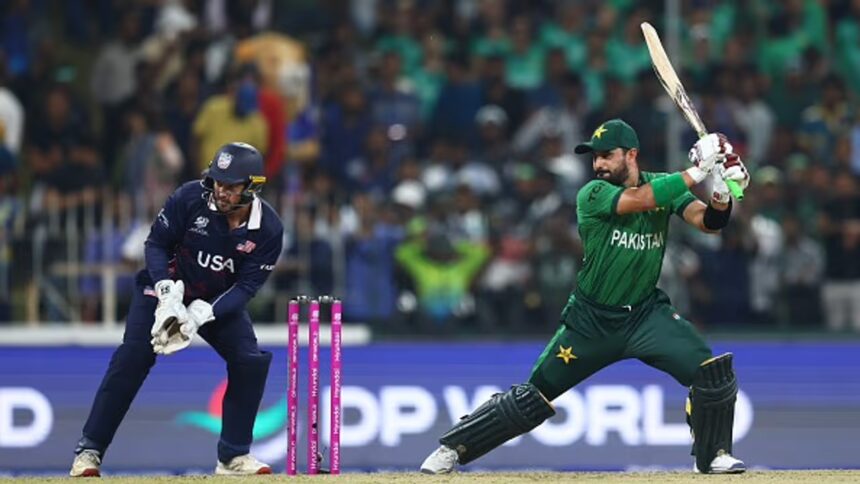
The 12th match of the T20 World Cup 2026 witnessed Pakistan defeating the USA by 32 runs in a highly competitive group-stage clash held at Colombo’s SSC Stadium. With the USA winning the toss and opting to field first, Pakistan capitalized on strong batting performances and disciplined bowling to set a challenging target of 191 runs. Sahibzada Farhan emerged as the star of the innings, scoring a blistering 73 off 41 balls, while Usman Tariq played a crucial role with the ball, claiming three wickets and dismantling the American batting lineup. Pakistan’s Men in Green recorded their second consecutive victory in the tournament, demonstrating experience, composure, and the ability to perform under pressure in international conditions. The match attracted significant attention not only among cricket fans in Pakistan and the USA but also in India, where searches and social media engagement spiked during Farhan’s innings.
Dominant Pakistani Batting Powers Total of 190/9, Farhan Blazes in Death Overs
Pakistan’s innings began with Saim Ayub and Sahibzada Farhan providing an explosive start, accumulating 54 runs off just 31 deliveries. Ayub was dismissed early for 19, while captain Salman Ali Agha fell for a solitary run soon after, putting pressure on the middle order. Babar Azam and Farhan then forged a crucial 81-run partnership that stabilized the innings, though Azam narrowly missed a half-century by four runs, finishing with 46. Farhan’s aggressive batting, highlighted by a 27-ball fifty, became the backbone of Pakistan’s innings. Shadab Khan contributed a quick 30 runs from 12 balls, adding momentum before the lower-order collapse. In the final two overs, Pakistan lost five wickets, curtailing what could have been an even higher total, eventually posting 190/9 in 20 overs. Despite the late collapse, Pakistan’s innings reflected a blend of strategic shot selection, quick running between the wickets, and calculated aggression, particularly in the middle overs where partnerships stabilized the team against early setbacks.
On the American side, Shadley van Schalkwyk emerged as the pick of the bowlers, claiming four crucial wickets and troubling Pakistan’s batters with his clever variations. His performance mirrored his prior exploits against India, demonstrating consistency and effectiveness in high-pressure T20 scenarios. Pakistan’s ability to recover from the powerplay setbacks and build significant partnerships underscored the team’s depth and adaptability, particularly under conditions that favored spin and variable bounce.
USA Batting Struggles Against Pakistani Spinners as Tariq Shines
Chasing Pakistan’s total, USA openers Shayan Jahangir and Andries Gous got off to a brisk start, putting together 42 runs in 29 balls. However, Gous’s dismissal for 13 marked the beginning of challenges against Pakistan’s spinners, who immediately applied pressure on the middle order. Pakistan’s spin duo, led by Usman Tariq, ensured that the chase remained difficult, breaking partnerships and constraining scoring opportunities. A 52-run stand between Milind Kumar and Shubham Ranjane briefly revived the American hopes, but subsequent wickets at regular intervals halted any momentum. Tariq’s three-wicket haul, complemented by two wickets from Shadab Khan and one each from Abrar Ahmed and Mohammad Nawaz, proved decisive in curtailing USA’s chase, highlighting Pakistan’s balanced bowling attack and tactical execution.
Shubham Ranjane’s valiant 51-run innings stood out as the last resistance for the USA, keeping the team in contention until Tariq struck decisively in the 19th over. The disciplined application of spin, combined with strategic field placements, demonstrated Pakistan’s preparedness and experience in handling pressure situations during international tournaments. USA captain Monank Patel admitted that while the team had started well in the powerplay, lapses in the middle overs and a lack of intent in handling spin bowling cost them the game, emphasizing the importance of execution and adaptability in high-stakes T20 encounters.
The match also featured noteworthy narratives off the field. Former Pakistan cricketer Ehsan Adil made his T20 World Cup debut for the USA, adding intrigue to the clash. Additionally, Indian fans closely followed the game, with search trends and digital engagement surging during Farhan’s innings, highlighting the global appeal of high-profile cricket rivalries and the excitement generated by emerging talents. Post-match, Pakistan captain Salman Ali Agha emphasized the flexibility of his batting order and praised the team’s ability to defend challenging totals, while USA skipper Monank Patel reflected on missed opportunities and the need to strengthen the middle-order performance.
Throughout the encounter, the Pakistan team demonstrated a blend of attacking cricket, strategic bowling changes, and mental resilience. Farhan’s attacking intent and ability to utilize the powerplay effectively set the tone, while Tariq’s wicket-taking ability at crucial junctures prevented the USA from establishing control. Shadab Khan’s all-round performance further strengthened Pakistan’s dominance, providing critical contributions in both batting and bowling departments. The combination of experienced campaigners and emerging talents allowed Pakistan to maintain composure under pressure, adapting strategies according to the unfolding match dynamics.
The 32-run margin of victory reflects Pakistan’s dominance in key moments of the match. While the USA had periods of stability, particularly during opening partnerships and individual resistance from Ranjane, the consistent pressure applied by Pakistan’s bowlers and fielders ensured that every run remained contested. The use of spinners in tandem with pace variations exemplified Pakistan’s understanding of T20 game management, particularly on a pitch that offered inconsistent bounce and conditions favoring tactical bowling strategies.
Sahibzada Farhan’s innings not only provided fireworks in terms of boundaries and strike rate but also displayed maturity in handling pressure and pacing the innings. His 73-run contribution was critical in establishing a defendable target and maintaining scoring momentum. Similarly, Tariq’s three-wicket performance, including key breakthroughs in the final overs, emphasized the importance of timing and precision in high-pressure situations. The synergy between Pakistan’s batting depth and bowling variety created a comprehensive performance, allowing the team to dominate multiple facets of the game.
This match reinforced Pakistan’s credentials in the T20 World Cup, combining aggressive batting, disciplined bowling, and fielding acumen. The interplay between experienced players and young talent ensured adaptability across scenarios, enabling the team to withstand pressure from early setbacks and capitalize on pivotal moments. In contrast, the USA’s inability to maintain partnerships in the middle overs, coupled with difficulties against spin, highlighted areas requiring improvement for future games.
Beyond the immediate result, the Pakistan versus USA game served as a showcase of emerging T20 talents, strategic ingenuity, and global engagement. Fans witnessed tactical nuances such as powerplay utilization, field positioning, bowling rotations, and calculated aggression in batting. The match also illustrated the significance of balancing risk-taking with structural discipline, as evidenced by Pakistan’s ability to recover from early wicket losses and set a challenging total while defending efficiently in the latter half of the innings.
The performance of Pakistan’s Men in Green will boost morale as they progress further in the tournament, reinforcing confidence in their strategies and team composition. Similarly, individual accolades, such as Sahibzada Farhan being named Player of the Match, highlight the impact of match-winning performances and their influence on team outcomes. Pakistan’s combination of pace, spin, and middle-order stability ensures that the team remains a formidable contender, capable of adapting to diverse match situations and countering opposition strategies.
The USA, meanwhile, will reflect on the match’s learning points, particularly in building resilient partnerships and executing plans against spin-friendly conditions. Tactical adjustments, middle-order consolidation, and handling high-pressure chase scenarios will be key for improving performance in subsequent matches. The clash also underscored the importance of fielding discipline and decision-making under pressure, crucial elements in the T20 format.