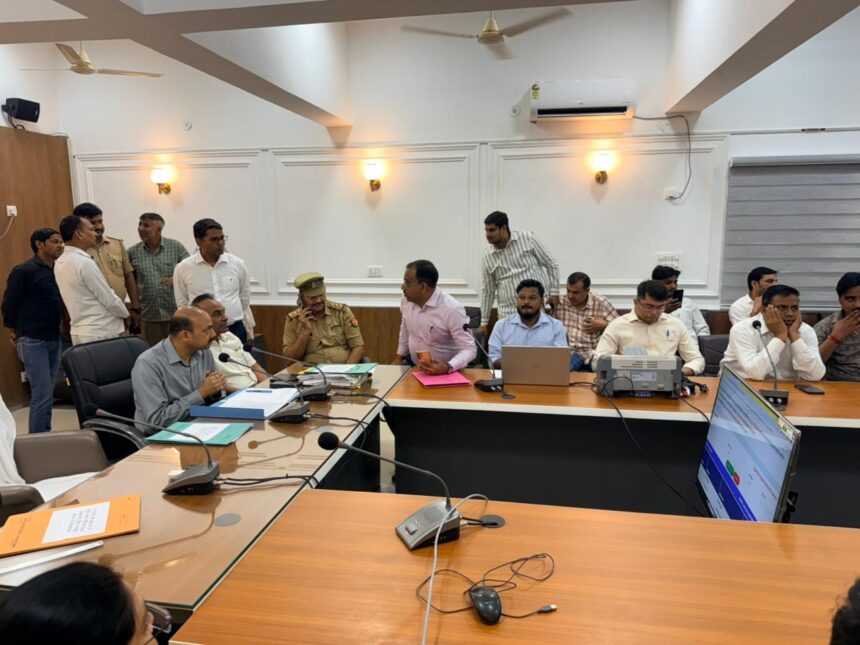
Gautam Buddh Nagar, April 9, 2026: The second phase of the e-lottery process under the Excise Policy 2026–27 was successfully conducted at the Collectorate auditorium, following the completion of the first phase. The exercise was carried out for the allocation of remaining and newly created liquor shops in the district through a transparent digital system under the supervision of the district-level selection committee.
As part of this phase, a total of 30 shops were allocated, including one remaining country liquor shop from the first phase, four model shops, 23 newly created country liquor shops as per the orders of the Excise Commissioner, and two composite shops. The entire process was conducted through an online e-lottery system, with live streaming displayed on LED screens at the Collectorate auditorium and premises to ensure complete transparency and public visibility.

High Participation Reflects Strong Demand
The e-lottery process witnessed an overwhelming response from applicants across categories. For the 24 country liquor shops, a total of 3,535 applications were received, indicating intense competition. Similarly, the two composite shops attracted 507 applications, while five applications were received for the four model shops.
In total, 4,047 applications were submitted for the 30 shops, highlighting significant interest in the excise retail sector in Gautam Buddh Nagar. Officials noted that the volume of applications received in the district was among the highest in the state, making the process notable in terms of participation and competitive bidding.
Revenue Generation of Nearly ₹28 Crore
The e-lottery process resulted in revenue generation of approximately ₹28 crore for the district administration. The significant financial outcome underscores the effectiveness of the policy framework and the transparency of the allocation mechanism.
Officials described the day as important from a revenue perspective, as the high number of applications directly contributed to increased earnings. The structured and technology-driven approach of the e-lottery system has played a key role in ensuring fairness while maximizing revenue potential.
Transparent and Digitally Driven Allocation Process
The allocation of shops was carried out in a fully transparent manner, with applicants able to witness the process live. The use of an online system minimized manual intervention and ensured impartial selection, strengthening confidence among participants.
The presence of a district-level selection committee and real-time display of results added to the credibility of the process. Authorities emphasized that maintaining transparency and accountability remains a top priority in such high-stakes allocations.
Officials and Departments Oversee Smooth Execution
The e-lottery process was conducted in the presence of senior officials, including Additional District Magistrate (Administration) Manglesh Dubey, District Excise Officer Subodh Kumar, Assistant Excise Commissioner nominated by the department, Ravi Shankar from Mohan Meakin Distillery Ghaziabad, along with representatives from the police department and all excise inspectors.
The coordinated efforts of various departments ensured that the process was completed smoothly and without any discrepancies. The administration reiterated its commitment to conducting such procedures with integrity and efficiency.
The successful completion of the second phase of the e-lottery marks a significant step in implementing the Excise Policy 2026–27 in Gautam Buddh Nagar, combining transparency, efficiency, and strong revenue outcomes.