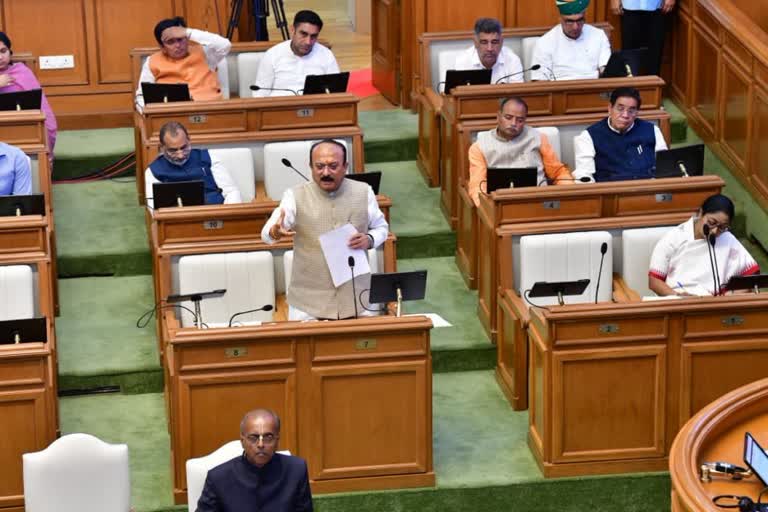
The Education Minister presented a detailed statement in the Delhi Assembly highlighting concerns raised in the CAG report regarding university governance, finances, and policy gaps.
27 March 2026, Delhi.
Delhi’s Higher Education Minister Ashish Sood delivered a detailed statement in the Assembly regarding the Comptroller and Auditor General report covering the functioning of Delhi Government universities between 2018 and 2023. He described the issue as a matter of serious public concern and thanked the Chair for the opportunity to present the facts before the people of Delhi. He began by drawing a political contrast, stating that instead of addressing core issues, opposition leaders often resort to what he termed a “victim card,” shifting focus away from accountability. He referred to recent public statements and political messaging, arguing that such approaches divert attention from governance failures that deserve scrutiny.
The Minister emphasized that criticism is inevitable when essential decisions and investments are delayed. He cited examples such as the failure to procure modern equipment even years after critical incidents and the lack of timely funding for government colleges. According to him, these shortcomings have directly impacted infrastructure development and student facilities. He stressed that raising such issues is part of responsible governance and cannot be dismissed as mere criticism. He also noted that accountability in public administration requires consistent questioning and transparency, regardless of whether one is in government or opposition.
*Concerns Over University Planning and Functioning*
In his address, the Minister highlighted structural and planning deficiencies in several universities established during the period under review. He stated that some institutions were created without adequate groundwork, resulting in operational inefficiencies and limited academic output. He pointed out that certain universities are functioning in constrained facilities, with extremely low student enrollment numbers. In some cases, he said, there is a lack of clarity regarding curriculum design, degree recognition, and faculty appointments, raising concerns about the long-term prospects of students enrolled in these institutions.
He also referred to the integration of polytechnic institutions into newer universities, stating that the transition has created uncertainty among students and faculty. Issues related to accreditation, course value, and administrative structure have led to dissatisfaction and protests, reflecting deeper systemic problems in planning and execution.
Financial Irregularities Highlighted in CAG Report
The Minister underscored that the findings mentioned are based on the report of the Comptroller and Auditor General of India, which identified serious financial irregularities and governance lapses. He stated that audited accounts of universities were not presented in the Assembly for several years, indicating a lack of financial transparency. The report also pointed to arbitrary appointments, misuse of funds, and diversion of resources meant for economically weaker section students. Additionally, scholarship funds were not utilized effectively, raising concerns about whether intended beneficiaries received adequate support.
He further highlighted that the report flagged long-standing issues such as the absence of a clear admission policy, lack of migration systems for students, and failure to update academic curricula for extended periods. These systemic gaps, he argued, have weakened the overall quality of higher education in the capital.
Government’s Response and Reform Measures
While outlining the shortcomings of the previous administration, the Minister also presented measures taken by the current government to address these challenges. He stated that between 2023 and 2025, scholarships worth ₹44 crore have been provided to 3,014 students from economically weaker sections. He highlighted initiatives under the “Campus to Market” vision aimed at promoting innovation and entrepreneurship among students, including financial support for startups.
He also mentioned that students have received significant opportunities in emerging sectors such as drone technology, including orders from defense-related projects. These developments, he said, reflect a shift toward practical learning and industry engagement, aligning education with real-world applications.
Call for PAC Review and Detailed Discussion
Concluding his statement, the Minister urged the Speaker to allow a detailed discussion on the CAG report and recommended that it be referred to the Public Accounts Committee for further examination. He stressed that such scrutiny is essential to uncover the full extent of irregularities and ensure accountability in the use of public funds.
He remarked that the report is already on the table of the House and deserves serious deliberation. According to him, the situation has transitioned from disorder to structured governance, from stagnation to development, and from mere publicity to tangible results. He reiterated that the government remains committed to transparency, reform, and delivering measurable outcomes in the higher education sector.