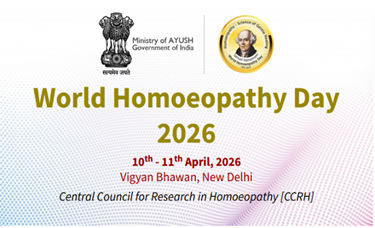
Homeopathy, a system of medicine founded by Samuel Hahnemann over two centuries ago, continues to hold a significant place in global healthcare discussions. Every year, World Homeopathy Day serves as an occasion to reflect on the evolution of this alternative system and its growing relevance in modern medicine. India, in particular, has emerged as a leading nation in institutionalizing homeopathy as a structured academic and professional discipline.
Professor (Dr) Kathika Chattopadhyay, Head of Psychiatry and Research and Development Cell at Bakson Homoeopathic Medical College and Hospital, emphasized that India has successfully transformed homeopathy from a traditional healing system into an organized educational framework. She noted that the journey of homeopathy from 19th-century Europe to India has been marked by widespread acceptance, primarily due to its cost-effectiveness and patient-centric approach. The foundational principle of “Similia Similibus Curentur,” meaning “like cures like,” continues to guide its therapeutic philosophy.
Structured Education and Policy Support Strengthen Homeopathy
In India, homeopathy education has evolved into a well-regulated system under the National Commission for Homoeopathy, offering degree programs such as BHMS, MD, and PhD. These programs aim to integrate traditional principles with modern scientific knowledge. Policy reforms and digital education initiatives have further strengthened this sector in recent years.
Under the guidance of the Ministry of AYUSH, efforts are being made to enhance clinical practice, promote community healthcare, and encourage evidence-based medicine. Compared to many countries where homeopathy is limited to short-term certification courses, India’s university-based model provides a comprehensive and standardized approach, setting it apart globally.
Dr Nisha Rani, Associate Professor of Pathology, highlighted the increasing integration of modern diagnostic tools with homeopathic treatment. She stated that laboratory investigations such as blood tests, urine analysis, and hormonal assessments play a crucial role in improving diagnostic accuracy and monitoring treatment outcomes. This integration is helping bridge the gap between traditional practices and modern medical science.
Integration with Modern Diagnostics Enhances Clinical Outcomes
The application of pathology in homeopathy has enabled more precise and individualized treatment strategies. For instance, anemia cases are managed through personalized remedies along with dietary improvements, while early detection of thyroid imbalances allows timely intervention. Similarly, accurate diagnosis of urinary tract infections and preventive care in prediabetes cases demonstrate the expanding scope of homeopathy in managing both acute and chronic conditions.
This integrative approach is also contributing to the adoption of evidence-based practices among students and practitioners. By combining clinical observation with diagnostic data, homeopathy is gradually aligning itself with contemporary healthcare standards.
Professor (Dr) Nimesh Kumar, Head of Community Medicine, noted that homeopathy remains relevant due to its affordability, accessibility, and minimal side effects. He pointed out that despite ongoing debates in modern science regarding its efficacy, continuous research and innovation are shaping its future.
Research, Technology, and Evidence-Based Evolution
Institutions such as the Central Council for Research in Homoeopathy are actively conducting studies to validate homeopathic treatments. The growing emphasis on evidence-based approaches, integrative medicine, and the use of artificial intelligence and data analytics is further modernizing the field.
These advancements aim to enhance the credibility and acceptance of homeopathy, both within India and internationally. The focus is increasingly shifting toward measurable outcomes, standardized protocols, and scientific validation.
Professor Dr Ashwini Nair, Head of Homoeopathic Materia Medica, discussed the role of homeopathy in surgical conditions, clarifying that it is not a substitute for surgery but can serve as an effective complementary therapy.
Supportive Role in Surgical and Chronic Care
Homeopathy is being used to support patients before and after surgical procedures. Pre-operative care focuses on reducing anxiety, minimizing bleeding risks, and strengthening immunity. Post-operative care includes pain management using remedies such as Hypericum and Staphysagria, along with wound healing support through medicines like Calendula and Arnica. It is also beneficial in managing post-anesthesia complications.
In certain non-emergency conditions such as kidney stones, piles, and tonsillitis, homeopathy may help in reducing symptoms and, in some cases, avoiding surgical intervention. However, experts clearly state that surgery remains essential in critical situations such as severe trauma, fractures, congenital abnormalities, and medical emergencies.
As India continues to strengthen its healthcare systems, the integration of homeopathy with modern scientific methods is shaping a more holistic and patient-centered model of care. The discussions on World Homeopathy Day 2026 reflect a broader shift toward combining traditional knowledge with scientific validation, ensuring that alternative systems of medicine evolve alongside advancements in modern healthcare.