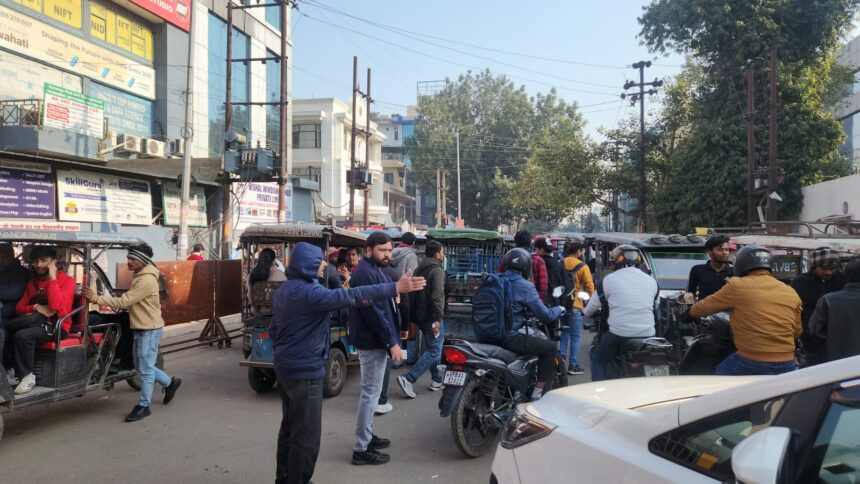
Noida: The situation outside Noida’s busy metro stations has become a daily ordeal for commuters, with disorder and congestion replacing what should be smooth last-mile connectivity. As soon as passengers step out of metro stations, they are confronted with traffic jams, unruly e-rickshaws, and complete lack of traffic discipline. During peak office hours, the unchecked movement and random parking of e-rickshaws turn station exits into zones of chaos. What was once a matter of inconvenience has now grown into a serious safety concern.

Peak Hours Witness the Worst Conditions
The situation is at its worst between 8:30 am and 10:30 am in the morning and from 5:30 pm to 8:30 pm in the evening. During these hours, e-rickshaw drivers stop anywhere on the road, block lanes without warning, and aggressively compete for passengers. Pedestrians struggle to find space to walk, while cars, buses, and two-wheelers remain stuck in long traffic snarls, often stretching far beyond station limits.
Rules Exist on Paper, Not on the Ground
Although traffic regulations and designated e-rickshaw stands exist officially, the ground reality tells a completely different story. A large number of e-rickshaw drivers operate without visible identity cards or valid permits and openly violate lane discipline and one-way rules. Traffic police presence is irregular and largely ineffective, allowing the situation to worsen day by day due to lack of consistent enforcement.
Commuters Voice Daily Frustration
Regular metro users, especially office-goers, say they lose nearly 20 to 30 minutes every day just trying to exit the station area. Women commuters report feeling unsafe amid speeding e-rickshaws and frequent pushing during rush hours. Elderly passengers and parents traveling with children also express constant fear of accidents, calling the station exits “danger zones” rather than public transport facilities.
Emergency Services at Risk
One of the most alarming aspects of the situation is the difficulty faced by emergency vehicles. Ambulances and fire tenders often find it nearly impossible to pass through these congested roads. In the event of a medical or fire emergency, such delays could prove fatal, raising serious questions about public safety and disaster preparedness.
Environmental Impact and Damage to City Image
Prolonged traffic jams result in vehicles idling for long durations, increasing air pollution and fuel wastage. The chaos also affects nearby shops, offices, and commercial establishments. Moreover, the disorder undermines Noida’s image as a modern and well-planned city, leaving visitors and residents alike disappointed with the state of civic management.
What Needs to Be Done
Commuters and local residents believe that immediate corrective measures are essential. These include permanent deployment of traffic police during peak hours, creation of designated e-rickshaw stands at a safe distance from metro station exits, strict action against illegal and unregistered e-rickshaws, mandatory display of identity cards and permits, and separate barricaded pathways for pedestrians to ensure their safety.
Appeal to the Administration
Noida is a rapidly developing urban center, and its citizens deserve an efficient and secure transport system. The ongoing chaos outside metro stations reflects administrative neglect at critical public transit points. The time has come for firm and long-term action rather than temporary assurances. Only strict enforcement and proper planning can provide relief to daily commuters and help restore order and dignity to the city’s public transport infrastructure.