Uttar Pradesh Chief Minister Yogi Adityanath inaugurated the 300-bed KDSG Super Speciality Hospital in Greater Noida (West), strengthening healthcare infrastructure in the National Capital Region. The state-of-the-art hospital aims to provide affordable, accessible and high-quality medical services while also generating employment opportunities for nearly 1,000 people.
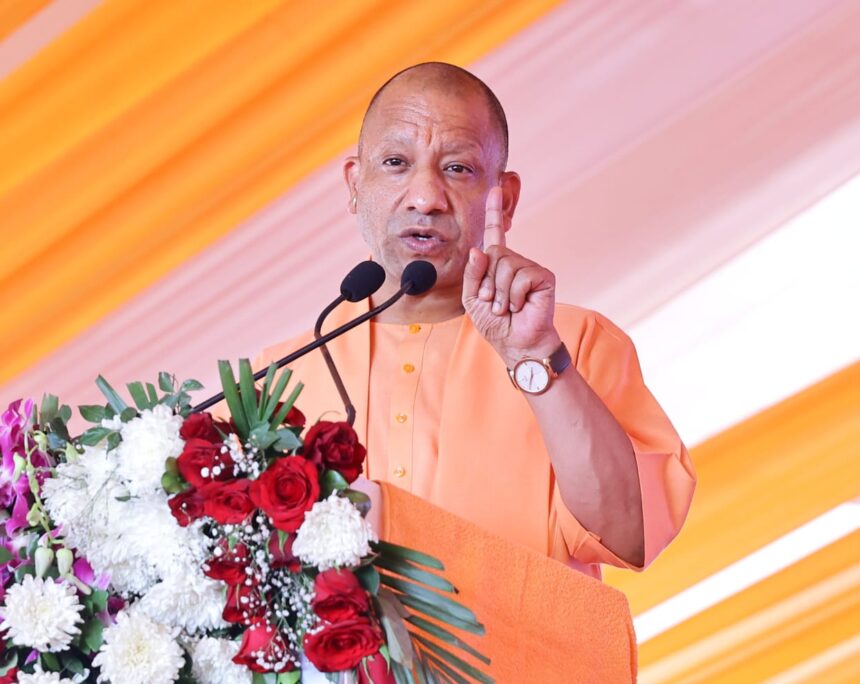
Uttar Pradesh Chief Minister Yogi Adityanath on Thursday inaugurated the 300-bed KDSG Super Speciality Hospital in Sector-10, Greater Noida (West) by formally cutting the ribbon. The hospital is designed to provide full-spectrum tertiary care services and marks an important step towards strengthening healthcare infrastructure in the National Capital Region and expanding high-quality healthcare services in rapidly developing urban areas.

During the visit, the Chief Minister reviewed the advanced medical facilities available at the hospital. The hospital has been established by Kapil Dev, captain of India’s 1983 World Cup-winning cricket team, along with industrialist Sunil Kumar Gupta.
Addressing the gathering, the Chief Minister congratulated Kapil Dev and Sunil Kumar Gupta along with their entire group for establishing the super speciality hospital. He said that the establishment of this advanced healthcare facility in Greater Noida will not only benefit residents of Gautam Buddh Nagar district but will also provide improved healthcare access to people from surrounding districts and the entire NCR region.

The Chief Minister said that under the leadership of Prime Minister Narendra Modi, several important initiatives have been launched to strengthen the healthcare sector in India. Through the Ayushman Bharat scheme, health security is being provided to millions of poor and needy families across the country. Currently, more than 60 crore people are benefiting from the scheme, with Uttar Pradesh emerging as a leading state in its implementation.
He noted that more than 5 crore 60 lakh Ayushman Bharat Golden Cards have already been issued in Uttar Pradesh. Eligible individuals can receive treatment under the scheme at any empanelled government or private hospital.
The Chief Minister emphasized that healthcare should not be defined solely by modern infrastructure but by services that are affordable, accessible and trustworthy. He said patients should receive proper treatment without any irregularities or exploitation and should be able to trust doctors and hospitals.
He added that when a patient approaches a doctor, they do so with trust. The behavior, advice and conduct of a doctor significantly influence a patient’s morale. Often, a doctor’s compassionate approach itself helps reduce a patient’s illness. Healthcare services, he said, involve both medicine and blessings—when doctors serve with dedication, they receive the goodwill and prayers of patients.

Yogi Adityanath further stated that significant changes have taken place in India’s healthcare sector since 2014 under the leadership of Prime Minister Narendra Modi. Until 2014, only six AIIMS institutions were operational in the country, while today 23 AIIMS and world-class medical institutions are functioning nationwide.
He also highlighted the rapid transformation in Uttar Pradesh’s healthcare infrastructure. Before 2017, the state had only 17 government medical colleges. Today, the goal of “One District–One Medical College” is close to being achieved, and currently 81 medical colleges are operational in the state.
The Chief Minister said that if the KDSG Group wishes to expand into the medical education sector in the future by establishing a medical college, the state government would welcome the initiative as it would help produce more medical professionals and enhance healthcare services for local residents.
He also noted that the hospital will serve as a significant source of employment. The 300-bed facility is expected to generate direct and indirect employment opportunities for at least 1,000 people, including doctors, nursing staff, technicians and other personnel.
The Chief Minister stated that in addition to Ayushman Bharat, the state government has extended cashless medical treatment up to ₹5 lakh to teachers of basic, secondary and higher education institutions, instructors, Anganwadi workers, ASHA workers, Shiksha Mitras and cooks working under the Basic Education Council.
He added that individuals who are not covered under Ayushman Bharat or other government schemes can receive financial assistance through the Chief Minister’s Relief Fund. Over the past year, approximately ₹1,300 crore has been provided from the Relief Fund to support patients receiving treatment in hospitals across the state.

The Chief Minister said Uttar Pradesh is moving rapidly towards a new phase of development. Once a state that struggled for recognition, Uttar Pradesh is now emerging as a growth engine of the country’s economy.
He highlighted that the Noida International Airport at Jewar will soon begin operations and will be the largest airport in India. The region is also witnessing the development of major industrial projects including mobile manufacturing units and a medical device park.
According to him, the entire region is rapidly emerging as a hub of new development opportunities and is gaining recognition as one of the areas with the highest per capita income in the country.
The Chief Minister assured the KDSG Group and all investors associated with the project that the Uttar Pradesh government will extend full support in every sector, including education, healthcare and initiatives aimed at strengthening India’s path toward self-reliance.
Kapil Dev said the establishment of KDSG is based on the belief that healthcare services should be ethical, accessible and fully patient-centric. He noted that Greater Noida needed an institution guided by such values and expressed pride in making this vision a reality.
The hospital is among the most advanced super speciality healthcare facilities in Greater Noida. It includes state-of-the-art modular operation theatres, multi-speciality ICUs, a fully equipped catheterization laboratory, a dedicated emergency and trauma centre, and advanced diagnostic facilities in radiology, pathology and nuclear medicine.
The hospital will provide specialized services in cardiology and cardiac sciences, oncology, neurology and neurosurgery, orthopedics and joint replacement, gastroenterology, critical care medicine, emergency and trauma care, pulmonology, nephrology and pediatrics.
The hospital will be operated by Ajeenkya DY Patil Healthcare, a specialist healthcare division led by Dr Ajeenkya DY Patil. With four decades of institutional experience, a strong clinical governance framework and an organized operational system, the group will manage hospital operations to ensure adherence to its core principles.
Among those present at the event were district in-charge minister Brijesh Singh, Member of Parliament Dr Mahesh Sharma, District Panchayat Chairman Amit Chaudhary, MLA Dadri Tejpal Nagar, MLA Jewar Dhirendra Singh, Legislative Council Member Narendra Bhati, Shrichand Sharma, BJP Regional President Satendra Sisodia, BJP District President Abhishek Sharma, BJP Metropolitan President Mahesh Chauhan, along with senior officials from the police, district administration and development authorities. Doctors and representatives from Ajeenkya DY Patil Healthcare, including Dr Ajeenkya DY Patil and hospital management officials, were also present.