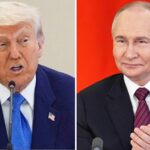
As global tensions escalate over trade and diplomacy, India finds itself in the crosshairs of Donald Trump’s renewed pressure campaign. Amid threats of hefty tariffs and accusations over Russian oil imports, Indian External Affairs Minister Dr. S. Jaishankar has called for a more just and multipolar world order, one that is not controlled by a select few. His remarks come as the United States imposes new trade penalties on India, citing its ties with Moscow, sparking concerns of a deepening trade conflict between two major democracies.
A Call for Multipolarity in a Fractured Global Climate
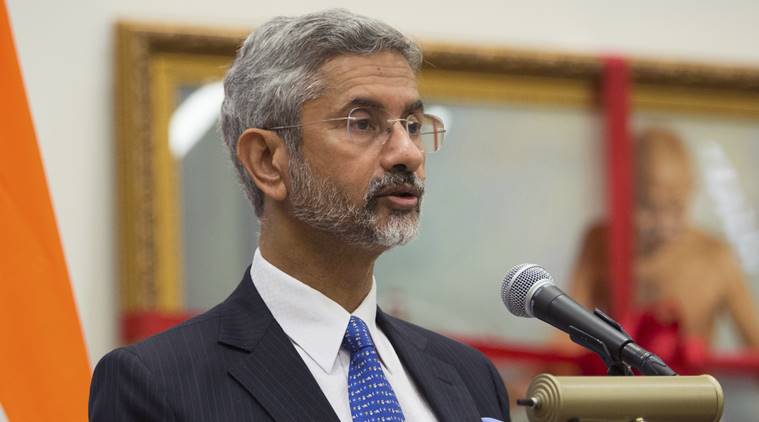
In a strongly worded statement during his address at the BIMSTEC Traditional Music Festival held in New Delhi, Dr. S. Jaishankar emphasized the importance of creating a fair and representative international system. “We live in complicated and uncertain times,” he noted, urging nations to build a balanced global order that isn’t dominated by the narrow interests of powerful states. Stressing the value of traditions and identity in shaping the future, Dr. S. Jaishankar’s remarks were clearly aimed at countering growing American unilateralism under the Donald Trump administration.
While he didn’t name the US directly, the timing and tone of his speech make it evident that the statement was a diplomatic response to President Donald Trump’s latest trade maneuvers. Donald Trump recently announced a steep increase in tariffs on Indian goods entering the US, blaming India for continuing to buy “massive amounts” of discounted Russian crude oil. He also accused India of reselling the oil on global markets for profit, a claim that was strongly rejected by Indian authorities.
This is not the first time Dr. S. Jaishankar has spoken in favor of a multipolar world. However, this particular instance marks a critical moment, as India now faces a multi-layered challenge—managing its energy security, safeguarding trade interests, and maintaining diplomatic autonomy, all while navigating the unpredictable waves of American foreign policy under Donald Trump.
Donald Trump’s Tariff Bombshell and India’s Firm Rebuttal
President Donald Trump’s decision to raise tariffs on Indian imports by 25% came as a major shock to New Delhi. The announcement, which was accompanied by a veiled penalty for India’s continued procurement of Russian defense and energy supplies, triggered immediate diplomatic and economic reactions in India.
Calling the move “unjustified and unreasonable,” the Indian government wasted no time in delivering a firm rebuttal. The Ministry of External Affairs emphasized that India’s oil purchases from Russia were purely driven by commercial and practical needs in light of global market volatility. They highlighted that these imports are not a political gesture or endorsement of Russia’s actions, especially in the context of the Ukraine conflict.
India further pointed out the glaring double standards in the Western narrative. Despite their public stance against Russia, both the US and the European Union continue to engage in significant trade with Moscow. The Indian government revealed that the EU alone traded over €67.5 billion in goods and €17.2 billion in services with Russia—figures that far surpass India’s commercial engagement.
India also criticized the United States for maintaining energy imports from Russia, specifically uranium hexafluoride used in its nuclear industry. These revelations were made to highlight that India is not alone in its engagement with Russia, nor should it be singled out for its pragmatic approach to energy security.
The Ministry stressed that India will take all necessary steps to defend its national interests and economic sovereignty. In light of the current geopolitical environment, it reiterated that Indian policy decisions are guided by strategic autonomy and grounded in national interest—not external pressure.
The Donald Trump administration’s aggressive trade stance reflects a larger pattern of using economic tools to secure foreign policy outcomes. Since returning to the White House, Donald Trump has doubled down on tariff diplomacy, especially in regions where he perceives resistance to American-led global frameworks. His threat to punish countries that defy US expectations on Russia is a continuation of that strategy.
India, however, appears to be drawing a red line. The Indian government’s response signals a willingness to confront economic coercion, particularly when it clashes with the nation’s long-term policy choices. New Delhi has repeatedly emphasized that it does not take orders on foreign policy decisions, especially when those orders threaten to undermine its own economic resilience.
Dr. S. Jaishankar’s comments at the BIMSTEC forum were thus more than symbolic—they were a clear articulation of India’s vision for the world. It is a vision rooted in balance, fairness, and respect for diversity, one that prioritizes sovereign decision-making over dictated compliance. In the current global climate, where alliances are shifting and economic warfare is becoming the norm, India’s position stands out as both assertive and pragmatic.
At a time when global trade norms are being rewritten and diplomatic relationships are being tested by political ambitions, India is signaling that it will not be passive. Whether the issue is energy security, trade policy, or international alignments, India is positioning itself as a key voice of reason in a rapidly polarizing world.