Tensions between India and the United States escalated this week after US President Donald Trump accused New Delhi of profiting from Russian oil and threatened to impose new tariffs on Indian goods. In a sharp rebuttal, India called out the West’s double standards and strongly defended its energy trade policies, with senior BJP leader Baijayant Panda invoking a famous Henry Kissinger quote to highlight the risks of being an ally of the US.
US President Donald Trump, in a fiery post on Truth Social, expressed his frustration with India’s ongoing oil trade with Russia. He alleged that not only was India purchasing massive quantities of oil from Russia, but also reselling it in international markets at a profit. Donald Trump claimed that India seemed indifferent to the destruction caused by the “Russian war machine” in Ukraine, suggesting that such actions warranted a strong response, including trade penalties.
India pushes back against Donald Trump’s accusations
The Indian government responded swiftly and strongly to Donald Trump’s remarks. In an unusually pointed statement, New Delhi described the criticism as “unjustified and unreasonable,” stating that its energy trade with Russia was a matter of national interest driven by practical considerations, not politics. The Indian government emphasized that ensuring affordable and predictable energy costs for its citizens was a key priority amid global uncertainty.
India underlined that its oil imports from Russia were necessary to stabilize domestic markets and protect consumers from fluctuating global prices. The government added that while India was being singled out, the same Western countries raising objections were themselves continuing trade relations with Moscow—a clear case of hypocrisy, in India’s view.
“India’s imports are meant to ensure predictable and affordable energy costs to the Indian consumer. They are a necessity compelled by global market situation. However, it is revealing that the very nations criticising India are themselves indulging in trade with Russia. Unlike our case, such trade is not even a vital national compulsion,” the Indian statement noted.
Baijayant Panda invokes Kissinger to reflect growing scepticism
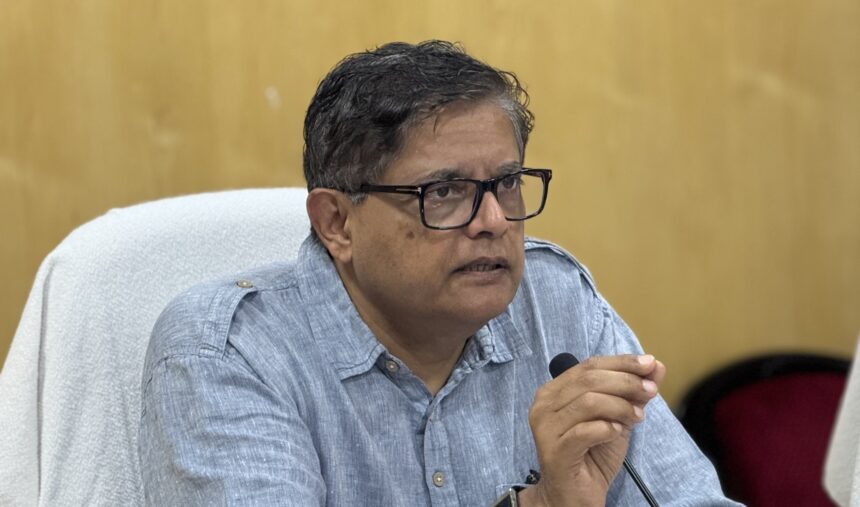
Senior BJP leader Baijayant Panda weighed in on the matter by sharing a historically charged quote from former US Secretary of State Henry Kissinger: “To be an enemy of America can be dangerous, but to be a friend is fatal.”
The statement was widely interpreted as a reflection of India’s frustration with the unpredictability of US foreign policy, particularly under Donald Trump, who has often taken a transactional approach to international relations. By invoking Kissinger, Panda signaled that India’s strategic alignment with the US should not be mistaken for blind allegiance, especially when national interests are at stake.
The comment also resonated in Indian political circles and among foreign policy experts, many of whom have long expressed concerns about overdependence on the United States. Panda’s message was seen as a reminder that while India values its partnership with Washington, it will not compromise on sovereign decisions regarding energy security or foreign policy.
The timing of these tensions is critical. With elections looming in both countries, Donald Trump’s rhetoric may be aimed more at domestic audiences than international diplomacy. However, India’s assertive response reflects a broader trend of New Delhi pursuing a more independent foreign policy, especially in the wake of the Russia-Ukraine conflict and the reshaping of global alliances.
India has consistently maintained a neutral stance on the Ukraine war, calling for dialogue and diplomacy while continuing its strategic and economic relations with Russia. This balanced approach, while appreciated in some quarters, has also drawn criticism from the West. But New Delhi has remained firm, arguing that its decisions are based on national interest, not ideological alignment.
While Donald Trump’s comments were made in his personal capacity as a former president, they still carry weight given his continued influence over American political discourse. If he were to return to office, such positions could translate into actual policy changes. That possibility underscores the importance of India asserting its stance now, rather than waiting for the political winds in Washington to shift further.
In recent years, India and the US have strengthened ties in several areas, including defense, technology, and trade. However, the friction over oil imports from Russia is a reminder that the relationship is not without its challenges. As global power dynamics evolve, India appears determined to chart its own course, even if that means occasionally locking horns with its strategic partners.
The episode also highlights a broader debate about the global order and energy security. Developing nations like India are increasingly pushing back against what they perceive as Western hypocrisy—expecting emerging economies to make sacrifices while continuing their own pragmatic dealings with countries like Russia.
Ultimately, India’s message is clear: it will not be pressured into policy changes that do not align with its national priorities. Whether it’s trade, energy, or foreign alliances, New Delhi is asserting a more confident, self-reliant voice on the global stage—even if it means pushing back against long-time partners like the United States.