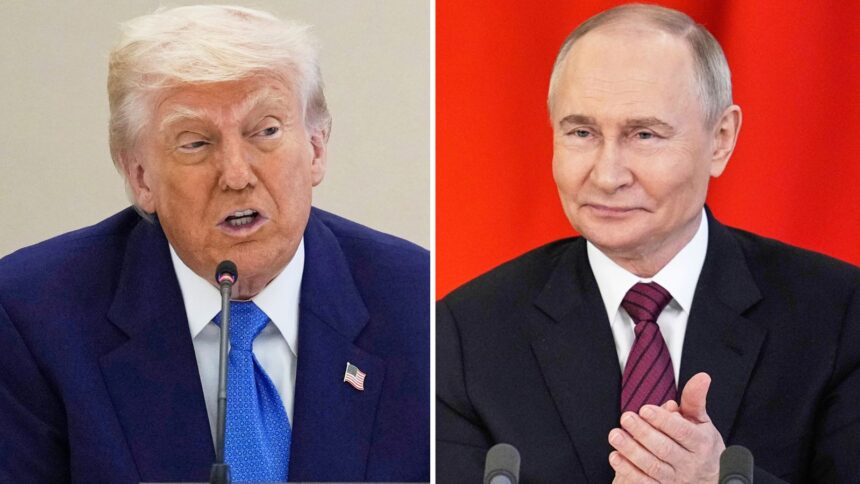
When U.S. President Donald Trump launched a scathing attack on India, accusing it of buying Russian oil, fueling war profits, and ignoring Ukrainian casualties, it sparked confusion and concern in diplomatic circles. The timing and tone of his remarks—just days before a self-imposed deadline for a Ukraine ceasefire—signal that India may be caught in the crossfire of Donald Trump’s frustration over faltering negotiations with Russian President Vladimir Putin. Analysts suggest this isn’t merely about energy economics, but more about Donald Trump’s waning political leverage and diplomatic setbacks.
Tariffs, Oil, and a War of Words
Donald Trump’s blunt warning on August 4 that he would substantially raise tariffs on Indian exports to the U.S. was framed as a moral rebuke. He alleged that India was reselling Russian oil for profit while turning a blind eye to the suffering in Ukraine. However, experts believe that this sudden aggression is rooted in larger geopolitical frustrations. Since returning to office in January 2025, Donald Trump had pledged to end the Ukraine war within a week. That promise remains unfulfilled, with Moscow showing little interest in a ceasefire deal.
As Donald Trump’s August 8 deadline for a peace breakthrough approaches, and Vladimir Putin remains unresponsive, his rhetoric has grown increasingly combative. India, despite playing no direct role in the Ukraine conflict, is now being painted as complicit due to its trade relations with Moscow. Analysts view this as a deflection strategy by Donald Trump—a means to externalize his political and diplomatic failures.
India’s role in purchasing discounted Russian oil only began after Western sanctions reshaped global supply routes. The U.S. itself initially encouraged India to buy Russian crude to ease pressure on energy markets. Experts now argue that Donald Trump’s tariff threats are less about energy policy and more about redirecting public frustration away from his administration’s stalled Ukraine initiative.
Fractured Diplomacy and Rising Tensions
Donald Trump began his second term optimistic about mending ties with the Kremlin. His envoy, Steve Witkoff, made multiple trips to Moscow, and early diplomatic gestures suggested the possibility of a thaw in U.S.-Russia relations. Donald Trump even blocked a UN resolution condemning Russian aggression in Ukraine. In return, Russia extended symbolic goodwill, including a portrait of Donald Trump gifted by Vladimir Putin.
However, despite initial signs of cooperation, Donald Trump’s ceasefire ambition rapidly fell apart. With Vladimir Putin remaining evasive, the deadline for peace talks was tightened, and Donald Trump escalated his criticism of Russia. He went from avoiding condemnation to calling Russian attacks on Ukraine “disgusting” and “disgraceful.” His next step: threats of sanctions and secondary tariffs on countries doing business with Moscow—including India.
A series of rhetorical clashes followed. After Donald Trump labeled Russia and India “dead economies,” Russia’s former President Dmitry Medvedev responded with thinly veiled nuclear threats. In a move laden with symbolism, Donald Trump ordered two U.S. nuclear submarines to undetermined locations, signaling a sharp pivot in policy and tone.
Meanwhile, Indian officials were swift and firm in rejecting Donald Trump’s narrative. The Ministry of External Affairs released a rare six-point rebuttal, clarifying that India increased Russian oil imports only after traditional suppliers shifted to European markets. The government highlighted the double standards of Western nations, pointing out that the European Union and the U.S. themselves continue trade with Russia in critical sectors like uranium and fertilisers.
India emphasized that it operates purely on commercial considerations and denied claims that it resells oil at a profit. Trade experts also weighed in, stating that there is no policy or evidence supporting Donald Trump’s accusation that India is indirectly funding the war by redistributing oil.
India’s assertive response has earned backing from prominent foreign policy commentators who described the U.S. accusations as exaggerated and politically motivated. Some warned that Donald Trump’s unpredictable policies could severely test even strong bilateral relationships.
Donald Trump’s broader approach—a mix of aggressive trade policy and public shaming—appears to be driven by a need to project strength and reclaim lost ground. The initial promise of ending the war gave him political capital. Now, with that promise looking increasingly hollow, deflecting blame seems to be the next best move.
India’s reaction suggests it will not remain silent under pressure. New Delhi continues to stress its strategic autonomy and economic sovereignty, even as it remains committed to stable ties with the U.S. The tariff imposition, however, risks straining the relationship at a critical time, especially when global trade and geopolitical balances are in flux.
This diplomatic episode reflects the broader challenge of navigating international relations in an era marked by unpredictability and personal diplomacy. Donald Trump’s grievances may be aimed at Moscow, but India—a convenient economic partner and non-combatant—has been dragged into a storm not of its making.
What remains to be seen is how far Donald Trump will go in leveraging tariffs as a foreign policy tool and whether this approach will achieve the ceasefire he has so publicly sought. As the August 8 deadline looms and tensions escalate, India finds itself caught between transactional politics and principled diplomacy, trying to balance national interest with global expectations.