New Delhi, December 24, 2025:
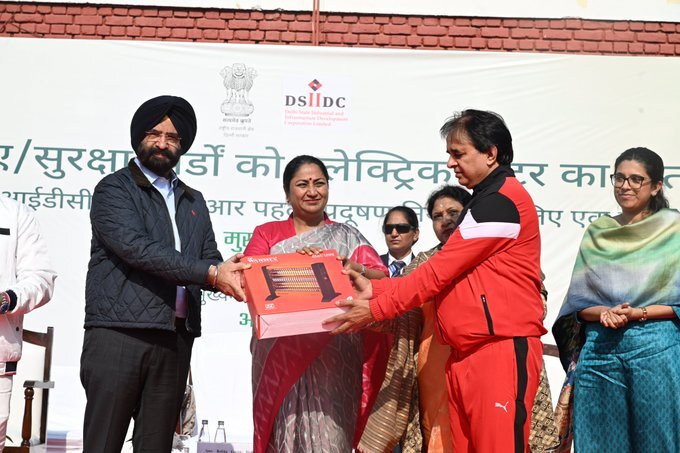
As part of the Delhi Government’s intensified winter relief and pollution control measures, Health and Transport Minister Dr. Pankaj Kumar Singh on Tuesday distributed 100 electric heaters to Residents’ Welfare Associations (RWAs) in Vikaspuri. The initiative aims to protect vulnerable sections of society during the harsh winter months while simultaneously reducing air pollution caused by the burning of coal and wood.
The distribution was carried out at the minister’s camp office in Vikaspuri and is part of a larger citywide programme under which 10,000 electric heaters are being provided to RWAs across Delhi. These heaters are intended primarily for use by security guards and other frontline workers who spend long hours outdoors, particularly during winter nights.
The initiative is aligned with the winter action plan of the Rekha Gupta-led Delhi Government, which focuses on combining welfare measures with environmental protection. By promoting the use of electric heaters, the government aims to discourage the practice of open burning of coal, wood, and other biomass fuels, which significantly contribute to localised air pollution during winter.
Officials said the distribution drive reflects a dual-purpose strategy—providing immediate relief to those exposed to extreme cold while addressing one of the root causes of winter pollution. Access to safe and clean heating alternatives is expected to improve neighbourhood air quality and reduce health risks associated with both cold exposure and polluted air.
The citywide heater distribution programme was formally launched earlier by Delhi Chief Minister Rekha Gupta, who handed over electric heaters to RWAs, marking a key step in the government’s people-centric approach to winter preparedness and pollution mitigation. Under the programme, RWAs are being encouraged to ensure that security personnel and other needy individuals do not resort to burning firewood or coal for warmth.
Speaking on the occasion, Dr. Pankaj Kumar Singh said the initiative reflects the government’s commitment to safeguarding frontline workers while promoting cleaner environmental practices. “Our winter strategy focuses on protecting the health and dignity of those who work tirelessly to keep our neighbourhoods safe. By providing electric heaters, we are offering a humane, practical and environmentally responsible solution that also helps curb pollution,” he said.
The minister added that pollution control cannot rely solely on enforcement measures and requires people-friendly interventions that provide viable alternatives. He said clean technology, public participation, and strong on-ground implementation form the foundation of Delhi’s pollution control strategy.
In addition to the heater distribution, Dr. Pankaj Kumar Singh also held a Jan Samvad at the Vikaspuri camp office. Residents from different parts of the assembly constituency attended the public interaction programme and raised issues related to civic amenities, healthcare services, transport, and local infrastructure.
During the Jan Samvad, the minister patiently listened to the concerns and suggestions of citizens and issued immediate directions to concerned departments and officials for swift resolution of issues. Officials present at the camp office were instructed to ensure timely follow-up and accountability in addressing public grievances.
Dr. Singh emphasised that direct engagement with citizens is a crucial component of responsive governance. He said Jan Samvad programmes allow the government to understand ground-level challenges and ensure that administrative solutions reach people without unnecessary delays.
“Our approach is rooted in public participation and transparency. Whether it is healthcare, transport, winter relief or pollution control, we believe solutions must be practical and accessible. Strong coordination between departments and active citizen involvement are essential for effective governance,” the minister said.
The Delhi Government has been implementing a range of winter-specific measures to combat pollution, including intensified monitoring, restrictions on open burning, deployment of enforcement teams, and promotion of cleaner alternatives. The distribution of electric heaters is being seen as a significant step toward reducing local pollution hotspots while extending support to those most affected by cold weather.
Officials said the initiative is expected to benefit thousands of security guards and other workers across the capital and contribute to improved air quality in residential areas. The government has reiterated that similar welfare-linked environmental measures will continue in the coming weeks as part of its broader strategy to ensure a healthier and more resilient Delhi during the winter season.