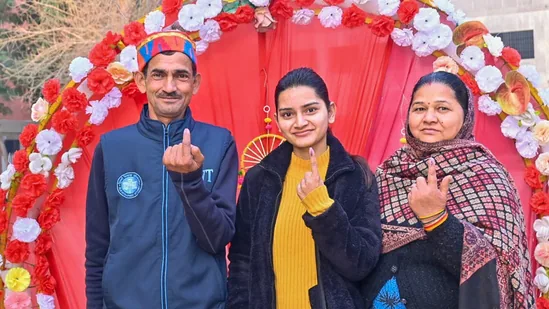
As voting commenced for the high-stakes Delhi Assembly elections on Wednesday morning, several prominent political leaders were among the early voters, setting the stage for an intense electoral battle in the national capital.
Union ministers S Jaishankar and Hardeep Singh Puri, along with Congress leader Rahul Gandhi, were among the first to cast their votes as polling stations opened at 7 am. Their participation marked the beginning of a crucial electoral exercise that will decide the political fate of Delhi for the next five years.
Former Delhi deputy chief minister and senior Aam Aadmi Party (AAP) leader Manish Sisodia also exercised his franchise early in the day, reflecting the enthusiasm among party members and leaders. Delhi BJP president Virendra Sachdeva, Delhi Police Commissioner Sanjay Arora, and Delhi Chief Electoral Officer R Alice Vaz were also seen casting their votes in the initial hours of polling.
Several key candidates from the three major political parties—AAP, BJP, and Congress—joined the early wave of voters. AAP’s Greater Kailash candidate Saurabh Bharadwaj, BJP’s Karawal Nagar candidate Kapil Mishra, Congress’ New Delhi candidate Sandeep Dikshit, and Kalkaji candidate Alka Lamba were among those who arrived at their respective polling stations soon after voting commenced. Their presence underscored the importance of this election, as each constituency is expected to witness a closely contested fight.
The 2025 Delhi Assembly election is shaping up to be a triangular contest between the ruling AAP, the Bharatiya Janata Party (BJP), and the Congress. AAP, which has been in power since 2015, is eyeing a third consecutive term, banking on its governance record and welfare schemes. Meanwhile, the BJP, which has been out of power in Delhi for over 25 years, is making an aggressive push to reclaim the capital. The Congress, once the dominant force in Delhi politics under Sheila Dikshit’s leadership, is aiming for a political comeback after failing to win a single seat in the last two assembly elections.
With approximately 1.56 crore eligible voters, the election is expected to witness significant participation, determining the future political landscape of Delhi. Polling is being conducted across 13,766 stations in all 70 assembly constituencies, with tight security arrangements in place to ensure smooth voting.
As the day progresses, voter turnout trends will be closely monitored, with political analysts keeping a keen eye on how Delhiites respond to the electoral contest. The results of the election, which will be declared on February 8, are expected to have a major impact on the national political discourse, especially with the 2024 Lok Sabha elections approaching.