New Delhi, December 24, 2025:
In a significant move aimed at ensuring transparency, accountability, and fairness in private school fee determination, the Delhi Government has implemented a new legal framework to regulate school fees across the capital. Education Minister Ashish Sood announced that the Delhi School Education (Transparency in Fixation and Regulation of Fees) Act, 2025, along with its accompanying rules, will be effectively implemented from the academic session 2025–26.
Under the new law, a structured and time-bound mechanism has been introduced through the mandatory formation of two committees—the School Level Fee Regulation Committee (SLFRC) and the District Level Fee Appellate Committee (DLFRC). These bodies will play a central role in examining, approving, and adjudicating matters related to private school fee proposals, with the objective of safeguarding the interests of students and parents while ensuring institutional stability for schools.
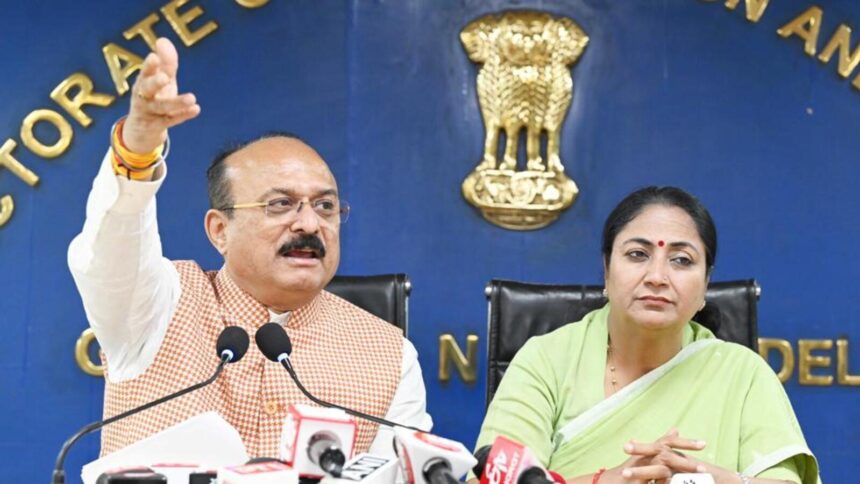
Addressing a press conference at the Delhi Secretariat, Education Minister Ashish Sood said the new legislation has been designed as a complementary framework to the Delhi School Education Act, 1973. He stated that while the earlier law governed school education broadly, there was a long-standing need for a dedicated and transparent system to regulate private school fees, which the new Act aims to fulfil.
The Education Minister said the law has been enacted after extensive consultations and deliberations and reflects the education vision of Prime Minister Narendra Modi and the leadership of Chief Minister Rekha Gupta. He added that despite being in office for a limited period, the government has prioritised education reforms to bring clarity and confidence to parents and school managements alike.
As per the provisions of the Act, every private school in Delhi will be required to constitute its SLFRC by January 10, 2026. The committee will consist of the school management as chairperson, the school principal, three teachers, five parents, and one representative from the Directorate of Education. To ensure fairness and transparency, members of the committee will be selected through a lottery system conducted under official supervision, with a designated observer overseeing the process.
Explaining the functioning of the SLFRC, Sood said the committee will examine the fee structure proposed by the school and take a decision within a stipulated period of 30 days. He noted that earlier, schools were permitted to submit fee proposals until April 1. However, under the new law, schools must submit their proposed fee structure to the SLFRC by January 25, 2026, ensuring timely decision-making well before the commencement of the academic session.
The Education Minister further stated that if the SLFRC fails to take a decision within the prescribed time frame, the matter will automatically be referred to the District Level Fee Appellate Committee (DLFRC). The DLFRC will function as an independent appellate authority empowered to hear appeals, adjudicate disputes, and issue binding decisions related to school fees. This mechanism, he said, provides parents with an institutional and impartial platform to address grievances without prolonged uncertainty.
Sood emphasised that the new framework has been carefully designed to eliminate arbitrariness at every level. “There will be no scope for unilateral decisions or lack of accountability. Every decision will be rule-based, transparent, and subject to oversight,” he said.
Rejecting the notion of confrontation between the government and private schools, the Education Minister said the Delhi Government believes in resolution, not conflict. He pointed out that nearly 37–38 lakh students are currently enrolled in schools across Delhi, and every child’s interest is equally important. The law, he clarified, is neither anti-school nor anti-teacher, but is intended to create a balanced, transparent, and predictable system that benefits all stakeholders.
The Education Minister also said that the new legislation addresses long-standing uncertainties faced by parents, particularly regarding annual fee hikes. Questions such as “what will happen to fees this year” will now have a structured and permanent resolution through the committee-based system. He reiterated that the government will not allow exploitation of parents under any circumstances, while also providing schools with a clear and lawful framework for financial planning and administration.
Concluding his address, Sood said the formation of SLFRC and DLFRC marks the beginning of a new era in school fee regulation in Delhi. With transparency, participation, and time-bound decision-making at its core, the new system aims to restore trust, reduce disputes, and ensure that education remains accessible, fair, and student-centric across the national capital.