30 March 2026, New Delhi.
The Delhi Legislative Assembly Secretariat has announced the successful conclusion of the second part of the Fourth Session of the Eighth Legislative Assembly, marking significant legislative and financial developments. According to the official statement, the session, held between 23 March and 27 March 2026, comprised four sittings and recorded a total working duration of 15 hours and 16 minutes, reflecting structured and result-oriented proceedings.
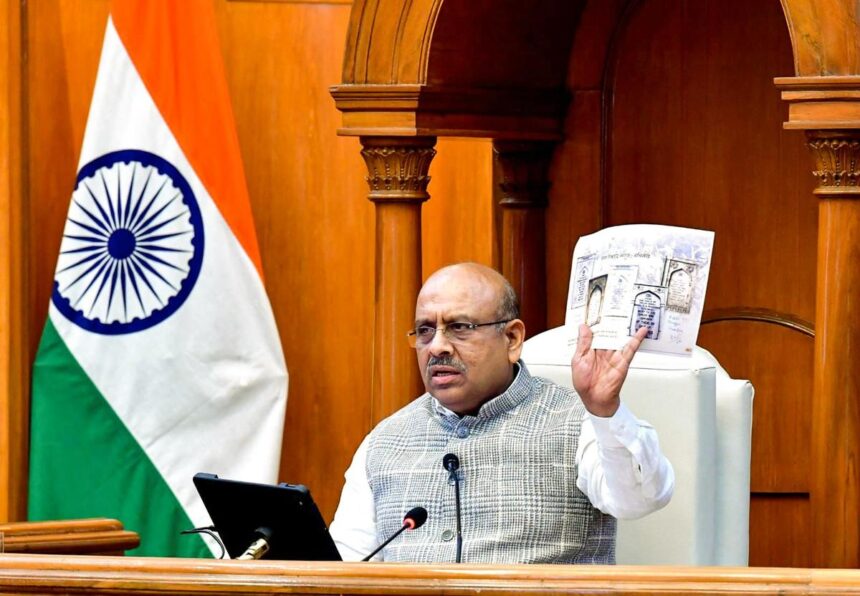
Addressing a press conference, Assembly Speaker Vijender Gupta expressed concern over the Opposition’s absence during the session. He stated that the Opposition adopted a “completely negative approach” by abstaining from proceedings despite having opportunities to participate in discussions. He described such conduct as unprecedented in legislative practice and emphasised that disruption, boycott, and attempts to mislead the public cannot replace meaningful debate within the House.
Session Proceedings and Legislative Business
The session witnessed substantial legislative and financial activity. The Economic Survey of Delhi (2025–26) was presented on 23 March, followed by the Annual Budget for 2026–27 on 24 March, both of which were adopted on 27 March 2026. Key legislations passed during the session included the Delhi Appropriation (No. 2) Bill, 2026, the Societies Registration (Delhi Amendment) Bill, 2026, and the Delhi Appropriation (No. 3) Bill, 2026.
The Speaker noted that the House also conducted detailed deliberations on audit reports, committee findings, and various governance-related issues. The proceedings included censure motions, statements by members, and discussions on the functioning of institutions such as the Delhi Jal Board and universities under the Government of NCT of Delhi.
Restoration of Audit Process
A key institutional achievement highlighted during the session was the complete laying of all seven pending reports of the Comptroller and Auditor General (C&AG) on the Table of the House. For the first time, no audit report remains pending, and all reports have been submitted to the Public Accounts Committee for further examination.
Speaker Vijender Gupta stated that this marks the restoration of the financial scrutiny cycle, ensuring accountability and transparency in governance. He also noted that three Public Accounts Committee reports have completed the full procedural cycle for the first time in fifteen years, with the House formally taking cognisance and placing responsibility on the government to act on the findings.
Special Mentions and Committee Work
The session also reflected active participation through Special Mentions. A total of 63 notices were received under Rule 280, out of which 44 were taken up for discussion in the House. These issues covered a wide range of public concerns across sectors and regions, demonstrating the representative role of the legislature.
Additionally, key financial committees, including the Public Accounts Committee, Estimates Committee, and Committee on Government Undertakings, were constituted with nine members each. This ensured continuity in oversight and strengthened institutional mechanisms for monitoring government functioning.
Introduction of ‘Vidhan Saathi’ AI Chatbot
Another notable development during the session was the rollout of “Vidhan Saathi,” an AI-enabled chatbot designed to provide real-time legislative research support in both Hindi and English. The system also includes voice-enabled access, aimed at enhancing informed participation and modernising legislative processes.
Speaker Vijender Gupta highlighted that the introduction of such technology reflects the Assembly’s commitment to adopting innovation in governance and improving accessibility for members.
Concerns Over Opposition Conduct
The Speaker reiterated concerns over the Opposition’s conduct, stating that deliberate disruption of proceedings and refusal to participate undermines the dignity of the House and weakens democratic accountability. He emphasised that the Assembly operates strictly under its Rules of Procedure and that members are expected to engage constructively in debates and discussions.
He further clarified procedural aspects related to suspension of members, noting that such suspensions cease once the House is prorogued and that provisions exist for granting entry under specific circumstances.
Summing up the session, Vijender Gupta stated that the Assembly fulfilled its legislative and financial responsibilities despite challenges. The passage of the Budget, approval of key bills, restoration of the audit process, and introduction of technological innovations were highlighted as major achievements.
He emphasised that the Legislature is a forum of public representation and that elected members are expected to uphold its dignity, ensure accountability, and contribute to meaningful discussions rather than adopting disruptive practices. The session, he concluded, reflects the Assembly’s commitment to governance, transparency, and institutional integrity.