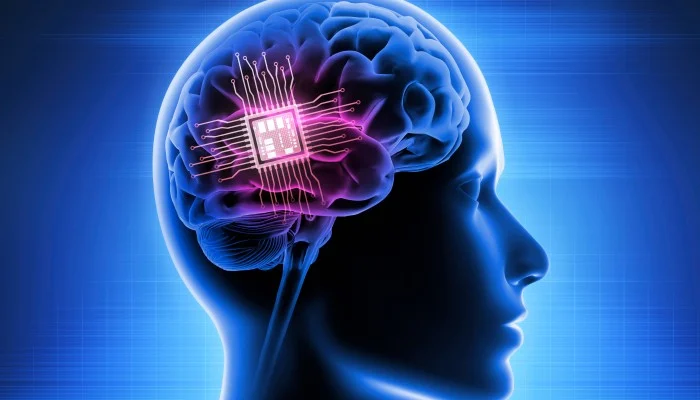
China is quietly advancing a radical vision where the human brain and machines are not just collaborators but could become physically and cognitively merged, as part of its ambitious quest to lead the global artificial intelligence race. While the U.S. tech ecosystem focuses on expanding large-scale language models and generative AI, China is charting a different path, betting on brain-computer interface (BCI) research and brain-inspired systems to bypass chip restrictions while potentially revolutionizing human-machine collaboration.
China’s Vision of Human-Machine Symbiosis
At the core of China’s emerging AI strategy is brain-computer interface technology, the science of directly linking human neural activity to computers. This goes far beyond controlling devices with thoughts; it aims to seamlessly merge human cognition with computational systems. The Washington Times reported that evidence of this vision is appearing in Chinese academic papers, government policy documents, and expert accounts, painting a picture of a state-backed push to blend human intelligence with machines in a literal sense.
According to Georgetown University’s Center for Security and Emerging Technology, Chinese researchers are exploring BCIs across invasive, semi-invasive, and non-invasive methods. The goal is to amplify the brain’s processing power by linking it directly to advanced AI systems, enabling human-machine teams that operate as integrated units rather than separate entities. This could lead to cognitive super-soldiers capable of faster decision-making, real-time data integration, and direct communication with automated systems.
Professor Dong Ming of Tianjin University, one of the more vocal advocates of this approach, told Chinese state media that the future is not about AI replacing humans, but about AI becoming part of us, both physically and cognitively. His comments align with China’s broader vision of merging flesh and fibre, where humans would increasingly rely on embedded technology to enhance their natural abilities.
A Different Path Amid Chip Restrictions
While Western companies like OpenAI, Google, and Meta focus on scaling up massive AI models powered by advanced GPUs, China’s brain-computer integration research offers an alternative path that could circumvent Western chip restrictions. By prioritizing brain-inspired computing, Chinese scientists are developing energy-efficient, concept-based learning systems that mimic how the human brain processes information rather than relying on brute-force computation.
One example of this alternative approach comes from the work of Bijan and Saied Tadayon, co-founders of Z Advanced Computing, who developed a brain-inspired algorithm for image recognition that caught Beijing’s attention. In 2018, the Tadayon brothers were offered $30 million by Chinese officials for a 20% stake in their company, demonstrating China’s keen interest in securing cutting-edge brain-like algorithms. Unlike conventional large-scale AI models that require enormous datasets and powerful hardware, the Tadayon brothers’ cognitive-explainable AI focuses on concept learning, using fewer data samples while eliminating the need for GPU hardware, a strategic advantage as the U.S. tightens export restrictions on advanced chips.
China’s interest extended further when the brothers were invited to present their technology at the InnoStars competition in Houston, signaling the country’s commitment to tapping unconventional AI pathways that align with its long-term technological ambitions.
This approach aligns with China’s strategy to leapfrog technological barriers while reducing reliance on Western hardware ecosystems, allowing it to pursue AI breakthroughs even amid restrictions on advanced semiconductors.
An Unsettling but Transformative Future
China’s push for brain-computer fusion is not without its ethical concerns. The vision of dissolving the boundary between human consciousness and machines raises profound questions about autonomy, privacy, and human identity. Yet it also reflects China’s readiness to explore radical technological integration, aiming to create systems where the brain’s capabilities are not only augmented but also intertwined with artificial intelligence at a fundamental level.
While Western AI labs focus on building larger models to power chatbots and productivity tools, China’s efforts may redefine what AI means by embedding its capabilities directly into human cognition. If successful, this could create a paradigm shift in how societies interact with technology, with humans acting as extensions of computational systems and vice versa.
The race for AI supremacy is no longer confined to algorithmic advancements and model scaling. China’s ambition demonstrates a willingness to experiment with technologies that promise not just incremental improvements in efficiency or intelligence but a complete transformation of the human experience itself, moving towards a future where thinking, processing, and acting are seamlessly integrated across human and machine.
As China accelerates its push into brain-computer interfaces and cognitive-computational convergence, the global AI race may soon extend beyond the digital realm, with the next frontier of artificial intelligence being human intelligence itself, reshaped and redefined through technology.