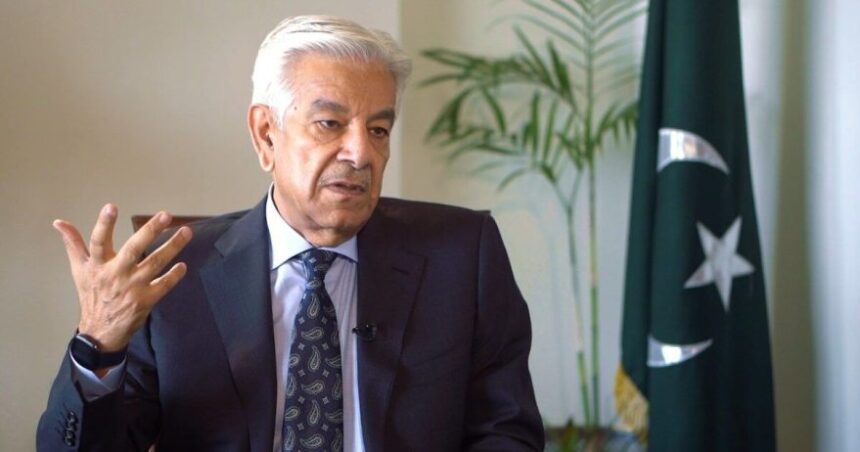
In a firm response to provocative statements and misinformation being spread in the aftermath of the deadly Pahalgam terror attack, the Indian government on Tuesday blocked the X (formerly Twitter) account of Pakistan’s Defence Minister Khawaja Muhammad Asif. This move follows growing tensions between the two nations and is part of a broader crackdown on platforms and voices accused of inciting communal disharmony or spreading false narratives about Jammu and Kashmir.
Account Blocked After Legal Demand
Users in India attempting to view Khawaja Muhammad Asif’s X profile are now greeted with a message that reads: “@KhawajaMAsif has been withheld in IN in response to a legal demand.” The Ministry of Electronics and Information Technology acted after Khawaja Muhammad Asif repeatedly posted controversial content on Jammu and Kashmir, particularly in the wake of the April 22 Pahalgam terror attack that killed 26 people, including many tourists.
The government’s action came a day after it banned 16 Pakistani YouTube channels amassing over 63 million subscribers, citing their role in spreading provocative and communally sensitive content. These measures underline New Delhi’s growing intolerance for misinformation that threatens national security or public harmony.
Khawaja Muhammad Asif’s Statements Escalate Tensions
Khawaja Muhammad Asif has been vocal in recent days, making several striking claims amid the heightened strain in Indo-Pak relations. In an interview with Reuters on Monday, Asif said Pakistan had reinforced its military in anticipation of a possible Indian strike. “We have reinforced our forces because it is something which is imminent now,” he said, hinting at fears of a retaliatory operation by India.
What added fuel to the fire was Khawaja Muhammad Asif’s controversial admission during an interview with a British news channel, where he acknowledged that Pakistan had supported terror groups for decades. He went on to say that Islamabad had been involved in “dirty work” for the West, including the US and the UK, over the past thirty years—a strategy he now calls a “mistake” that has cost Pakistan dearly.
In response to the Pahalgam attack, India has already taken a series of stringent steps, including suspending the Indus Waters Treaty, halting visas for Pakistani nationals, scaling down diplomatic presence at the Pakistani High Commission, and closing the Integrated Check Post at Attari. These actions signal India’s hardening stance toward cross-border terrorism and its sources of support.