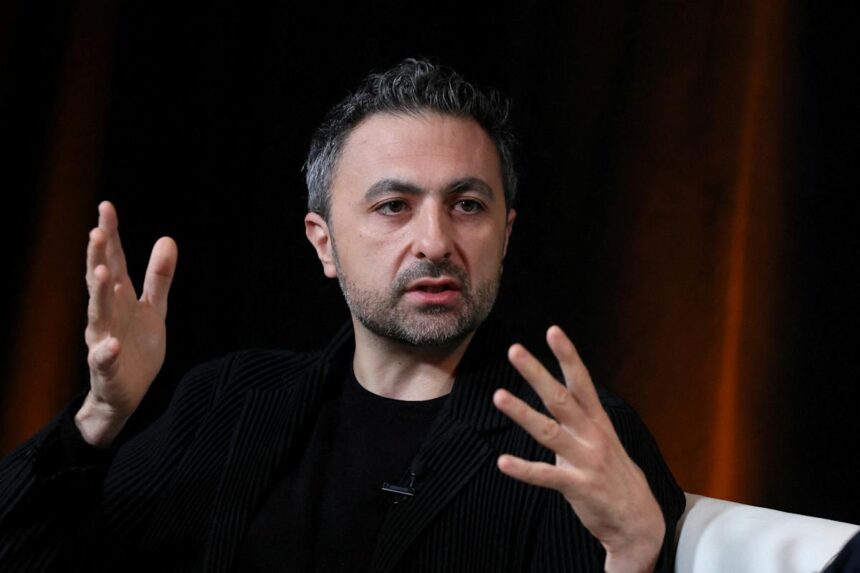
In a decisive move to dominate the next wave of consumer AI, Microsoft has hired 24 engineers, researchers, and product leaders from Google DeepMind, including Amar Subramanya as corporate vice president of AI. This strategic poaching, led by Microsoft’s head of consumer AI Mustafa Suleyman, marks an aggressive push to strengthen its AI products like Copilot and Bing while intensifying the talent war with Google and Meta.
A Strategic Talent Surge
Amar Subramanya, who spent 16 years at Google and led engineering for its Gemini chatbot, confirmed his move to Microsoft in a LinkedIn post, praising the company’s “refreshingly low ego yet bursting with ambition” culture. Subramanya noted that just a week into his role, he already felt energised by the collaborative and fast-moving environment, likening it to the best parts of a startup focused on building state-of-the-art AI foundation models.
This wave of hiring is the latest chapter in Microsoft’s aggressive AI expansion under Mustafa Suleyman, who joined the company in 2024 following its $650 million “acqui-hire” of his startup Inflection. Suleyman, who co-founded DeepMind before it was acquired by Google, has been systematically tapping into his DeepMind network to recruit top talent, bringing in engineers and product specialists who have previously contributed to groundbreaking AI projects.
Notable DeepMind alumni joining Microsoft include engineering lead Sonal Gupta, senior engineer Adam Sadovsky, and product manager Tim Frank. Many of these hires have taken up senior roles, with Sadovsky, who spent nearly 18 years at Google, now serving as a corporate VP within Microsoft AI.
The AI Talent War Intensifies
Microsoft’s hiring spree is reflective of the broader talent race unfolding across the tech industry. Big tech giants are aggressively pursuing top AI researchers and engineers, offering unprecedented incentives to lure talent away from rivals. OpenAI’s CEO Sam Altman recently claimed that Meta has been offering signing bonuses as high as $100 million to poach his staff, while there are reports of bonuses reaching $200 million—claims Meta has denied.
The competition between Microsoft and Google, however, is particularly fierce. Suleyman’s move to Microsoft has set him in direct rivalry with his former DeepMind co-founder, Demis Hassabis, who continues to lead DeepMind at Google. Despite the departures, insiders close to Google assert that DeepMind’s attrition rates remain below industry averages and that it continues to attract talent from competitors, including Microsoft.
Microsoft’s approach under Suleyman has been to aggressively build a robust team to develop and refine its consumer-facing AI products. The company is focused on integrating advanced AI models across its suite, including Microsoft Copilot and Bing, to make generative AI a seamless part of its consumer experience.
In a parallel move, Microsoft has made significant headlines in healthcare AI by unveiling a diagnostic tool it claims is four times more accurate than human doctors. Dubbed the MAI Diagnostic Orchestrator (MAI-DxO), the tool leverages models like ChatGPT, Claude, and Gemini to analyse patient symptoms, conduct virtual tests, and suggest potential diagnoses. During trials, this system reportedly outperformed panels of human doctors across hundreds of complex medical scenarios, underscoring Microsoft’s intent to diversify its AI offerings into critical sectors.
Interestingly, this surge in AI hiring comes at a time when Microsoft has laid off around 9,000 employees globally, approximately 4% of its workforce, as part of broader cost-cutting measures. This juxtaposition of layoffs alongside aggressive AI recruitment has sparked discussions on how tech giants are reshaping their workforces to align with rapidly evolving priorities while balancing financial sustainability.
Building for a Consumer AI Future
Microsoft’s intensified AI hiring underscores a clear pivot toward building next-generation consumer AI experiences. Under Suleyman’s leadership, the focus is on creating reliable, cutting-edge foundation models capable of powering products that can seamlessly assist users in everyday tasks. This ambition is evident in Subramanya’s comments, which highlight Microsoft’s drive to innovate rapidly while maintaining a collaborative culture that prioritises impactful product development.
The hiring of former DeepMind talent gives Microsoft a significant advantage, as these engineers and researchers bring deep expertise in AI model development, reinforcement learning, and scalable AI infrastructure. Their contributions are expected to accelerate Microsoft’s efforts in developing AI models that can compete with the likes of Google’s Gemini, OpenAI’s GPT, and Anthropic’s Claude, all while ensuring these models are deployable in real-world consumer products.
The broader AI industry is watching closely as Microsoft, Google, Meta, and others compete for talent that can advance the capabilities of large language models, multi-modal AI systems, and AI-powered applications across sectors. This competition is not just about building the best models but also about commercialising AI at scale while ensuring these technologies are integrated responsibly and effectively into daily life.
As Suleyman builds his “dream team” at Microsoft, the hires from DeepMind signal a deeper shift in the industry’s talent dynamics, highlighting how critical top-tier human capital is to shaping the AI revolution. For Microsoft, this is more than a recruitment drive; it is a strategic maneuver to position itself as the leader in consumer AI, ensuring it remains at the forefront of the technological advancements that will define the next decade.