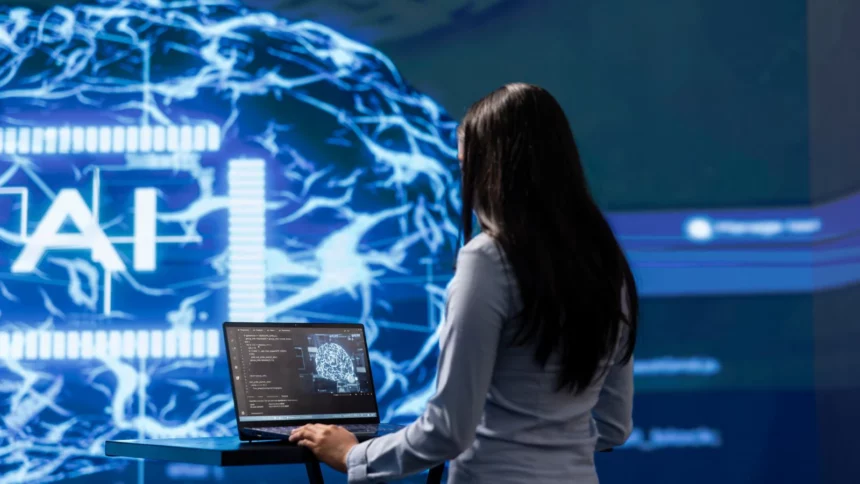
India is making a decisive push to prepare its young population for an AI-driven future by embedding artificial intelligence learning in schools and aligning skilling with real employment outcomes. The Ministry of Skill Development and Entrepreneurship (MSDE) has launched SOAR (Skilling for AI Readiness), a national programme that will introduce AI awareness and foundational learning to students from Classes 6 to 12, alongside major initiatives to strengthen vocational training, digital skilling, and international collaborations to support India’s vision of a tech-driven, future-ready workforce.
SOAR Programme to Embed AI in Schools
At an event in New Delhi, Minister of State for Skill Development and Entrepreneurship Jayant Chaudhary unveiled the SOAR programme, which will roll out AI learning for students in Classes 6 to 12 through three progressive 15-hour modules: ‘AI to be Aware’, ‘AI to Acquire’, and ‘AI to Aspire’. A separate 45-hour module, ‘AI for Educators’, will equip teachers with the skills needed to guide students in understanding and applying AI concepts.
The modules will cover basics of artificial intelligence, generative AI, ethical use of technology, cybersecurity, and AI-linked career pathways, reflecting India’s ambition to build the world’s largest network of young learners actively engaging with AI. Minister Chaudhary highlighted that under the vision of ‘Viksit Bharat 2047’, India is focused on not only enabling its school students to learn AI but also empowering them to apply it meaningfully in real-world situations, building a technology-driven nation prepared for the future.
Skilling Linked Directly to Employment Outcomes
Alongside SOAR, the MSDE operationalised KaushalVerse, a new digital enterprise portal developed by the National Council for Vocational Education and Training (NCVET) to streamline vocational training regulations and improve accessibility of skill-related services across the country. This portal aims to simplify skill development delivery, making services more efficient for both learners and training institutions.
In a significant move to link skilling efforts directly to employment, India launched the world’s largest outcomes-based development impact bond for skilling and employment—the Skill Impact Bond (SIB). The bond, led by the National Skill Development Corporation (NSDC), has mobilised $14.4 million to ensure skilling efforts translate into real employment opportunities for India’s youth.
To strengthen its skilling ecosystem further, the government signed multiple MoUs with private companies and international partners. One notable agreement was signed with the Government of the French Republic, focusing on vocational education collaboration, joint curriculum development, creation of Centres of Excellence, and cross-country training models. These partnerships will help align India’s skilling efforts with global best practices while creating a skilled workforce that meets evolving industry needs.
Additionally, several prestigious institutes across India are rolling out targeted skilling programmes under PMKVY 4.0 in high-demand sectors. The Indian Institute of Information Technology (IIIT) Una will train 120 candidates in electrical technician and software programming roles, focusing on deep-tech and IT-ITeS sectors. IIT Hyderabad will train 280 candidates in Sangareddy, Telangana, in electronics, hydrocarbon, and capital goods sectors for roles like CNC programmer and AI–ML engineer.
In Patna, Bihar, IIT Patna will train 1,440 candidates in sectors such as agriculture, green jobs, and healthcare, covering roles from EV service technician to AR/VR engineer and elderly caretaker. NIT Agartala will train 370 candidates in West Tripura in automotive IoT, bamboo artisan work, and AI–data science. Rashtriya Raksha University (RRU) in Gandhinagar, Gujarat, will conduct training for 240 candidates in areas such as yoga wellness training and fire safety, blending digital and wellness skills to meet diverse employment needs.
In an initiative to support rural entrepreneurship, NSTI Mumbai signed an MoU with the ICICI Foundation to promote rural incubation through project-based vocational training. Furthermore, under PMKVY’s institutional strengthening strategy, Flexi MoUs have been signed with companies like Dixon Technologies, Microsoft, and HCL to customise training modules in line with industry requirements, ensuring that learners acquire skills that are directly aligned with current job market demands.
Through these targeted initiatives, India is sending a clear signal of its intent to build a robust, future-ready workforce where students, youth, and educators are actively engaged with emerging technologies like AI while ensuring that skill development programmes translate into meaningful, employable outcomes. The blend of school-level AI education, large-scale skilling tied to jobs, and global collaborations positions India strongly as it advances towards its 2047 development goals.