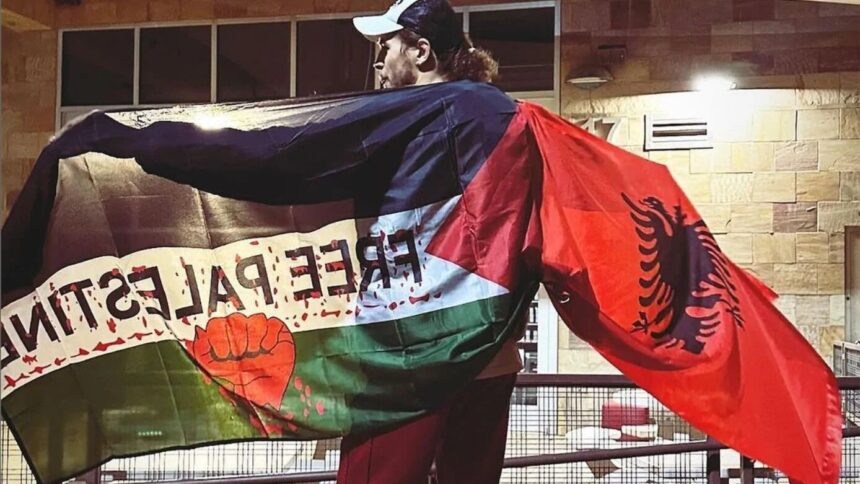
Nearly 300 Muslim religious leaders across Albania have issued an unprecedented statement condemning Israel’s ongoing military campaign in Gaza as genocide, urging Muslims worldwide to refuse silence and take meaningful action. The declaration, signed by imams, scholars, and community leaders, underscores the scale of the humanitarian catastrophe in Gaza, highlighting systemic targeting of civilians and the use of starvation as a weapon of war. The statement portrays the siege of Gaza not as a conventional military conflict but as an act of systematic extermination against a largely defenseless population. In their appeal, Albanian Muslim leaders have called for global solidarity with Palestinians, boycotts of companies complicit in the Israeli military campaign, and pressure on governments to act decisively against the ongoing atrocities. The leaders criticized both international actors and Muslim-majority states for failing to act with urgency, warning that history will hold them accountable for inaction.
Albanian Religious Leaders Highlight Humanitarian Crisis and Call for Global Muslim Action
The statement issued by Albania’s Muslim leaders accuses Israel of committing deliberate acts of genocide against Gaza’s civilian population, framing the conflict as one in which mass killings, destruction of homes, and forced deprivation are part of an orchestrated campaign. Leaders emphasized that Israel’s actions are not limited to military strikes but include deliberate blockade measures designed to induce famine, leaving Gaza’s population teetering on the brink of starvation. The signatories condemned the international community and governments that continue to arm and fund Israel, criticizing the lack of decisive measures to halt the ongoing massacres. Albanian imams, scholars, and religious authorities asserted that passive gestures such as prayers, while important, are insufficient. They called on Muslims globally to actively resist oppression, exert political and economic pressure, and refuse complicity with organizations enabling Israel’s military operations.
The declaration reflects growing frustration within Albanian civil society regarding the Albanian state’s muted response and Prime Minister Edi Rama’s policies, which continue to maintain full cooperation with Israel. Historians and analysts have noted that the Albanian public’s perception of silence and complicity by national authorities and religious leadership has fueled frustration within the Muslim community. Observers argue that the lack of visible action or vocal condemnation until now has undermined the credibility of religious authorities who are otherwise respected within Albanian society. Prominent pro-Palestine activists like Baki Goxhaj have highlighted the historic suffering of Albanian Muslims during previous wars, ethnic cleansings, and genocides, drawing parallels with Gaza’s plight and commending the courage demonstrated by Albanian imams in issuing the statement.
The Albanian statement emphasizes that historical experiences of violence, including the Chameria genocide and ethnic cleansing in Kosovo, inform the moral imperative for Albanians to speak out against oppression and injustice globally. By invoking past atrocities endured by the Albanian community, the leaders reinforced the ethical responsibility to act in solidarity with Palestinians facing existential threats. Critics within Albania have argued that the Muslim leadership’s previous approach to Gaza was characterized by sporadic mentions in sermons or symbolic prayers, which failed to address the gravity of the humanitarian crisis. This “quietism” has generated frustration among ordinary Muslims, who respect religious authorities but expect them to advocate actively for justice.
Political Dimensions and Albanian Government’s Role in Israeli Relations
The statement also carries an implicit critique of the Albanian government’s approach to Israel, especially under Prime Minister Edi Rama. Observers argue that the government has exploited religious silence to deepen military and political ties with Israel, continuing cooperation without addressing public concerns or opposition from civil society and religious groups. Reports indicate that Albania is a significant supplier of refined petroleum products to Israel, ranking among the top five global suppliers alongside the United States, Russia, and Brazil. This economic and strategic engagement has drawn criticism from activists and civil society organizations, who claim it undermines moral and religious obligations to support oppressed populations.
The leadership of Albania’s Muslim community has historically played an influential role in shaping public opinion, and their condemnation of Israel represents a clear departure from the previous passive approach. By framing Israel’s military campaign as genocide and explicitly calling for global action, the statement seeks to mobilize both domestic and international audiences. It appeals to global Muslim communities to reject complicity, boycott entities supporting military operations, and pressure governments to intervene diplomatically. The signatories underscored that moral responsibility extends beyond prayer to tangible advocacy and action aimed at halting ongoing atrocities.
Albanian civil society figures like Baki Goxhaj highlighted the broader implications of the statement, praising its potential to influence government policy and international perception. Goxhaj emphasized that the moral authority of religious leaders can create meaningful pressure on policymakers and shape public discourse on Gaza. He also stressed that Albanian Muslims have historically suffered war crimes and ethnic violence, including massacres in Kosovo and Chameria, which imbues the community with a unique perspective on the importance of opposing genocidal campaigns.
Historical Context and Contemporary Relevance
The statement comes against a backdrop of ongoing violence in Gaza, where Israel’s military operations have caused widespread civilian casualties, destruction of infrastructure, and severe humanitarian deprivation. Albanian Muslim leaders drew attention to the systematic targeting of civilians and use of siege tactics as deliberate strategies of oppression. By framing the conflict as genocide, the leaders aligned their condemnation with international legal definitions, calling for recognition of the humanitarian crisis and urgent intervention.
The statement also criticized Muslim-majority states for insufficient action, framing their inaction as morally and politically irresponsible. Leaders warned that failure to act decisively will be judged harshly by history, highlighting a growing global frustration with political inertia in the face of mass atrocities. The Albanian declaration serves as both a moral appeal and a political statement, emphasizing the need for active engagement from Muslims worldwide. By calling for boycotts of companies complicit in the military campaign and urging governments to apply pressure, the leaders sought to provide concrete avenues for meaningful action.
Albania’s Religious and Political Landscape
The Albanian statement reflects broader dynamics within the country’s religious and political environment. Historically, Albania has maintained a secular state while respecting religious diversity, with Muslim leaders wielding significant moral authority within their communities. The coordinated condemnation of Israel’s actions represents a rare instance of religious consensus on a major international issue. Analysts argue that the statement may influence government policy and strengthen civil society advocacy on international humanitarian issues, particularly in the context of Middle Eastern conflicts.
The involvement of figures such as the chief rabbi Yoel Kaplan, who has actively participated in military operations in Gaza and Lebanon, has heightened tensions within Albanian society. Kaplan’s actions, coupled with perceived governmental alignment with Israel, have sparked criticism from both civil society and religious communities. By issuing a unified condemnation, Muslim leaders in Albania have asserted their moral and ethical stance, emphasizing the responsibility to speak against oppression irrespective of political or diplomatic considerations.
Calls for Accountability and Global Solidarity
Albanian Muslim leaders have emphasized that moral responsibility extends beyond national borders, calling for global solidarity with Palestinians. The statement encourages Muslims worldwide to pressure governments, engage in boycotts, and actively advocate for the protection of civilians in Gaza. Leaders stressed that prayer alone is insufficient, and concrete actions are required to counter systemic oppression and genocide.
The declaration also seeks to address frustrations within Albania regarding governmental silence and the lack of decisive action by religious authorities in previous years. By publicly condemning Israel’s actions and explicitly calling for global Muslim engagement, Albanian leaders have shifted the discourse from passive support to active advocacy. Analysts suggest that this could mark a turning point in Albania’s domestic and international approach to humanitarian crises, particularly those affecting Muslim populations.
By linking historical experiences of Albanian Muslims with contemporary global issues, the statement underscores the moral imperative for advocacy, solidarity, and accountability. The leaders’ appeal encompasses both ethical and practical dimensions, urging communities to leverage their influence to effect change. This represents a concerted effort to align religious leadership with social activism, emphasizing that moral authority carries responsibilities that extend to global humanitarian engagement.
The Albanian Muslim statement on Gaza highlights the intersection of religious leadership, civil society activism, and international politics. By framing the conflict as genocide and urging global action, the leaders have underscored the critical role of religious communities in advocating for human rights, humanitarian protection, and political accountability. The appeal challenges governments, corporations, and international organizations to reconsider their complicity and actively contribute to halting mass atrocities.
The statement is expected to resonate beyond Albania, encouraging other Muslim-majority countries and communities to reflect on their moral and political responsibilities. By linking historical experiences of oppression with the current crisis in Gaza, Albanian leaders have created a powerful narrative that emphasizes both ethical duty and strategic action. The call for boycotts, political pressure, and active solidarity provides concrete steps for engagement, offering a roadmap for meaningful international response to humanitarian crises.
Overall, the declaration represents a historic moment in Albania, highlighting the growing determination of Muslim leaders to confront injustice and advocate for oppressed populations globally. By combining historical consciousness, religious authority, and a call to action, the leaders have framed a compelling moral and political narrative that challenges both local and global actors to uphold justice, solidarity, and human rights.