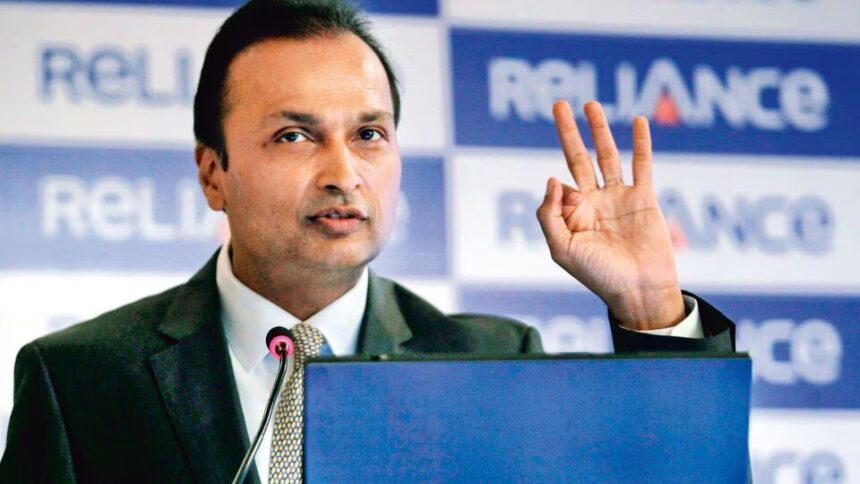
The Enforcement Directorate (ED) has attached assets worth ₹3,000 crore belonging to companies under the Anil Ambani-led Reliance Group in connection with an ongoing money laundering investigation linked to Reliance Home Finance Ltd (RHFL) and Reliance Commercial Finance Ltd (RCFL). The probe, which falls under the Prevention of Money Laundering Act (PMLA), involves allegations of diversion and siphoning of public funds raised by these financial entities through complex loan structures and investment channels involving Yes Bank and other institutions.
ED’s extensive property attachments across multiple cities
According to sources familiar with the development, the ED’s latest action includes the attachment of 40 properties spread across several major Indian cities, including Mumbai, Delhi, Noida, Ghaziabad, Pune, Thane, Hyderabad, Chennai (including Kancheepuram), and East Godavari. Among the key properties attached are the Ambani family’s luxurious Pali Hill residence in Mumbai and the Reliance Centre located at Ranjit Singh Marg in the national capital. Officials stated that these properties collectively carry an aggregate value of ₹3,084 crore. The attached assets consist of residential apartments, office spaces, and land parcels, all of which are alleged to have been purchased or developed using laundered money.
The Enforcement Directorate’s probe stems from findings that public funds mobilized by RHFL and RCFL were misused and rerouted to entities connected to the Reliance Anil Dhirubhai Ambani Group (ADAG). During 2017–2019, Yes Bank reportedly invested ₹2,965 crore in RHFL instruments and another ₹2,045 crore in RCFL instruments. These investments eventually turned into non-performing assets (NPAs) by December 2019, with ₹1,353.50 crore remaining outstanding for RHFL and ₹1,984 crore for RCFL, as per investigators. The ED believes these transactions were part of a larger financial web created to disguise the true flow of funds and evade regulatory scrutiny.
The company has not yet issued any official statement responding to the ED’s action or the allegations raised in connection with the fund diversion case. However, sources within the financial sector have suggested that the ED’s move is part of a broader crackdown on financial irregularities involving non-banking financial companies (NBFCs) and their promoters.
Complex web of fund diversion and alleged regulatory violations
According to investigators, the money trail indicates that direct investments by Reliance Nippon Mutual Fund into financial companies under Anil Ambani’s group were not permissible under the Securities and Exchange Board of India (SEBI)’s mutual fund conflict of interest framework. To circumvent this restriction, the funds collected from the general public through mutual fund schemes were allegedly routed indirectly through Yes Bank’s exposures, ultimately reaching RHFL and RCFL. These companies, in turn, extended loans to various shell entities and companies closely linked to the Reliance Group.
A senior ED officer revealed that substantial amounts categorized as General Purpose Corporate Loans were ultimately funneled back to Reliance-linked entities. The investigation uncovered that many of these loans were processed with extraordinary haste — in some cases, applications, sanctions, and agreements were completed within a single day. In certain instances, the funds were even disbursed before the formal loan approval, suggesting a complete collapse of due diligence protocols.
The ED further noted that documentation associated with these loans contained glaring irregularities. Several forms were left blank, overwritten, or undated, while key sections related to collateral and security were missing. Many of the borrower entities showed weak financial profiles or had minimal operational activities. The agency asserts that such patterns cannot be coincidental and point toward systematic manipulation of financial processes to facilitate fund siphoning.
Investigators also revealed that security creation for several of these loans was either unregistered or inadequate, and the actual utilization of funds did not align with the purposes stated in the sanction documents. The ED’s findings suggest that these were not isolated incidents but part of an orchestrated strategy designed to divert funds under the guise of legitimate corporate financing.
Wider implications and ongoing investigations in related companies
In addition to RHFL and RCFL, the ED has intensified its investigation into Reliance Communications Ltd (RCOM) and associated group companies. According to the agency, these entities collectively diverted more than ₹13,600 crore through mechanisms such as loan evergreening, connected party transactions, and misuse of financial instruments. Of this, approximately ₹12,600 crore was allegedly diverted to companies linked to the same business group, while ₹1,800 crore was reportedly invested in fixed deposits and mutual funds, which were later liquidated and redirected to Reliance entities.
ED officials have also unearthed a massive misuse of bill discounting facilities that were employed to funnel money to connected parties. This involved the artificial creation of invoices and discounting of bills to disguise the transfer of funds within the group’s network. The agency has described this as a “huge misuse” of legitimate financial tools, aimed at recycling funds to maintain liquidity and conceal the group’s true financial exposure.
Investigators said the recovery of proceeds from these attachments will eventually serve the broader public interest, as the funds originally came from public investments and deposits. They emphasized that the ED is committed to tracing every layer of the complex money trail, securing the proceeds of crime, and ensuring accountability for those responsible.
The developments in this case come amid a larger national drive by the Enforcement Directorate and other investigative agencies to clamp down on corporate money laundering, financial fraud, and misuse of public funds. The case involving the Anil Ambani-led Reliance Group marks one of the most high-profile instances of alleged financial irregularities by a major industrial group in recent years.
Officials familiar with the matter stated that further analysis of electronic records, loan agreements, and bank transactions is underway to identify the exact chain of beneficiaries and intermediaries. The ED is also working in coordination with financial regulators and banks to freeze any movable assets and accounts that may have been used in the laundering process.
The agency’s actions have once again placed the spotlight on the financial practices of large conglomerates operating in India’s non-banking finance sector, where regulatory oversight has often been weaker compared to traditional banking institutions. The ED’s probe underscores the growing concern that certain corporate groups have leveraged complex financial structures to mask the diversion of funds while maintaining an appearance of compliance.
While the Reliance Group under Anil Ambani has previously faced scrutiny over debt defaults and loan restructuring, this latest action by the Enforcement Directorate significantly escalates the legal and reputational challenges confronting the group. As the investigation progresses, further attachments and possible charges under the PMLA are likely, with authorities determined to recover diverted funds and hold those accountable who enabled the alleged financial misconduct.