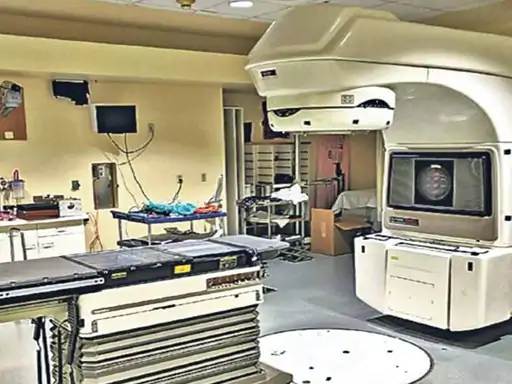
The Yamuna Expressway Industrial Development Authority (YEIDA) has initiated an ambitious national-scale project to establish India’s first integrated cancer-care manufacturing hub, where state-of-the-art diagnostic machines such as CT scanners, MRI systems and PET-CT units will be produced locally. Designed to transform India’s medical technology ecosystem, the project marks a significant move toward reducing dependence on costly imports while accelerating innovation, job creation and healthcare accessibility. A high-level meeting with global med-tech firms is scheduled in Bengaluru on November 17–18, signaling the formal launch of this transformative industrial initiative.
YEIDA’s Vision to Build a Global-Standard Cancer-Care Equipment Manufacturing Cluster
YEIDA’s latest move represents one of the most decisive steps taken by any Indian industrial development authority in the healthcare technology sector. Recognizing the rapidly rising incidence of cancer in India and the heavy reliance on imported medical diagnostic tools, YEIDA plans to create a dedicated cluster where major domestic and international companies can design, manufacture, assemble and export advanced imaging systems.
Officials close to the project have confirmed that the medical devices cluster will operate on a model similar to global med-tech hubs in Singapore, Germany and the United States. It will offer specialized industrial plots, plug-and-play facilities, high-capacity power supply, integrated testing labs, and regulatory support systems aligned with international certifications such as CE and USFDA.
Sources indicate that the hub will also feature an R&D corridor for AI-driven cancer detection technologies, indigenous software development, and semiconductor component integration—areas traditionally dominated by foreign companies. YEIDA aims to position India as a competitive manufacturing base capable of supplying diagnostic machines not only to Indian hospitals but also to global markets across Asia, Africa and the Middle East.
The decision to focus specifically on CT, MRI and PET-CT machines stems from India’s overwhelming reliance on imports for these devices. Current estimates suggest that almost 90 percent of high-end medical imaging systems used in India are imported, costing hospitals and diagnostic centers several crores per unit. Import duties and logistical expenses further inflate the final cost, making advanced cancer screening unaffordable for many patients.
YEIDA’s proposed cluster is expected to bring down equipment costs significantly once large-scale manufacturing begins. More importantly, local production will ensure quicker servicing, better availability of spare parts and shorter waiting times for installations—areas where Indian healthcare providers often face delays due to foreign supply chains.
A pre-project feasibility report prepared for senior state officials notes that the upcoming medical-tech cluster will generate thousands of skilled and semi-skilled jobs, attract global vendors for electronic components and imaging technologies, and stimulate parallel economic activity in logistics, biomedical engineering, software development and advanced manufacturing.
Senior officers from the Uttar Pradesh government have emphasized that the project fits into the broader state vision of transforming the Yamuna Expressway region into a multi-sector global investment corridor, complementing ongoing developments such as the Noida International Airport, the Electronics Manufacturing Zone, the Film City project and the recently expanded logistics networks.
YEIDA has confirmed that delegations from Japan, Germany, South Korea and the United States have already shown early interest. Several Bengaluru-based medical technology companies, including those specializing in diagnostic AI platforms and oncology imaging solutions, have also requested exploratory meetings during the upcoming two-day Bengaluru session.
The medical devices sector in India has been valued at over USD 12 billion and is projected to grow to USD 50 billion by 2030. Within this sector, cancer-care diagnostics remain one of the fastest-growing components. With an estimated 15 lakh new cancer cases recorded annually in India, the need for affordable and accessible diagnostic tools is rising faster than ever.
Experts believe that YEIDA’s cancer-care equipment cluster could potentially become the backbone of India’s self-reliance push in medical technology, similar to how the telecom manufacturing sector transformed after domestic production surged. If the project proceeds as planned, Uttar Pradesh could emerge as the largest producer of cancer-diagnostic machines in the country within a decade.
Another major advantage is YEIDA’s proximity to key logistics and export infrastructure. The region’s connectivity to the upcoming Noida International Airport, the Eastern Peripheral Expressway, the Dedicated Freight Corridor and multiple industrial hubs ensures rapid movement of manufactured units to both domestic hospitals and international buyers.
Senior YEIDA officials have added that the authority is finalizing a long-term incentive structure for med-tech companies, including land subsidies, regulatory fast-tracking, shared R&D facilities, and tax benefits under state industrial policies. Discussions are ongoing with the Union Ministry of Commerce and the Ministry of Health to integrate the project with national medical-devices promotion schemes.
The Bengaluru meeting on November 17–18 is expected to finalize the blueprint for company participation. YEIDA’s CEO will lead the delegation, accompanied by senior officers handling industrial development, investment partnership, and medical-tech project facilitation. Over two dozen leading global companies in medical imaging, cancer-care solutions and semiconductor components have confirmed their presence.
Early reports suggest that the meeting agenda includes presentations on the cluster’s infrastructure plan, detailed land allotment procedures, timelines for facility readiness, regulatory support systems, and long-term export strategies. Several companies are expected to sign preliminary intent letters if discussions proceed positively.
Industry observers believe that Bengaluru—home to some of India’s strongest biomedical engineering and healthcare technology companies—is the ideal location for YEIDA to initiate national collaboration. The city’s ecosystem of research institutions, med-tech startups and global device manufacturers could play a crucial role in shaping the YEIDA cancer-care hub’s technological roadmap.
A senior industry analyst noted that the combination of Uttar Pradesh’s land resources and Bengaluru’s technical know-how could give India a major competitive edge in a market dominated by multinational giants. If domestic companies succeed in developing cost-effective alternatives to imported CT, MRI and PET-CT systems, India could emerge as a global med-tech exporter within a short period.
As the project gains momentum, local universities and technical institutes in the NCR region are also expected to develop specialized training programs in biomedical engineering, imaging technology maintenance, and AI-based diagnostics. YEIDA has reportedly initiated discussions with several institutions to explore joint training centers and testing labs.
Local hospitals and diagnostic chains have welcomed the development, stating that strong domestic manufacturing will reduce dependency on expensive foreign machines and drastically shorten downtime caused by delayed servicing. Many hospital administrators note that cancer diagnosis demand has surged sharply in the past decade, but access to advanced imaging tools remains limited in several districts.
Several international med-tech companies, including those specializing in high-field MRI and hybrid PET-CT systems, have expressed interest in exploring India-based assembly units to reduce costs and expand access in emerging markets. YEIDA is positioning itself to capitalize on this global trend toward localization of med-tech production.
With expectations rising, administrative preparations for the Bengaluru meeting have intensified. YEIDA has prepared detailed investment brochures, technical park blueprints, and cluster-specific incentive frameworks to present before global industry leaders. State ministers are also expected to participate virtually to reinforce government support.
If successful, the cancer-care equipment manufacturing hub could become one of India’s most significant healthcare technology projects, potentially transforming the medical devices landscape and paving the way for complete self-reliance in critical diagnostic equipment.