The debate surrounding casting decisions in big-budget Indian cinema once again came into sharp focus after actor Vikrant Massey publicly dismissed reports claiming he had been removed from the upcoming film Ramayan: Part-1. The controversy erupted amid intense public scrutiny of the film’s star cast, with speculation rapidly spreading across digital and traditional media platforms. Massey’s strong reaction highlighted broader concerns about credibility, accountability, and editorial responsibility within entertainment reporting, particularly when unverified narratives begin to shape public perception.
The actor categorically stated that he was never associated with the project and therefore could not have been replaced. His response underscored frustration with what he described as reckless reporting by sections of the media that presented conjecture as fact. The episode has since sparked a wider conversation within the film industry about how casting rumours originate, how they gain legitimacy, and the reputational consequences actors face when inaccurate information circulates unchecked.
Actor’s Response and Media Accountability
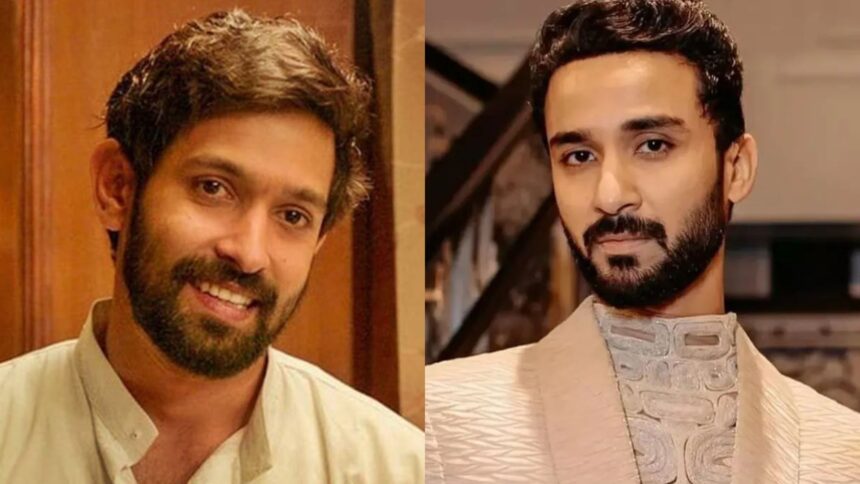
Vikrant Massey chose to directly address the speculation after multiple reports suggested that actor Raghav Juyal had replaced him in the role of Meghnad, also known as Indrajit, in Nitesh Tiwari’s Ramayan: Part-1. In his statement, Massey clarified that he had never been approached for the film, nor had he ever been part of its casting process. By doing so, he rejected the very premise of the replacement narrative, calling it misleading and irresponsible.
Massey’s remarks carried a distinctly critical tone toward what he referred to as “so-called reputable media houses,” accusing them of amplifying an unfounded claim without verification. His response resonated with many within the industry who have long expressed concern about speculative reporting becoming normalized, especially around high-profile projects. In an era where film announcements, leaks, and rumours often blur into one another, Massey’s intervention stood out for its clarity and directness.
Despite his frustration, the actor maintained a measured stance toward the film itself, extending goodwill to the project and its cast. He stated that he wished the team success and intended to watch the film in cinemas, a gesture that helped separate his criticism of media practices from any perceived animosity toward the filmmakers or fellow actors. This distinction reinforced the idea that the controversy was less about professional rivalry and more about journalistic responsibility.
Interestingly, Massey removed his clarification shortly after posting it, a move that further intensified discussion. While the deletion was widely interpreted as a reaction to continued misrepresentation, it also highlighted the dilemma public figures face when responding to misinformation. Any statement, even a corrective one, risks being selectively quoted or reframed, sometimes perpetuating the very narrative it seeks to counter.
How the Casting Narrative Took Shape
The origins of the replacement story can be traced to reports indicating that Raghav Juyal had been cast as Meghnad in Ramayan: Part-1. Once that information entered the public domain, a parallel narrative emerged suggesting that Massey was initially slated for the role. This assumption, lacking confirmation, was repeated across outlets until it appeared to gain legitimacy through sheer repetition.
Such developments illustrate how casting news often travels through informal channels before being substantiated. In large-scale productions like Ramayan, where every role attracts attention, even minor updates can trigger extensive speculation. The absence of official casting announcements for certain characters creates a vacuum that is frequently filled by conjecture, leaks, or interpretations drawn from unrelated reports.
The film itself has remained a focal point of discussion due to its ambitious scope and high-profile ensemble. Directed by Nitesh Tiwari, Ramayan: Part-1 features Ranbir Kapoor as Lord Ram and Sai Pallavi as Sita, while Yash portrays Lankesh Ravana. Sunny Deol’s casting as Lord Hanuman and Ravi Dubey’s role as Lakshman further emphasize the project’s scale. Additional roles, including Kajal Aggarwal as Mandodari and Rakul Preet Singh as Surpanakha, have added to public interest and scrutiny.
Against this backdrop, any perceived change in casting inevitably attracts disproportionate attention. The Massey-Juyal episode demonstrates how quickly narratives can evolve from speculation to accepted fact in the absence of careful editorial checks. It also reflects the broader tension between the demand for rapid updates and the need for accuracy, a challenge that continues to confront entertainment journalism.
As the film approaches its scheduled release on November 6, the incident serves as a reminder of the complex interplay between cinema, media, and public discourse. While casting controversies may appear transient, they reveal deeper structural issues about information flow and responsibility in an industry driven by visibility and anticipation.
Highlights (10 words each)
Media speculation sparks backlash as Vikrant Massey denies Ramayan casting rumours
Actor’s response reignites debate on accountability in entertainment journalism