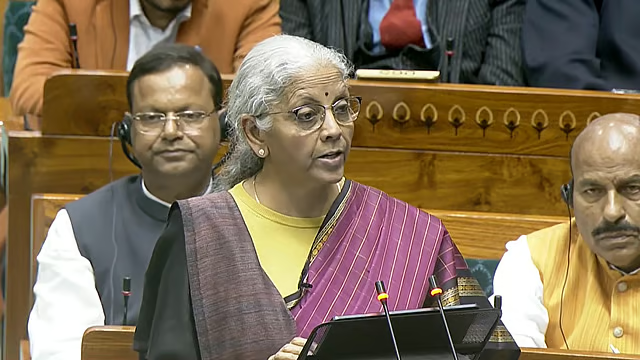
The ninth day of the Parliament Budget Session 2026 descended into turmoil on Monday as proceedings in the Lok Sabha were adjourned shortly after commencement, reflecting deepening political fault lines between the ruling dispensation and the Opposition. What began as routine legislative business quickly transformed into a charged confrontation, with Opposition parties intensifying protests and formally signalling their intent to move a no-confidence motion against Lok Sabha Speaker Om Birla, alleging partisan conduct and suppression of dissenting voices within the House.
The disruption underscored a broader crisis of parliamentary functioning, as repeated adjournments and acrimonious exchanges continued to overshadow substantive discussion on fiscal priorities, governance reforms, and accountability mechanisms central to the Budget Session. The unfolding standoff has raised serious concerns about the erosion of parliamentary conventions and the diminishing space for deliberative democracy.
Opposition Escalates Protest, Alleges Institutional Bias and Procedural Erosion
Opposition parties entered the House with coordinated slogans and placards, accusing the Speaker of selectively allowing interventions from treasury benches while curtailing Opposition voices during debates on sensitive economic and political issues. The protests intensified within minutes of the session’s opening, forcing the Speaker to adjourn proceedings amid unrelenting uproar.
Leaders across Opposition formations alleged that repeated denial of notices under Rule 267, frequent expunging of remarks critical of the government, and abrupt adjournments had rendered parliamentary participation ineffective. According to senior Opposition members, the proposed no-confidence motion against the Speaker is intended not merely as a symbolic act but as a constitutional assertion against what they describe as the “weaponisation of procedure” to shield the executive from scrutiny.
The charge of institutional bias has been building over multiple sessions, with Opposition MPs pointing to stalled discussions on inflation, unemployment, federal financial allocations, and alleged regulatory failures. Monday’s confrontation, they argue, marks a tipping point where procedural grievances have transformed into a direct challenge to the authority and neutrality of the presiding officer.
The ruling party, however, rejected the accusations, asserting that repeated disruptions by the Opposition were deliberately engineered to derail the Budget Session. Treasury bench leaders contended that the Speaker acted within the framework of parliamentary rules and that the Opposition’s conduct amounted to legislative obstruction rather than principled dissent.
Budget Session Paralysis Raises Questions on Democratic Accountability
The adjournment of the Lok Sabha on the ninth day added to a growing tally of lost legislative hours, reinforcing concerns that the Budget Session is slipping into dysfunction at a time of heightened economic and geopolitical uncertainty. Key budgetary demands, taxation amendments, and policy-linked expenditure proposals remain pending, with limited progress made on debate or scrutiny.
Constitutional experts note that while a no-confidence motion against the Speaker is procedurally permissible, its political implications are profound. Such a move signals an unprecedented breakdown of trust between the Opposition and the Chair, potentially setting a contentious precedent for future parliamentary conduct.
Beyond immediate procedural disputes, the standoff reflects a deeper struggle over the role of Parliament itself. Critics argue that the repeated sidelining of debate weakens democratic oversight, reduces transparency in fiscal decision-making, and shifts power disproportionately toward the executive.
As the Budget Session progresses under mounting tension, the prospect of meaningful legislative engagement appears increasingly uncertain. The Opposition’s aggressive posture and the government’s firm defence of the Speaker suggest that confrontation, rather than consensus, will continue to define the parliamentary atmosphere in the days ahead.