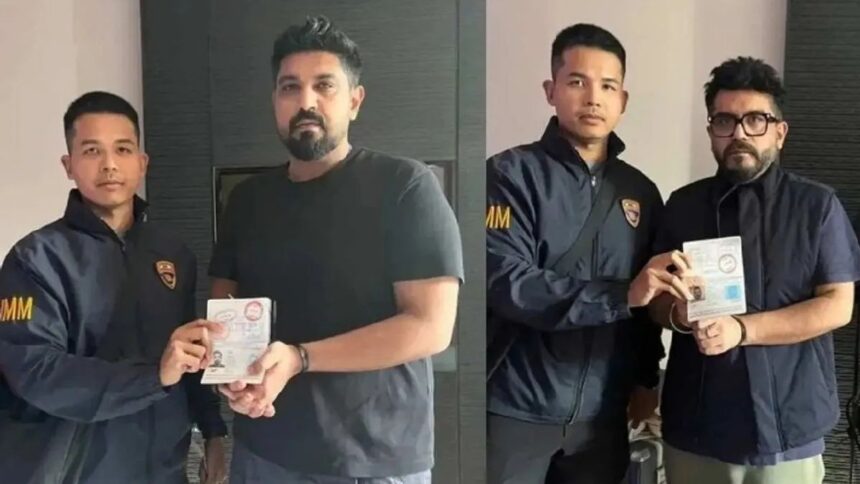
A Goa court on Wednesday remanded Saurabh and Gaurav Luthra, co-owners of the Birch by Romeo Lane nightclub, to five days of police custody in connection with the devastating fire incident in North Goa that claimed 25 lives, while also rejecting their request for special arrangements in custody on medical grounds.
The remand order was passed by the Judicial Magistrate First Class court in Mapusa after the accused were produced following their deportation from Thailand and subsequent transfer to Goa police custody. The case has drawn intense public attention due to the scale of the tragedy and the circumstances surrounding the fire that broke out on December 6 at the popular nightclub in Arpora, a coastal belt in North Goa frequented by tourists and locals alike. The court proceedings marked a crucial step in the ongoing criminal investigation into one of the deadliest nightlife-related disasters in the state’s recent history.
The Luthra brothers, who are among the key accused in the case, were brought back to India nearly ten days after the incident, having left the country within hours of the fire. Their return followed coordination between Indian authorities and Thai officials, after which they were taken into custody by law enforcement agencies upon landing in New Delhi and later transported to Goa. The prosecution sought police custody to question the accused in detail about the management of the nightclub, safety arrangements, and events leading up to the fire.
During the remand hearing, the defence raised concerns regarding the health of the accused and sought permission for the provision of a mattress during police custody. The court, however, orally observed that the accused had already been declared medically fit following examination at a government hospital, and did not grant the request at that stage. The magistrate then remanded both brothers to police custody for five days, allowing investigators additional time to probe the case.
Events leading to arrest and court proceedings in Goa
The fire at the Birch by Romeo Lane nightclub on December 6 sent shockwaves across Goa and the country, raising serious questions about fire safety, crowd management, and regulatory oversight in nightlife establishments. According to investigators, the blaze spread rapidly within the premises, trapping several patrons and staff members inside. Despite rescue efforts, 25 people lost their lives, making it one of the worst fire tragedies linked to a commercial entertainment venue in the state.
In the immediate aftermath of the incident, multiple agencies launched investigations, and criminal liability was fixed on those responsible for the operation and management of the nightclub. The Luthra brothers, identified as co-owners of the establishment, became central to the probe. However, it soon emerged that they had left the country shortly after the fire, travelling to Thailand within hours of the incident. This development intensified scrutiny and prompted law enforcement agencies to initiate steps for their return.
After days of coordination, the brothers were deported from Thailand and brought back to India. They were taken into custody by police officials in New Delhi and produced before a court there before being handed over to a Goa police team. On Wednesday morning, they were brought to Goa and subjected to medical examinations at the district hospital before being produced before the Judicial Magistrate First Class court in Mapusa.
During the remand proceedings, the prosecution argued that custodial interrogation was essential to uncover the full chain of events that led to the fire. Investigators told the court that they needed to question the accused about licensing, compliance with safety norms, capacity limits, and the alleged lapses that may have contributed to the tragedy. The police also indicated that they were examining financial records, communication logs, and the role of various employees and contractors associated with the nightclub.
The defence, while opposing extended police custody, sought certain facilities for the accused, citing medical concerns. The counsel requested permission for a mattress to be provided in police custody, arguing that the brothers suffered from spinal and tailbone-related issues that could be aggravated by prolonged confinement without proper bedding. This request, however, did not find favour with the court at that stage.
Medical claims, court observations, and investigation focus
During the hearing, one of the accused, Saurabh Luthra, addressed the court directly and stated that he had an L4-L5 problem in his spine, while his brother Gaurav Luthra was suffering from a tailbone-related issue. He claimed that during the medical examination conducted earlier, only an X-ray had been done and not an MRI, which, according to him, would have revealed the extent of their medical conditions. On this basis, the defence reiterated its plea for a mattress during police custody.
The court, however, orally remarked that the medical examination had already declared both accused fit, and therefore there was no immediate basis to grant special facilities. The magistrate made it clear that custodial conditions would be governed by existing rules and medical advice, and that any further medical issues could be addressed through appropriate legal channels if required.
With the five-day police custody now granted, investigators are expected to intensify questioning of the Luthra brothers. Police officials have indicated that the focus of the interrogation will include the nightclub’s compliance with fire safety norms, the availability and functionality of emergency exits, the use of flammable materials in the premises, and the role of management decisions in exacerbating the situation on the night of the fire.
The investigation is also likely to examine whether the nightclub was operating beyond its permitted capacity and whether required clearances from fire and civic authorities were in place and up to date. Sources familiar with the probe suggest that investigators are scrutinising inspection records, renovation approvals, and internal communications to determine if warnings or violations were ignored.
The fact that the accused left the country shortly after the incident has also become a significant aspect of the case. Prosecutors argue that this conduct raises questions about intent and accountability, while the defence is expected to argue that their travel was not an attempt to evade the law. This issue is likely to be examined further as the investigation progresses and the matter moves through subsequent stages of the judicial process.
The tragedy has also triggered broader discussions in Goa about safety standards in nightlife venues, particularly in tourist-heavy regions. In the days following the fire, authorities carried out inspections of several clubs and bars across the state, with some establishments reportedly facing temporary closures or notices for non-compliance. The case has thus become a focal point for debates on regulatory enforcement and the responsibility of business owners toward public safety.
As the police custody period unfolds, the Luthra brothers remain at the centre of a high-profile investigation that continues to draw public attention. Families of the victims and survivors have been closely following the proceedings, seeking accountability and justice for those who lost their lives in the fire. The coming days are expected to be critical as investigators attempt to piece together the sequence of events and establish individual responsibility in a case that has deeply shaken public confidence.