The United Kingdom witnessed a surge in far-right activity last weekend, culminating in what has been described as the largest nationalist rally in decades. Tens of thousands of participants gathered in central London for an event led by far-right activist Tommy Robinson, billed as a “festival of free speech.” The protest, which drew over 110,000 people, featured inflammatory speeches by high-profile figures including Elon Musk and French far-right politician Eric Zemmour, and was marked by virulent anti-migrant, Islamophobic, and racist rhetoric. The rally, underscored by nationalist and overtly Christian themes, raised concerns about public safety, police preparedness, and the UK government’s response, particularly regarding Prime Minister Keir Starmer’s delayed condemnation. The event highlighted the growing strength of far-right movements in the UK and sparked debate over the role of government policies and rhetoric in influencing extremism.
Massive Far-Right Rally Highlights Rising Nationalism and Islamophobia
The London rally was designed to serve as a convergence point for far-right activists and their supporters, combining anti-migrant messaging with nationalist and religious overtones. Organized by Tommy Robinson, a figure central to the UK’s far-right movement, the event was attended by tens of thousands of participants waving Union Jacks, Israeli flags, St. George’s crosses, and various Christian symbols. Speakers propagated conspiracy theories and xenophobic narratives, framing Muslims, Hindus, and other non-Christian communities as threats to Western civilization. Brian Tamaki, a New Zealand pastor, called for the banning of mosques, temples, and other religious sites in Western countries, advocating for a society exclusively aligned with Christian doctrine.
The event also featured high-profile interventions from Elon Musk, who spoke via video link calling for the dissolution of the UK Parliament, warning of societal “violence,” and framing political conflict in apocalyptic terms. Eric Zemmour propagated the narrative of a “great replacement,” warning that European populations were under threat from migrants from the south and Islamic communities. Such messaging reinforced a transnational far-right ideology, blending elements of nationalism, racism, and Christian extremism. Sky News described the rally as demonstrating “overt Christian nationalism,” with participants chanting religious slogans, holding crosses, and participating in public prayers led by clergy.
Reports indicated that the rally’s participants engaged in violent clashes with police as they overwhelmed crowd control measures. The Metropolitan Police reported 26 officers injured, including four seriously, due to projectiles and physical assaults. Despite these disruptions, many attendees appeared less ideologically focused, with observers noting that alcohol consumption, drug use, and physical altercations were as prominent as ideological engagement. The rally also served as a platform to reinforce anti-migrant sentiment, connecting local grievances with broader international far-right movements, highlighting the global exchange of extremist ideas.
Government Response and Criticism of Keir Starmer’s Silence
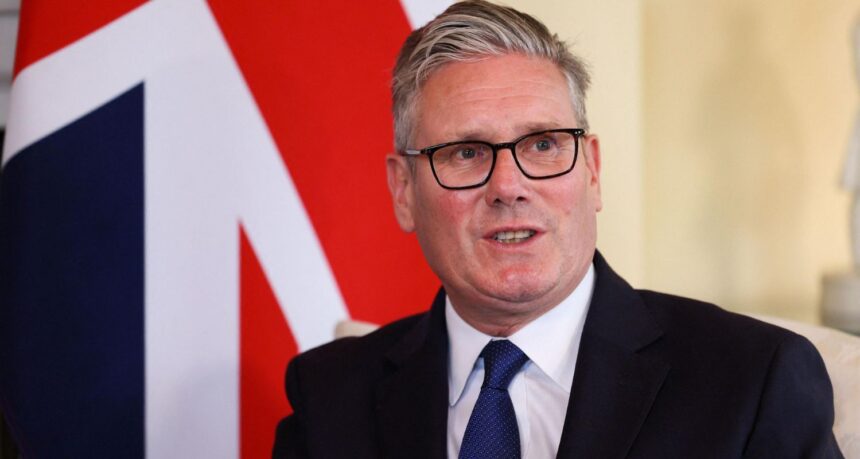
The far-right rally quickly became a focal point for criticism of the UK government’s response, particularly Prime Minister Keir Starmer, who was slow to issue a statement condemning the event. Campaigners, MPs, and civil society organizations emphasized that delayed government action risks emboldening extremist movements. Zarah Sultana, MP, highlighted the contrast between widespread anti-migrant protests and the lack of immediate government condemnation, asserting that fascist groups continue to operate without accountability. Media figures and civil society actors also criticized Labour’s leadership for failing to counter the surge in right-wing mobilization effectively.
While Keir Starmer eventually condemned the violence against police and racist intimidation during the rally, critics argue that his response did not adequately address the broader threat posed by the far-right. He denounced the misuse of the St. George’s flag and emphasized that people have a right to peaceful protest, but many believe these statements fell short of tackling the growing normalization of extremist rhetoric. Hope not Hate, a watchdog organization, had urged Keir Starmer to speak out ahead of the rally in defense of migrant communities and multiculturalism, warning that silence could encourage far-right actors.
Some analysts also pointed to the Labour leadership’s own rhetoric as potentially contributing to the rise of far-right activism. In May, Keir Starmer faced backlash for invoking elements of Enoch Powell’s infamous “rivers of blood” speech while discussing immigration policies, warning that the UK risks becoming an “island of strangers.” Civil society groups highlighted the potential consequences of such statements, warning that they could amplify tensions and contribute to attacks on ethnic minorities or asylum seekers. Red Flare, an anti-fascist research organization, described Labour’s current policy trajectory as authoritarian and racist, suggesting that far-right actors exploit these conditions to further their agenda.
The rally coincided with a broader context of anti-migrant protests across the UK, including demonstrations targeting asylum accommodations and opposition to government bans on activist organizations such as Palestine Action. Local communities, responding to broader political anxieties, have increasingly organized decentralized protests, making it more challenging for authorities and anti-fascist organizations to respond effectively. These developments highlight the need for sustained public policy interventions that address the social, political, and economic drivers of far-right mobilization.
Keir Starmer’s delayed condemnation contrasts sharply with his response to other political issues, and critics argue that such inconsistency risks undermining confidence in government oversight of extremist activity. Labour MPs expressed frustration at colleagues who failed to unequivocally condemn the protests, describing the party’s approach as inadequate in addressing the dangers posed by organized far-right movements. In particular, comments by business secretary Peter Kyle, which framed far-right mobilizations as signals to address public concerns about immigration, were criticized for failing to recognize the explicit threat posed by nationalist extremism.
The violence during the rally, coupled with inflammatory rhetoric from prominent figures, underscores the potential for far-right events to catalyze wider societal unrest. The Metropolitan Police’s efforts to manage both the rally and counterprotesters—approximately 5,000 anti-fascist demonstrators—highlight the logistical challenges authorities face in balancing public safety with civil liberties. Counterprotesters, including trade union members and anti-racist activists, were kettled for hours, with police restricting access to exit routes to prevent clashes. These operational constraints, alongside the unpredictable behavior of far-right participants, reveal gaps in preparedness and coordination in handling mass mobilizations.
Analysts have noted the role of international influences in shaping far-right ideology in the UK, pointing to the presence of American figures such as Elon Musk and the adoption of narratives from overseas. Symbols, speeches, and media amplification contribute to creating a transnational far-right culture, where localized grievances are linked to global movements advocating anti-migrant, nationalist, and Christian supremacist agendas. Such developments illustrate the increasing sophistication and reach of extremist networks, raising urgent questions about government response, civil society engagement, and law enforcement capabilities.
The cumulative impact of far-right mobilizations, coupled with government policies perceived as anti-migrant, is likely to shape public perceptions of immigration and race relations in the UK. Measures introduced by the Labour government since July 2024, including restrictions on asylum seekers and tighter immigration controls, have been criticized for potentially exacerbating social tensions. Civil society experts argue that these policies risk legitimizing far-right narratives, providing extremists with material to mobilize supporters and heighten anti-migrant sentiment.
The far-right movement’s growth has also been linked to broader political trends, including the rise of Reform UK, a party pledging mass deportations, and the organizational efforts of far-right groups like Patriotic Alternative. The decentralization of protests and blending of nationalist, religious, and anti-migrant ideologies has made the movement more resilient and harder to counter. Red Flare emphasized the need for coordinated national-level alternatives to provide a counter-narrative and safeguard marginalized communities from targeted intimidation.
As far-right groups continue to capitalize on public anxieties, the effectiveness of government leadership and civil society action will be tested. Analysts warn that ignoring the structural and ideological drivers of extremism risks entrenching radicalization, increasing violence, and creating a climate of fear for minority and migrant communities. The UK’s experience over the weekend illustrates the complex interplay between political rhetoric, extremist mobilization, and public safety, highlighting the urgent need for coherent, decisive responses from national leadership.
This episode also underscores the broader implications of far-right activity for civil liberties, multiculturalism, and social cohesion. As extremist groups continue to grow in confidence, the balance between freedom of speech, public safety, and minority protection becomes increasingly delicate. The interplay of global and local influences, coupled with inconsistent government messaging, illustrates how far-right movements exploit societal vulnerabilities to advance their agendas.
The scale, intensity, and ideological framing of the London rally indicate that the UK faces a significant challenge in addressing far-right extremism. While Keir Starmer has eventually condemned violence and police attacks, critics insist that more proactive leadership and clear denunciation of anti-migrant ideology are necessary to prevent future escalations. The events serve as a stark reminder of the enduring presence of extremist ideologies and the importance of timely, decisive leadership in safeguarding social stability.
Far-Right Rhetoric Fuels Rising Tensions and Extremism
Observers note that the rally and associated far-right mobilizations highlight the risks posed by inflammatory political rhetoric and government policies that fail to address systemic inequality. Comments by Keir Starmer and other political figures on immigration and cultural change have the potential to embolden extremist groups, providing a sense of legitimacy to narratives of racial and religious exclusion. Civil society organizations argue that a failure to confront these trends directly allows far-right movements to gain momentum, mobilize followers, and influence public discourse in ways that threaten social cohesion.
The intersection of far-right extremism with issues such as asylum, migration, and multicultural policy illustrates the complex challenges facing the UK. Analysts emphasize that combating these movements requires sustained leadership, targeted policy interventions, and the active engagement of civil society, alongside robust law enforcement. Without coordinated efforts to challenge extremism and protect vulnerable communities, the country risks the entrenchment of ideologies that undermine democratic values and threaten public safety.
At the same time, counterprotesters and anti-fascist groups are experimenting with new forms of engagement, including local organizing and community outreach, to disrupt far-right influence and foster solidarity among affected populations. These decentralized initiatives demonstrate the potential of grassroots activism to counter extremist narratives, though they also underscore the difficulties of organizing effective resistance in the absence of national-level leadership.
The UK government’s response to far-right mobilizations, combined with public debates over immigration and multiculturalism, will likely shape political and social dynamics for years to come. Analysts warn that without proactive measures, extremist groups could expand their influence, posing enduring threats to societal cohesion, public safety, and minority rights. The London rally serves as both a cautionary tale and a call to action, illustrating the urgent need for coherent strategies to counter far-right extremism while upholding democratic principles and protecting vulnerable communities.