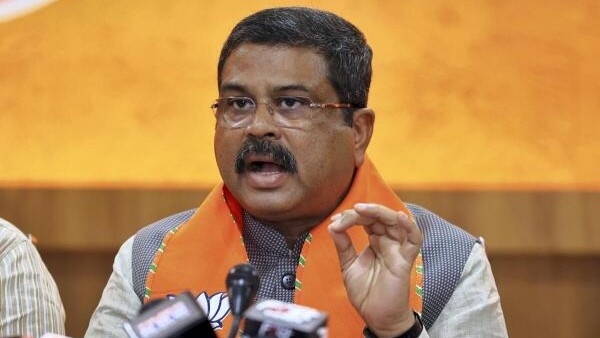
On the occasion of the 65th Foundation Day of the National Council of Educational Research and Training (NCERT), Union Education Minister Dharmendra Pradhan underscored the critical role of the institution in shaping the future of India. Emphasizing the need to enhance competencies, improve knowledge levels, and instill a sense of national pride among students, Dharmendra Pradhan highlighted that NCERT’s work is central not only to education but also to nation-building. While he stressed the importance of English proficiency, he argued that true clarity and understanding emerge when learning is rooted in students’ own languages, thus bridging gaps in comprehension and cultural knowledge. The minister called upon NCERT to adopt global best practices while remaining deeply anchored in India’s educational and cultural realities, underscoring the institution’s responsibility in nurturing competent, aware, and self-reliant citizens.
Reviving National Curriculum and Educational Heritage
Dharmendra Pradhan reflected on the evolution of India’s National Curriculum Framework (NCF), noting the different approaches taken by successive governments. He highlighted that the NCF developed in 2000 under the NDA government laid a robust foundation, while the subsequent 2005 NCF, implemented during the UPA government, led to confusion in the minds of some educators and policymakers. According to Dharmendra Pradhan, certain forces with limited understanding of the country, influenced by what he described as a “slave mentality,” attempted to deprive Indian students of self-reliance and self-respect. This, he argued, resulted in educational content that often failed to reflect India’s heritage, achievements, and the underlying ethos of self-confidence. The minister emphasized that NCERT is now actively working to correct these distortions and present education in a manner that fosters national pride and awareness.
As part of this effort, Dharmendra Pradhan praised the introduction of new educational modules that aim to instill historical awareness and social consciousness among students. Modules such as Operation Sindoor and the ‘Partition Horrors Remembrance Day’ are examples of how NCERT is encouraging learners to confront and understand the nation’s historical challenges while fostering critical thinking. By integrating such content into school curricula, Dharmendra Pradhan argued, students not only gain knowledge but also develop a sense of empathy, responsibility, and moral clarity. These initiatives, he noted, are vital in nurturing citizens who are capable of both intellectual growth and ethical reasoning.
The minister’s reflections were complemented by remarks from former ISRO Chairman S. Somanath, who shared his personal experiences as a student shaped by NCERT textbooks. He highlighted the formative role of these books in developing his knowledge, aspirations, and career path. According to Somanath, the books provided a foundation for lifelong learning, demonstrating the importance of curriculum development, textbook writing, and educational content creation in shaping future leaders. While acknowledging the strengths of past textbooks, he also pointed out areas where improvements were necessary, particularly in reflecting India’s scientific achievements and heritage. He emphasized that a curriculum grounded in Indian history, science, and culture enables students to develop pride in their nation’s accomplishments while understanding the learning processes that have evolved in India over centuries.
Somanath further argued that the gap in linguistic accessibility has been a significant challenge for Indian education. While higher education often relied on textbooks and resources from other nations, these materials were largely unavailable in regional languages, limiting students’ comprehension and engagement. By promoting learning in students’ own languages, NCERT is making an important stride toward inclusivity, cultural relevance, and deeper understanding. According to both Dharmendra Pradhan and Somanath, this effort is not just about language but also about creating a more meaningful connection between students and their heritage, fostering confidence and clarity of thought.
Building Competencies and Embracing Global Best Practices
Education, Dharmendra Pradhan emphasized, is not merely about information dissemination; it is about developing competencies that empower students to navigate complex challenges, think critically, and contribute meaningfully to society. NCERT, as the nation’s premier educational research and development institution, bears a unique responsibility in this regard. The minister urged NCERT to adopt the best practices from around the world while tailoring them to India’s context, ensuring that students are both globally competitive and deeply rooted in their national identity.
Competency building, he explained, involves more than academic knowledge. It encompasses problem-solving skills, ethical reasoning, creativity, communication, and the ability to collaborate effectively. By focusing on these holistic competencies, NCERT can prepare students not just for examinations but for real-world challenges, equipping them to contribute to India’s growth and development. Dharmendra Pradhan also stressed that English proficiency is important for global engagement, but true clarity in thought and understanding arises from mastering concepts in students’ own languages. This approach ensures that learners are not merely memorizing information but internalizing knowledge in a way that enables critical thinking and informed decision-making.
The minister highlighted that NCERT’s recent initiatives, including revised textbooks and innovative teaching modules, reflect this dual objective: global exposure and local relevance. By integrating case studies, historical narratives, and scientific achievements of India into the curriculum, NCERT is fostering a learning environment where students can appreciate the depth and richness of their heritage while preparing to compete on a global stage. The emphasis on historical accuracy, ethical reasoning, and critical engagement ensures that education becomes a tool for empowerment rather than indoctrination.
Somanath’s reflections on the importance of contextually relevant textbooks reinforced this perspective. He noted that while the textbooks of his time provided a strong foundation, they often lacked sufficient focus on India’s own scientific and technological accomplishments. Modern NCERT efforts aim to address these gaps by incorporating detailed accounts of India’s contributions to science, mathematics, and other fields. This approach not only enhances students’ knowledge but also instills pride in their cultural and intellectual heritage. By combining content rooted in India’s achievements with exposure to global knowledge systems, NCERT is creating a curriculum that is both aspirational and grounded.
Language, according to both Dharmendra Pradhan and Somanath, is a critical element in this transformative vision. By enabling students to learn in their mother tongue while gradually developing proficiency in English, NCERT ensures that learning is accessible, inclusive, and effective. The ministry’s emphasis on clarity of thought through native languages is aimed at producing learners who are confident, articulate, and capable of engaging with complex ideas. This linguistic foundation is particularly important in fostering equity in education, ensuring that students from all backgrounds can access knowledge without being hindered by language barriers.
The minister also reflected on NCERT’s role in nurturing social awareness and empathy among students. Modules on historical events such as Partition, Operation Sindoor, and other moments of national significance are designed to cultivate moral reasoning, critical reflection, and ethical engagement. By confronting students with the realities of the past, NCERT encourages them to develop an understanding of the consequences of violence, oppression, and social injustice. This approach aligns with the broader objective of education as a tool for nation-building: creating citizens who are not only knowledgeable but also socially responsible and morally grounded.
Transforming Education for a Self-Reliant Nation
Dharmendra Pradhan’s remarks consistently emphasized the connection between education and self-reliance. The minister argued that a curriculum designed to enhance knowledge, competencies, and clarity in students’ own languages contributes directly to the development of an atma nirbharta (self-reliant) and swabhiman-rahit (self-respecting) society. Education, he contended, is central to empowering individuals, communities, and ultimately the nation, enabling citizens to think independently, make informed decisions, and take ownership of their lives and responsibilities.
NCERT’s role in this transformation is multi-faceted. Beyond textbook preparation, the institution engages in research, curriculum design, teacher training, and educational innovation. By incorporating global best practices and contextualizing them for India, NCERT ensures that students are equipped to navigate contemporary challenges while remaining grounded in their cultural and historical identity. This approach addresses long-standing gaps in Indian education, where access to quality resources and culturally relevant content has often been uneven across regions and socio-economic backgrounds.
Dharmendra Pradhan also highlighted the personal impact of NCERT education on leaders and professionals across India. Drawing on Somanath’s testimony, he pointed out that NCERT textbooks have played a formative role in shaping careers, aspirations, and ethical foundations. The minister argued that by continuously improving the quality, content, and accessibility of educational materials, NCERT can amplify its impact on future generations, producing citizens who are competent, knowledgeable, and ethically responsible.
The integration of historical awareness, scientific achievement, linguistic clarity, and ethical reasoning into the curriculum represents a holistic approach to education. It reflects a vision where learning is not just about academic achievement but also about character building, civic responsibility, and cultural pride. By grounding education in India’s heritage while incorporating global best practices, NCERT is fostering a generation of learners who are both nationally conscious and globally competent.
Through these efforts, Dharmendra Pradhan stressed, NCERT is contributing to the creation of a society that values knowledge, competency, and humanistic principles. Students are encouraged to critically engage with the past, understand contemporary challenges, and envision solutions that are both innovative and ethical. By fostering a deep understanding of India’s history, culture, and scientific achievements, NCERT ensures that learners are equipped not only to succeed academically but also to participate meaningfully in nation-building and societal development.
The minister’s remarks on linguistic clarity further underscored the importance of communication and comprehension in education. By prioritizing learning in native languages, NCERT ensures that knowledge is internalized, understood, and applied effectively. This approach addresses the challenges posed by English-medium instruction, which can sometimes create barriers to comprehension for students who are more comfortable in regional languages. By balancing English proficiency with strong native language foundations, NCERT promotes inclusivity, clarity, and deeper engagement with the curriculum.
Finally, Dharmendra Pradhan emphasized the enduring responsibility of NCERT in shaping India’s future. By creating content that fosters competencies, ethical reasoning, historical awareness, and linguistic clarity, the institution is equipping students to navigate the complexities of modern life while remaining rooted in their cultural identity. The combination of global best practices, contextual relevance, and ethical grounding ensures that NCERT continues to play a pivotal role in producing knowledgeable, competent, and responsible citizens who can contribute meaningfully to India’s growth and development.