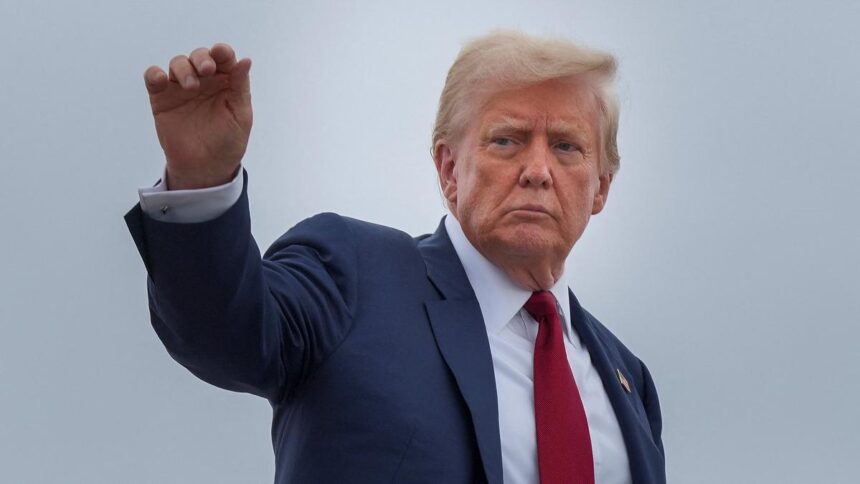
In a significant turn of events in the ongoing geopolitical and trade tensions between India and the United States, U.S. President Donald Trump hinted at a possible shift in India’s oil import policy from Russia. Speaking to reporters, Donald Trump said he had “heard” that India may have stopped buying Russian oil — a development he described as a “good step” — though he admitted that he could not confirm the accuracy of the information. The comments follow closely on the heels of the White House’s decision to impose a sweeping 25% tariff on all exports to the U.S. from India and reflect Donald Trump’s continued discontent over New Delhi’s trade and energy dealings with Moscow.
This latest episode underscores the fragile balance India seeks to maintain between its long-standing strategic autonomy and evolving partnerships in a rapidly changing global order. While Donald Trump’s remarks mark a tentative approval of India’s possible policy shift, they also revive concerns about punitive trade measures and diplomatic friction between the two democracies.
Donald Trump’s criticism and changing tone
Just days before expressing tentative support for India possibly reducing or halting Russian oil imports, Donald Trump had openly lashed out at New Delhi. In a post on his social media platform, Truth Social, he accused India of maintaining the highest tariffs in the world and erecting “obnoxious” trade barriers against American goods. Donald Trump also reiterated his long-standing criticism of India’s continued purchase of Russian military equipment and energy products, even as the Ukraine conflict drags on.
The former president’s frustration also coincided with the Biden administration’s imposition of a 25% tariff on all Indian exports to the U.S. Additionally, Washington hinted at an unspecified “penalty” aimed at India for its continued energy relationship with Moscow. These developments suggest that despite bipartisan support for strong U.S.-India ties, friction points remain, particularly around trade and energy diplomacy.
India’s energy equation and its Russia ties
India, the world’s third-largest oil importer, has emerged as the leading buyer of seaborne Russian crude since the Ukraine war began in 2022. The discounted oil has helped New Delhi manage inflationary pressures and maintain a stable energy supply amid global volatility. For Russia, India has become a vital customer as Western sanctions have choked its traditional markets in Europe.
However, a recent shift has been reported. According to industry insiders, Indian state-run refiners have not placed any orders for Russian oil in the past week. While this may suggest a recalibration in India’s energy policy, no official confirmation has been provided by Indian authorities. Donald Trump’s comments appear to be based on these unverified reports and remain speculative.
India’s external affairs ministry responded diplomatically but firmly to these developments. MEA spokesperson Randhir Jaiswal emphasized that India and Russia share a “steady and time-tested partnership,” particularly in sectors like energy and defence. He noted that India’s procurement decisions are guided by national interest and energy security considerations.
India-U.S. strategic dynamics
Despite Donald Trump’s harsh rhetoric and the new tariff regime, Indian officials have reiterated their commitment to deepening ties with Washington. Jaiswal highlighted the comprehensive global strategic partnership that India and the U.S. share, rooted in democratic values, mutual interests, and strong people-to-people connections. He noted that this relationship has withstood numerous transitions and challenges over the years.
While addressing concerns about defence partnerships, Jaiswal pointed to growing cooperation in key sectors and underlined New Delhi’s openness to enhancing collaboration with the U.S. even amid ongoing global tensions. He refrained from making direct comments on the tariff decision but maintained that India remains focused on the substantive agenda agreed upon by both nations.
As geopolitical alignments continue to shift, India’s challenge will be to balance its diversified energy strategy with the need to maintain robust diplomatic and trade ties with both the West and Russia. Donald Trump’s comments — whether speculative or informed — add another layer to this complex diplomatic equation. Meanwhile, India’s evolving position on Russian oil will likely be closely watched in Washington, Moscow, and beyond.
In this unfolding scenario, trade friction, energy security, and strategic autonomy will remain critical themes in India’s foreign policy calculus. Whether India has indeed reduced or paused its oil imports from Russia is still unclear. But even the possibility of such a move has already triggered political responses and stirred international headlines, showing how energy flows are increasingly intertwined with global diplomacy and power dynamics.