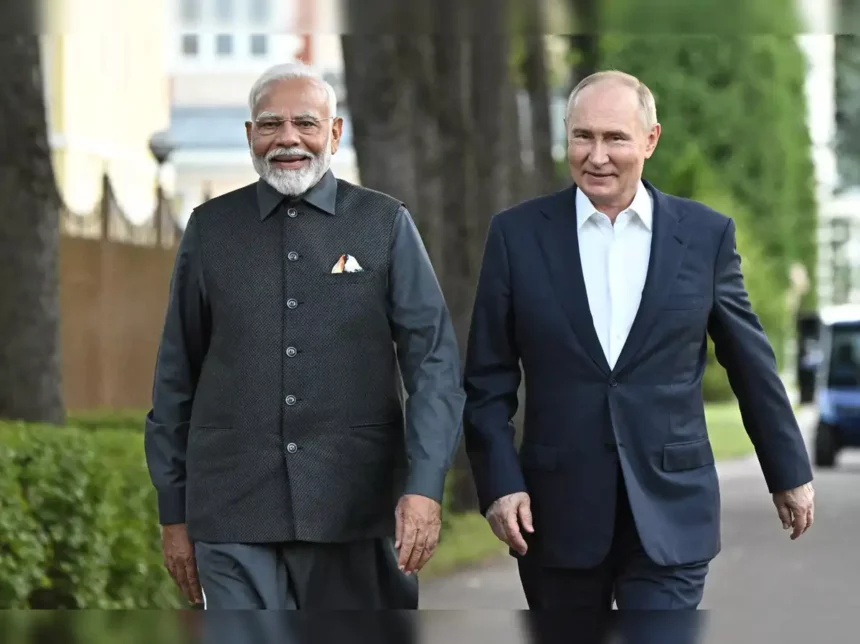
India’s strategic partnership with Russia continues to demonstrate resilience and steadfastness despite mounting international pressure from the United States and NATO allies. Recent tensions, including attempts by the Trump administration to influence other countries to impose US-style tariffs on Indian goods for continuing to purchase Russian oil, have tested the bilateral relationship. Yet, Moscow has consistently praised India for maintaining its commitments and adhering to a course rooted in long-standing trust and strategic cooperation. Officials in the Russian Foreign Ministry emphasized that any external attempt to disrupt the India-Russia relationship is “destined to fail,” underlining the durability of ties that span decades and involve diverse sectors from energy to defense and space. The statement reflects the confidence Moscow places in India’s diplomatic autonomy and commitment to sovereignty, signaling that strategic relations between the two nations remain insulated from short-term geopolitical pressures.
Steadfast Partnership Amid Global Pressure
The Russian Foreign Ministry reiterated that the relationship between Moscow and Delhi is “steadily and confidently advancing,” highlighting the role of mutual respect, strategic autonomy, and long-term planning in maintaining the partnership. Officials pointed out that India has stood firm against repeated pressures from the US and NATO to cease purchases of Russian oil, demonstrating a commitment to its agreements despite threats or potential economic consequences. Recent US-imposed tariffs on Indian goods, including a base 25 percent duty and an additional 25 percent penalty linked to India’s defense and oil purchases from Russia, were intended to pressure New Delhi into compliance with Washington’s geopolitical agenda. However, Moscow emphasized that India’s choices reflect not only pragmatism but also the guiding principles of strategic autonomy and national sovereignty.
The ministry noted that India’s approach is consistent with the “spirit and traditions of long-standing Russia-India friendship,” which have been cultivated over decades through cooperation in defense, energy, space exploration, and scientific research. Joint projects spanning military equipment production, manned space missions, nuclear energy, and collaborative oil exploration reflect the multi-faceted nature of the partnership. Moscow underscored that these initiatives are built on trust, reliability, and predictability, making the bilateral relationship both strategic and resilient. Officials emphasized that the partnership is designed to withstand external pressures, ensuring that decisions taken by New Delhi and Moscow remain mutually beneficial, secure, and autonomous.
Strategic Cooperation and Shared Economic Interests
The India-Russia relationship extends beyond diplomatic statements, encompassing tangible economic, technological, and defense cooperation. Both nations are engaged in efforts to develop alternative financial mechanisms, including new payment systems and the increased use of national currencies, which reduce dependence on external financial systems. Moreover, joint initiatives to enhance transport and logistics routes aim to improve connectivity and trade efficiency, creating structural resilience against geopolitical pressures or disruptions. These measures, officials suggest, reflect a forward-looking approach to bilateral cooperation, focusing on sustainability, security, and economic autonomy.
India’s energy partnership with Russia remains a cornerstone of bilateral cooperation. Despite international criticism and allegations linking India’s oil imports from Russia to the Ukraine conflict, New Delhi has maintained a balanced approach, ensuring its energy security while adhering to principles of fair and independent foreign policy. Moscow lauded India’s ability to navigate these pressures, emphasizing that India’s actions are grounded in strategic autonomy and a commitment to protecting national interests. This steadfast approach is seen as emblematic of India’s broader foreign policy, which seeks to maintain equilibrium among global powers while safeguarding economic growth and development objectives.
Defense cooperation represents another critical dimension of the India-Russia partnership. Both nations continue to collaborate on the production and modernization of military equipment, technology transfer agreements, and joint training exercises. These initiatives not only bolster India’s defense capabilities but also contribute to regional stability and preparedness. Moscow views this collaboration as mutually reinforcing, allowing India to maintain strategic independence while ensuring Russia has a reliable partner in the Indo-Pacific and South Asian regions.
Furthermore, the partnership encompasses significant technological collaboration, including in space exploration and nuclear energy. India’s manned space missions and joint projects with Russia exemplify a shared commitment to scientific progress and technological self-reliance. The Russian Foreign Ministry emphasized that these efforts reflect a long-term vision of cooperation, transcending short-term geopolitical disputes or external pressures. By maintaining consistent engagement in technology, energy, and defense, India and Russia have cultivated a robust framework for strategic collaboration that is both resilient and adaptable.
Moscow also addressed concerns arising from US-imposed tariffs and trade disputes, noting that India has consistently rejected allegations linking its energy purchases to geopolitical conflicts as “unfair, unjustified, and unreasonable.” The imposition of tariffs on Indian goods, particularly related to oil and defense imports, was seen by Russian officials as an example of external attempts to influence India’s autonomous foreign policy. Despite these challenges, India continues to prioritize its bilateral agreements, demonstrating an ability to maintain strategic partnerships while balancing complex global pressures.
In addition to energy and defense, the India-Russia partnership encompasses economic, cultural, and diplomatic dimensions. Investment in joint ventures, technology sharing, and infrastructure development highlights the depth and breadth of collaboration. By fostering strong economic ties alongside defense and scientific cooperation, both nations aim to create a multi-dimensional relationship capable of withstanding external shocks. The Russian Foreign Ministry’s statement reflects confidence that these structures will remain intact and that India’s commitment to the partnership will continue irrespective of external influences.
Moscow’s emphasis on “the highest value of sovereignty and the primacy of national interests” underscores the philosophical foundation of the India-Russia relationship. For Russian officials, India’s adherence to these principles ensures that bilateral engagement remains strategic, predictable, and mutually beneficial. By emphasizing sovereignty, both nations are able to pursue independent policy choices, while reinforcing trust and continuity in collaboration across various sectors. The Russian perspective suggests that enduring partnerships rely on shared respect for autonomy, long-term vision, and mutual strategic goals rather than short-term political gains or pressures.
The statement also addressed the importance of future-oriented planning in India-Russia relations. Officials highlighted ongoing efforts to expand joint projects, improve energy security, and strengthen technological collaboration. The development of alternative payment systems, logistics improvements, and enhanced trade routes exemplify proactive measures to safeguard bilateral cooperation against potential disruptions. These initiatives reflect a strategic mindset, ensuring that India and Russia are not only responding to immediate challenges but also laying the groundwork for sustainable, long-term collaboration.
India’s approach to maintaining its relationship with Russia, in the face of international pressures, underscores the country’s broader foreign policy philosophy of strategic autonomy. By prioritizing long-term partnerships over transient geopolitical pressures, India demonstrates a commitment to safeguarding national interests while contributing to regional stability. Moscow’s affirmation that attempts to disrupt the partnership are “destined to fail” reinforces confidence in the durability of this relationship.
Joint energy projects, defense collaborations, and technological initiatives represent tangible outcomes of decades of bilateral engagement. From nuclear energy cooperation to joint military production, these efforts provide India with both strategic and economic benefits. Similarly, Russia gains a reliable partner in South Asia and the Indo-Pacific region, allowing it to strengthen global influence while supporting India’s growth and development objectives. The partnership, therefore, operates on a mutually reinforcing framework, ensuring benefits for both nations across multiple dimensions.
Moscow’s remarks come at a time when India faces increasing pressure from the US and NATO to align its policies with Western strategic interests, particularly in energy procurement. Despite these challenges, India continues to uphold its commitments to Russia, demonstrating diplomatic resilience and a balanced approach. Officials in Moscow emphasized that India’s steadfastness serves as a model of strategic decision-making, showcasing how nations can pursue sovereign policies while engaging in mutually beneficial partnerships.
The Russia-India relationship also exemplifies the role of trust, predictability, and continuity in international relations. Joint projects in civilian and military sectors, shared investments in energy, and scientific collaborations highlight the importance of long-term engagement. Moscow stressed that these initiatives contribute to reliable and predictable outcomes, ensuring that the partnership remains insulated from external pressures or attempts to destabilize cooperation.
Beyond defense and energy, the partnership includes cultural exchanges, diplomatic coordination, and mutual support in multilateral forums. By fostering collaboration across economic, technological, and social dimensions, India and Russia have created a resilient and multi-layered relationship. Officials emphasized that this comprehensive engagement ensures strategic continuity, enabling both nations to address evolving challenges while preserving autonomy and national interests.
The statements from Moscow also reflect confidence in India’s role as a regional and global actor capable of maintaining independent foreign policy choices. By resisting external pressure to halt oil imports or make concessions in trade negotiations, India asserts strategic agency and reinforces the credibility of its diplomatic commitments. The Russian Foreign Ministry highlighted that these decisions are consistent with India’s long-standing principles of sovereignty, autonomy, and responsible international engagement.
India’s ability to maintain strategic cooperation with Russia, even amid US-led pressure and potential economic sanctions, serves as a testament to the strength and resilience of bilateral ties. Moscow’s assertion that attempts to disrupt the relationship are “destined to fail” underscores the robustness of agreements spanning defense, energy, technology, and trade. By adhering to principles of mutual respect, sovereignty, and long-term vision, both countries have cultivated a partnership capable of withstanding geopolitical turbulence.