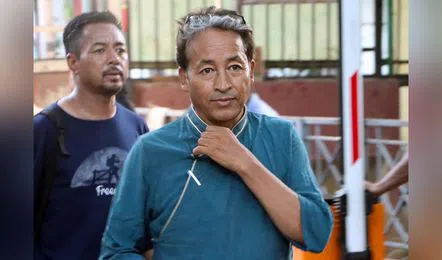
The Sonam Wangchuk case returns to the spotlight as the Supreme Court of India prepares to hear a plea filed by his wife on November 24, which challenges his detention under the National Security Act (NSA) as arbitrary and unlawful.
Background and Detention Details
Wangchuk, a well-known climate activist and educator from Ladakh, was detained on September 26—two days after unrest in Leh that left four dead and over 90 injured. Authorities have alleged that he incited the violence demanding statehood and “Sixth Schedule” status for Ladakh. He was later transferred to Jodhpur jail and booked under the NSA, which permits preventive detention for up to twelve months when an individual is deemed a threat to national security.
His wife, Gitanjali J Angmo, has filed an amended plea arguing that his arrest is based on outdated FIRs, vague allegations and speculative assertions, lacks any immediate connection to the purported grounds of detention, and thus is devoid of legal or factual justification. She points out that the official grounds for detention were supplied only after 28 days—contravening Section 8 of the NSA which mandates issuance of grounds within five days, extendable to ten in exceptional cases.
Angmo’s petition also highlights that over the past three decades Wangchuk has been engaged in educational and environmental work, yet he now faces a coordinated series of administrative actions: notices for cancellation of his land lease, cancellation of his FCRA registration, a CBI inquiry and summons from the Income Tax Department. She argues that these measures appear aimed at suppressing an individual exercising his democratic right to dissent rather than responding to any genuine national security threat.
In a media post, Angmo equated the present situation in Ladakh with colonial‐era oppression, claiming misuse of local police by the Union Home Ministry: “Is India really free? In 1857, 24,000 British used 135,000 sepoys to oppress 300 million Indians. Today, a dozen administrators use 2,400 Ladakhi police to oppress 300,000 Ladakhis under orders from the MHA.”
Supreme Court Proceedings and Larger Implications
The Supreme Court bench of Justices Aravind Kumar and N.V. Anjaria will hear the plea, and the case follows an earlier hearing on October 29 when the court had asked the Centre and Ladakh administration to respond to the amended petition. On October 6, the Court had already issued notice to the government on a habeas corpus petition filed by Angmo seeking Wangchuk’s immediate release.
The government, represented by Solicitor General Tushar Mehta, has maintained that “law has been followed and grounds of detention supplied to Wangchuk.” However, the Court refused at that time to pass any order regarding the sufficiency and timeliness of those grounds and posted the matter for further hearing.
For Wangchuk’s wife and supporters, the case carries broader significance: it raises fundamental questions regarding the use of stringent detention laws like the NSA against individuals engaged in activism, the relationship between national security and dissent, and the rights of people in union territories facing unrest. The outcome may influence not only Wangchuk’s fate but also how preventive detention laws are applied in future.