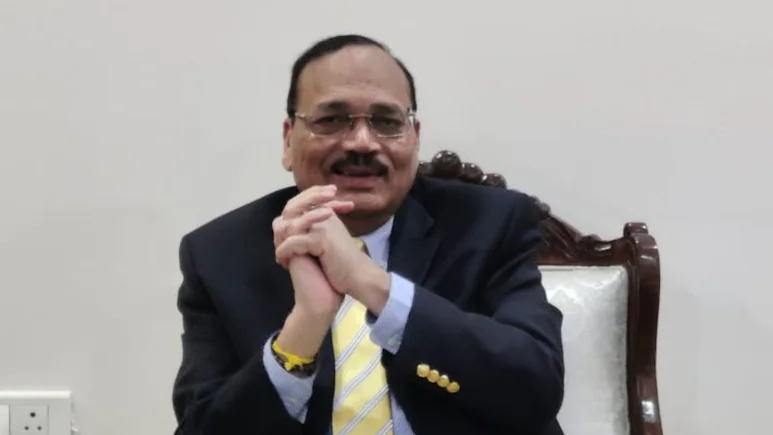
Justice Surya Kant is set to take oath today as the 53rd Chief Justice of India, marking the beginning of a significant 14-month term at the helm of the country’s highest judiciary. His elevation comes at a time when India’s judicial system is grappling with record-high case pendency, growing debates on the role of technology in justice delivery, and increasing expectations for institutional reforms. With a long and distinguished career spanning four decades—from his early legal practice in Hisar to occupying some of the judiciary’s most important chairs—Justice Surya Kant’s appointment is being widely viewed as a pivotal moment for the institutional direction of the Supreme Court and the broader judicial ecosystem.
Early Life, Judicial Journey, and Rise Through India’s Legal System
Justice Surya Kant, born on February 10, 1962, in a modest middle-class household in Haryana, began his legal career in 1984 in Hisar. After gaining experience in district practice, he moved to Chandigarh, where he built a strong and respected presence before the Punjab and Haryana High Court. Over the years, he carved out a substantial reputation in constitutional, service, civil, and administrative law, representing a wide range of institutions including universities, public sector corporations, financial institutions, statutory boards, and even the High Court itself. His legal acumen and rapidly expanding portfolio of cases soon brought him to the attention of state authorities and senior members of the bar.
In July 2000, he was appointed the youngest Advocate General of Haryana, a position that further strengthened his credibility and visibility within the legal fraternity. The following year, in 2001, he was designated a senior advocate, acknowledging his expertise, courtroom proficiency, and growing stature in the profession. On January 9, 2004, he was elevated as a permanent judge of the Punjab and Haryana High Court, marking the beginning of an influential judicial career that would span multiple high courts and culminate in his appointment to the Supreme Court.
During his years as a High Court judge, Justice Surya Kant earned recognition for judgments that emphasized administrative fairness, social justice, and constitutional discipline. His reputation grew further when he was appointed Chief Justice of the Himachal Pradesh High Court in October 2018. His tenure there was marked by efforts to streamline judicial processes, strengthen court infrastructure, improve case flow management, and enhance coordination between benches and supporting institutions. His leadership eventually led to his elevation to the Supreme Court on May 24, 2019.
Since November 2024, Justice Surya Kant has also served as Chairman of the Supreme Court Legal Services Committee, where he oversaw initiatives aimed at expanding legal aid, improving procedural access for vulnerable groups, and facilitating alternative dispute resolution. These experiences, combined with his administrative and judicial background, have shaped the expectations surrounding his upcoming tenure as Chief Justice of India.
On Monday, his appointment becomes official when President Droupadi Murmu administers the oath of office at Rashtrapati Bhavan. He succeeds Chief Justice Bhushan R. Gavai, who demitted office on Sunday upon turning 65, in accordance with constitutional provisions. CJI Gavai continued the longstanding convention of recommending the senior-most judge of the Supreme Court as his successor, endorsing Justice Surya Kant’s elevation under Article 124(2) of the Constitution.
Justice Surya Kant’s journey from a young lawyer in Hisar to the highest judicial office exemplifies a trajectory of dedication, intellectual engagement, and long-standing commitment to judicial service. His judgment-writing style is often described as balanced, clear, and mindful of both legal precedent and social context. As he prepares to assume leadership of the Supreme Court, his decades-long experience across different layers of India’s judicial system is expected to influence his approach to handling major constitutional questions and the administrative challenges facing the judiciary.
Priorities as Chief Justice: Reducing Pendency, Strengthening Courts, and Expanding Mediation
In an interaction with the media just days before taking charge, Justice Surya Kant outlined the core priorities he intends to pursue during his term. His foremost concern, he said, would be addressing the staggering pendency of cases across Indian courts. With over 5.29 crore cases pending nationwide—4.65 crore in district and subordinate courts, 63.30 lakh in High Courts, and 86,742 in the Supreme Court—the judicial system is facing one of its most acute backlogs in history. Justice Surya Kant acknowledged the magnitude of the challenge and noted that reducing pendency requires not just Supreme Court-level intervention but coordinated, structural action across the judicial ladder.
One of his first steps, he said, would be to engage with all High Courts to identify issues affecting the functioning of district and subordinate courts. These lower courts handle the largest volume of cases, and delays there directly contribute to the national backlog. Justice Surya Kant emphasized that strengthening the machinery at the district level is essential for meaningful reform. Issues such as inadequate staffing, infrastructure deficits, technological gaps, and process inefficiencies remain central barriers to timely justice.
He also spoke of the urgent need to constitute long-pending Constitution Benches of five, seven, and nine judges in the Supreme Court. Several major constitutional questions—some pending for years—require larger bench interpretation, and Justice Surya Kant confirmed that such benches would be formed “within the next few weeks.” These benches are expected to take up cases involving fundamental rights, federalism, separation of powers, and other matters of national significance.
A major part of his reform vision focuses on promoting alternative dispute resolution mechanisms. Justice Surya Kant stressed that effective mediation, particularly community mediation, must be encouraged widely to reduce the volume of litigation reaching the courts. Community mediation, he said, can play a transformative role in resolving disputes between state governments and in settling conflicts between the Union government and states, which frequently reach the Supreme Court. Creating a conducive environment for mediation requires training, legal frameworks, and institutional support, all of which he identified as areas requiring attention.
Addressing questions about the growing interest in using artificial intelligence within the judiciary, Justice Surya Kant offered a cautious and balanced perspective. He acknowledged that AI offers potential benefits in streamlining procedural matters, such as case classification, research assistance, and document organisation. However, he also noted that concerns remain, particularly regarding reliability, fairness, and the potential for errors. He reiterated that while AI may assist judges, the responsibility of deciding cases must remain with human judges because litigants expect their matters to be adjudicated through human judgment and interpretation.
The enormity of India’s pending caseload remains a defining challenge, and Justice Surya Kant’s comments suggest that his tenure will concentrate heavily on administrative strengthening, modernisation, and pushing for structural changes that address the roots of delay. His plan to consult High Courts, revive Constitution Benches, and strengthen mediation frameworks reflects a multifaceted approach to improving the efficiency and responsiveness of the judicial system.