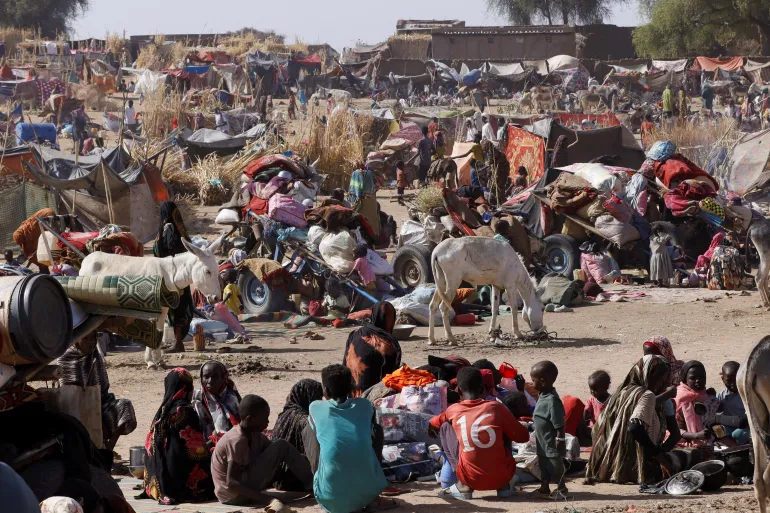
The fall of El-Fasher, the last major stronghold in Sudan’s Darfur region not under paramilitary control, has unleashed a new wave of terror and violence. In horrifying scenes captured on video and circulated online, fighters from the Rapid Support Forces (RSF) were seen celebrating their conquest of the city while allegedly committing widespread massacres and abuses against fleeing civilians. The assault on El-Fasher marks one of the darkest chapters yet in Sudan’s ongoing civil war, which began in April 2023 and has already displaced millions and killed tens of thousands across the country.
RSF Declares Victory Amid Chaos and Bloodshed
Early on Sunday morning, the RSF announced that it had successfully seized the headquarters of the Sudanese Armed Forces’ (SAF) Sixth Infantry Division in El-Fasher, effectively bringing the city under its control. Soon after the announcement, videos surfaced showing RSF fighters rejoicing inside the captured garrison, surrounded by bullet-riddled buildings and damaged vehicles. Abdel-Rahim Hamdan Dagalo, the brother and deputy of RSF leader Mohammed Hamdan Dagalo, appeared in one such video, addressing his troops and declaring that El-Fasher was now “safe and protected” under RSF control. He instructed his men not to harm civilians or loot property.
However, what unfolded in the hours that followed painted a drastically different picture. Drone footage released shortly before the official RSF declaration showed hundreds of residents fleeing the outskirts of El-Fasher on foot. Subsequent videos filmed by the fighters themselves revealed scenes of devastation — gunfire, looting, and civilians being hunted down in open fields. The Arabic dialect spoken by the fighters and their attire suggested that these were indeed RSF members, many of whom were from Darfur.
In one particularly disturbing clip, RSF fighters were seen riding through the city streets on camels and pickup trucks, chanting that “the nomads are inside El-Fasher.” Communications from within the city had already been largely severed in previous months, with only limited contact maintained through satellite internet. Once the RSF overran the city, communication lines were completely cut off, isolating tens of thousands of trapped civilians.
Journalists, activists, and local leaders are among those feared dead or detained. One freelance reporter who contributed to international media was seen in RSF custody in videos circulating online. Other disturbing footage showed lifeless bodies strewn across streets and fields, suggesting that widespread killings had taken place.
Civilians Trapped and Hunted in the Fields
The fertile plains surrounding El-Fasher, once used for farming and grazing, have now turned into killing grounds. Video footage taken after the RSF assault shows groups of terrified civilians fleeing through the fields as RSF fighters chase them in pickup trucks. In one chilling clip, gunfire echoes as a fighter shouts, “Catch up with the girls in the front!” followed by laughter and calls to “loot” as civilians scatter in panic.
Another video shows an RSF vehicle driving into fleeing people before armed men emerge to rob and assault them. One fighter can be heard threatening a civilian, demanding valuables before executing him at point-blank range. “We are finishing them. Just finish them,” another fighter says as a young combatant fires his weapon at unarmed men.
Footage from the aftermath depicts rows of bodies lying motionless in the open fields. In another disturbing scene, RSF members surround captured civilians, calling them “slaves” and taunting them before shooting several as they attempt to escape. Such acts, filmed by the perpetrators themselves, mirror atrocities previously documented in other parts of Darfur where RSF forces were accused of ethnic targeting and mass killings.
Humanitarian experts have long warned that El-Fasher was at grave risk of becoming a site of mass atrocities. In August, analysts identified more than 30 kilometers of defensive earthworks and berms constructed by the RSF to encircle the city. The network of trenches effectively trapped tens of thousands of civilians, turning El-Fasher into what observers described as “a literal kill box.” The recent footage suggests that these barriers have become death traps, with vehicles carrying fleeing families found destroyed or aflame beside the earth mounds, and bodies lying nearby.
Amid this chaos, one name repeatedly surfaces — Brigadier-General Al-Fatih Abdallah Idris, known by his nom de guerre “Abu Lulu.” Recognizable by his long hair, beard, and pale scarf, the RSF commander appears in multiple new videos showing extrajudicial executions and brutal killings. In one video, Abu Lulu addresses ten men kneeling on the ground, pleading for mercy. “We have only two options: victory or martyrdom,” he tells them coldly before opening fire. All ten are seen collapsing to the ground.
Abu Lulu has a documented history of recording war crimes on camera. Earlier footage from other regions showed him interrogating captives about their ethnic backgrounds before executing them. Reports have also linked him to previous massacres in North and West Kordofan and to the killing of prisoners at oil facilities near Khartoum. His repeated appearances in videos from El-Fasher have reignited fears that systematic executions are being carried out under RSF command.
A City in Collapse and a Nation in Crisis
El-Fasher’s capture comes after more than 500 days of siege, during which food, medicine, and humanitarian supplies were largely blocked from entering the city. Before the assault, local groups estimated that over 260,000 civilians — mostly women, children, and the elderly — were trapped inside with dwindling resources. The Sudanese Armed Forces and allied Darfuri rebel groups had managed to defend the city for over a year but eventually succumbed to the RSF’s sustained attacks and encirclement.
In the aftermath of the takeover, witness accounts and video evidence suggest that at least 2,000 civilians have been killed since Sunday. Entire neighborhoods appear to have been burned, and numerous reports indicate that the RSF is conducting door-to-door searches, detaining or executing individuals believed to have ties with the army or rebel factions.
The RSF emerged from the infamous Janjaweed militias, which were responsible for atrocities during the Darfur genocide two decades ago. Since the beginning of Sudan’s latest war in 2023, the RSF has been accused of replicating those same tactics — ethnic cleansing, mass rape, and looting — across the country. The Sudanese military, for its part, has also been accused of shelling civilian areas and committing its own share of war crimes, deepening the suffering of an already devastated population.
The humanitarian situation has become catastrophic. Millions have fled to neighboring Chad and South Sudan, while those remaining face starvation and disease. International observers warn that the latest assault on El-Fasher could mark a tipping point in the conflict, as the RSF’s control over all major Darfuri cities gives it unprecedented leverage.
Despite international outrage, diplomatic efforts have failed to bring the warring factions to the negotiating table. Ceasefire talks recently held in Washington collapsed just hours before El-Fasher fell, reportedly due to disagreements over humanitarian access and the refusal of certain foreign actors to halt military support to the RSF.
Mounting evidence indicates that external forces continue to fuel the conflict. While the RSF denies receiving any outside aid, multiple intelligence reports suggest that the group is being supplied with weapons and manpower by regional powers, allowing it to sustain its campaign against the national army.
As the smoke clears over El-Fasher, the human cost of this assault continues to rise. Thousands of families remain unaccounted for, with satellite imagery showing widespread destruction throughout the city. The once-vibrant regional capital now lies in ruins, its streets littered with debris, and its people silenced by fear.
The fall of El-Fasher is more than a military defeat — it represents a humanitarian catastrophe and a tragic reminder of Sudan’s continuing descent into chaos. The atrocities captured on video are not isolated incidents but part of a broader pattern of violence that has come to define this brutal war. With communications severed and international intervention yet to materialize, the fate of those still trapped inside remains uncertain, and the echoes of Darfur’s past once again haunt its present.