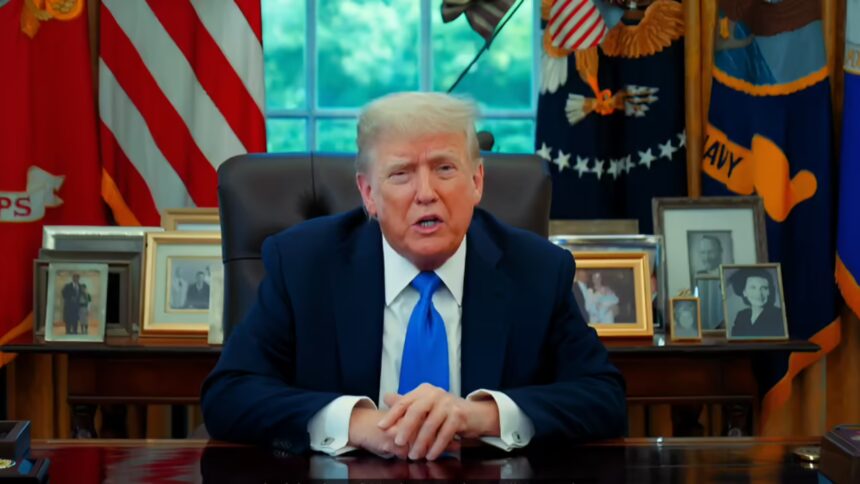
US President Donald Trump has signed a new executive order imposing a travel ban on nationals from 12 countries and partial restrictions on citizens from seven others. This decisive move aims to address concerns over national security, immigration law violations, and inadequate vetting processes. The ban follows recent events and ongoing challenges linked to immigration and terrorism threats, reflecting the administration’s focus on safeguarding the country.
The executive order completely restricts entry for nationals from Afghanistan, Myanmar, Chad, Congo, Equatorial Guinea, Eritrea, Haiti, Iran, Libya, Somalia, Sudan, and Yemen. Meanwhile, citizens of Burundi, Cuba, Laos, Sierra Leone, Togo, Turkmenistan, and Venezuela face partial travel restrictions, particularly regarding certain immigrant and nonimmigrant visa categories.
Security and Immigration Concerns Drive New Restrictions
President Donald Trump cited a recent attack in Boulder, Colorado, where a man allegedly in the US illegally targeted a Jewish protest, as a key reason for enforcing the travel ban. “The recent terror attack in Boulder, Colorado, has underscored the extreme dangers posed to our country by the entry of foreign nationals who are not properly vetted,” Donald Trump stated in a video message. The administration also highlighted broader security concerns, such as the Taliban’s control in Afghanistan, state-sponsored terrorism from Iran and Cuba, and ongoing immigration issues including illegal migration from Haiti during the previous administration.
Additionally, countries like Chad and Eritrea were singled out for their high visa overstay rates and insufficient cooperation with US immigration enforcement. Chad’s B1/B2 visa overstay rate is nearly 50 percent, while Eritrea’s overstay rate for F, M, and J visa categories is over 55 percent. This data supports the administration’s rationale for imposing stricter travel limitations on these countries.
Partial Restrictions Target High Overstay Rates and Limited Cooperation
For the seven countries under partial restrictions, the ban focuses on limiting both immigrant and nonimmigrant visas such as B-1, B-2, B-1/B-2, F, M, and J categories. These restrictions are primarily due to either high rates of visa overstays or inadequate collaboration with US law enforcement agencies. This approach aims to tighten visa issuance processes and improve border security by targeting specific challenges linked to these nations.
This travel ban echoes Donald Trump’s earlier immigration policies during his first term when he restricted travel from several majority-Muslim countries. That initial ban faced legal challenges but was ultimately upheld by the Supreme Court in 2018. However, the subsequent administration under President Joe Biden reversed those restrictions in 2021, calling the previous bans “a stain on our national conscience.” Despite this, the renewed ban under Donald Trump reflects ongoing concerns about immigration control and national security.