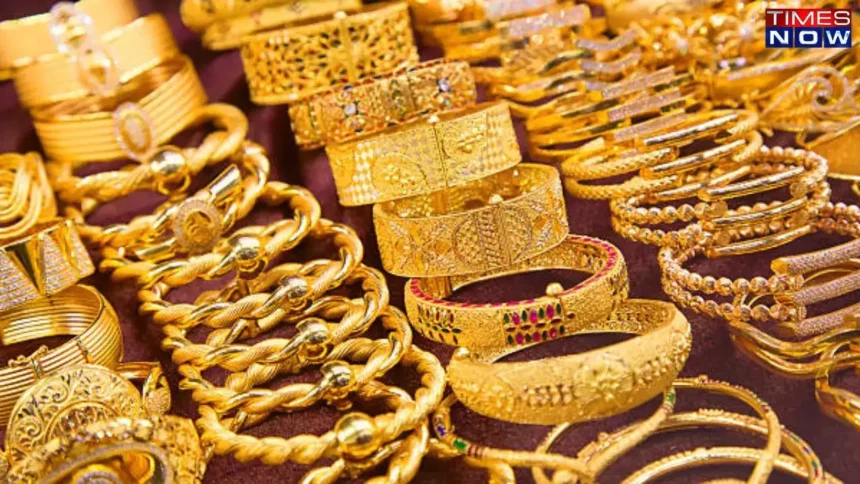
Gold prices in India witnessed an upward movement on October 29 after days of fluctuation following the Diwali festival. The latest market data shows that all major categories—18-carat, 22-carat, and 24-carat—have registered modest gains in most metropolitan cities, reflecting renewed investor interest and global price corrections. With the 24-carat gold price standing at ₹12,158 per gram, 22-carat at ₹11,145 per gram, and 18-carat at ₹9,119 per gram, the bullion market indicates a stabilizing trend after a brief decline.
Upward Shift in Gold Rates After Diwali Decline
Over the past week, the gold market in India has experienced notable volatility driven by a combination of domestic and international factors. During the five-day Diwali festivities, gold prices dipped slightly due to subdued retail demand and profit booking by investors. However, as trading resumed, renewed buying activity and shifts in global precious metal trends have contributed to a modest recovery.
According to the latest data, the 24-carat gold rate increased by ₹76 per gram, reaching ₹12,158, while 22-carat gold rose by ₹70 to ₹11,145 per gram. Similarly, 18-carat gold saw a rise of ₹57, trading at ₹9,119 per gram. Although these hikes appear small, they mark a positive reversal after the previous week’s decline, signaling strengthening investor sentiment ahead of the year-end festive and wedding season.
In cities like Chennai, Mumbai, Delhi, and Kolkata, the price trends remain largely consistent with national averages, though slight variations persist due to local taxes, transportation costs, and making charges. Chennai continues to report among the highest gold rates in the country, followed by Hyderabad and Bangalore. Meanwhile, Delhi and Mumbai reflect steady prices with limited fluctuations, indicating a balanced demand-supply equation.
The increase also aligns with the marginal recovery of global gold prices. Internationally, gold has been trading in a cautious upward range as investors anticipate key policy statements from major central banks and continue to monitor geopolitical developments. The combination of these factors has led Indian gold prices to mirror the slight recovery seen in global bullion markets.
Market Dynamics and Investment Trends Driving Price Fluctuations
Gold remains one of India’s most preferred investment assets, serving both as a hedge against inflation and a symbol of financial security. Traditionally, the demand for gold in India surges during festive months such as October and November, driven by cultural and religious significance. However, this year’s post-Diwali trend reflects a more cautious consumer sentiment influenced by fluctuating international prices and a strong domestic currency.
Analysts attribute the current volatility to multiple global triggers, including fluctuations in the U.S. dollar index, changing bond yields, and the geopolitical environment in the Middle East and Eastern Europe. The uncertainty surrounding these developments has prompted many investors to rebalance their portfolios, favoring safer assets such as gold.
In India, despite the temporary fall in demand during Diwali, traders anticipate a resurgence as the wedding season progresses. The demand for 22-carat and 18-carat gold, commonly used in jewelry, is expected to rise, while 24-carat gold, which is considered the purest form and used mainly for investment, will likely continue attracting investors seeking long-term value preservation.
The Reserve Bank of India’s recent monetary stance and the inflation outlook have also played an indirect role in influencing gold prices. A stable rupee and slightly lower import costs have helped moderate domestic price fluctuations, even as international markets remain uncertain. However, as gold is denominated in U.S. dollars globally, any depreciation in the rupee could potentially push local prices higher in the near term.
Experts suggest that the current price levels offer an attractive entry point for investors aiming for medium to long-term returns. Historically, gold has provided consistent appreciation during periods of global economic uncertainty, and the ongoing shifts in energy prices, interest rates, and global trade tensions are reinforcing its appeal as a stable asset.
Jewelry retailers have also reported gradual improvement in sales volume compared to the initial Diwali period. Retailers in Chennai and Hyderabad mentioned that many consumers had postponed purchases anticipating further price drops. With the latest upward revision, a wave of pent-up demand is expected to flow back into the market, particularly from wedding shoppers and small investors.
From a global perspective, gold futures and spot prices have moved slightly higher, supported by expectations that central banks may pause rate hikes to curb inflation without triggering a slowdown. This global sentiment has trickled down to India, influencing domestic gold trends. The U.S. Federal Reserve’s policy announcements, inflation data, and movements in the global energy market are likely to continue shaping gold’s trajectory in the coming weeks.
Moreover, digital and paper gold investments are becoming increasingly popular among young Indian investors. Platforms offering gold exchange-traded funds (ETFs) and sovereign gold bonds (SGBs) have seen a steady rise in participation, reflecting a diversification of gold investment patterns beyond physical jewelry. Financial advisors continue to emphasize gold’s importance as part of a diversified investment portfolio, especially in uncertain economic conditions.
Despite the modest gains seen today, experts caution that short-term fluctuations may persist as the market adjusts to external developments. Still, the broader trend appears stable, and the long-term outlook remains positive. As inflation remains a global concern and the equity markets show mixed performance, gold’s position as a safe-haven asset remains unchallenged.
While retail buyers are responding to the latest price trends with cautious optimism, bullion traders maintain that the real momentum will be visible once the full wedding season demand kicks in. Historically, the November to February period witnesses one of the highest gold purchase volumes in India, driven by weddings, cultural festivals, and traditional investments.
Economists also underline that India’s continued role as one of the world’s largest consumers of gold ensures that domestic price trends will remain closely linked to international patterns. However, government policies—such as import duties, hallmarking standards, and digital gold regulations—may add further layers of influence on local pricing.
Looking ahead, both investors and consumers are advised to monitor price trends carefully, considering the broader economic indicators and potential policy shifts. Gold’s role as a hedge against inflation, currency depreciation, and geopolitical instability ensures it will remain a critical component of India’s financial and cultural landscape.
For now, the slight rebound in gold prices on October 29 marks a positive signal for both investors and jewelers. With 24-carat gold priced at ₹12,158 per gram, 22-carat at ₹11,145, and 18-carat at ₹9,119, the market appears poised for gradual recovery. Whether this upward trajectory sustains will depend on how global and domestic conditions evolve in the coming weeks, but the underlying sentiment remains one of cautious optimism.