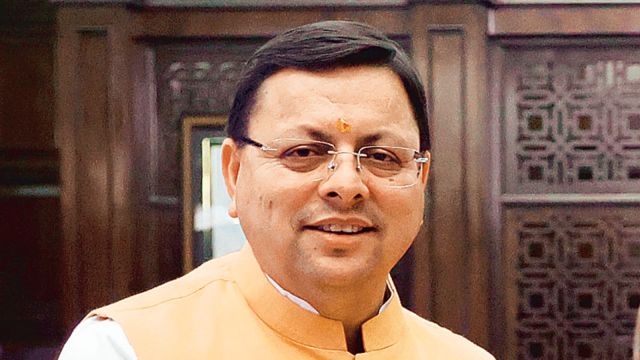
The Uttarakhand government has embarked on an ambitious ₹3,300-crore project titled the Sharda Corridor Development Plan, aiming to transform the Champawat district into a holistic centre for religion, culture, tourism, and environmental sustainability. The project, which covers approximately 200 square kilometres from Banbasa to Mata Rankochi, seeks to create a unique confluence of faith, nature, and livelihood opportunities. Chief Minister Pushkar Singh Dhami inaugurated the first phase of the project last Friday and later reviewed its progress this week, signaling the government’s firm commitment to developing the region into a model of integrated growth.
A Vision for Holistic Development and Religious Tourism
According to a statement from the Chief Minister’s Office, the Sharda Corridor project is designed to bring multi-dimensional development to the area while preserving its ecological balance. The initiative includes several large-scale infrastructure and cultural rejuvenation components such as the redevelopment of Sharda Ghat, the creation of an international border market at Banbasa, and the construction of a modern heliport to improve connectivity. The first phase of the project, worth ₹185 crore, focuses on the Sharda Ghat redevelopment and aims to transform the riverfront into an eco-sensitive, safe, and aesthetically attractive zone that enhances both tourism and spiritual experiences.
Chief Minister Pushkar Singh Dhami, while reviewing the implementation of 38 major works proposed under the project, highlighted that the goal is to develop the valley as a symbol of religious heritage intertwined with environmental and economic progress. The CM emphasised that this project would not only serve as a centre of faith but also become a source of prosperity, creating employment and entrepreneurial opportunities for the people of the region.
Among the major components of the plan are the redevelopment of the Sharda Ghat, restoration of the historic Rankochi Mata Temple, and the establishment of a mountain biking trail from Chuka to Chalti. Additionally, the development of a heliport at Banbasa, beautification of the Shradha Path riverbank, and creation of aero sports facilities are expected to significantly boost tourism. The government has also initiated the preparation of a detailed master plan for the Sharada riverfront, ensuring that every aspect of development aligns with environmental sustainability and local cultural identity.
The project’s vision is deeply rooted in the belief that tourism development can coexist with ecological preservation. Officials noted that land acquisition and transfer processes are already underway, in coordination with the Forest Department, since the corridor falls under forest land. The Uttarakhand Infrastructure and Industrial Development Board (UDI IDB) has been appointed as the nodal agency to implement the project, ensuring professional execution and timely completion.
Infrastructure Expansion and Environmental Sustainability in Focus
One of the highlights of the Sharda Corridor’s first phase is the inclusion of the Kiroda Nala Ecological Corridor, an initiative worth ₹109.57 crore. This ecological corridor aims to conserve biodiversity, enhance wildlife habitats, and strengthen the region’s resilience against natural disasters such as landslides and floods. The project will introduce several eco-restoration measures, including riverbank stabilisation, plantation drives, and water conservation systems.
In addition to this, a city drainage plan estimated at ₹62 crore is being implemented to address long-standing waterlogging and sanitation issues in the urban parts of Champawat district. This component is crucial to ensuring that the infrastructure growth accompanying the project does not come at the cost of environmental degradation.
Chief Minister Dhami underscored that the Sharda Corridor will serve as a unique fusion of nature, faith, and sustainable development. “This land will no longer remain only a centre of faith; it will also usher in a new stream of economic prosperity and opportunities for the people here,” he stated. The government envisions the corridor as a catalyst for tourism-led growth, attracting pilgrims, nature enthusiasts, and adventure tourists alike.
The project also places strong emphasis on promoting local livelihoods. Through the development of the international border market at Banbasa, local artisans and small traders will gain new avenues to showcase their products to domestic and international visitors. This market is expected to become a vibrant economic zone along the India-Nepal border, enhancing cross-border cultural exchange and tourism.
The heliport planned in Banbasa will improve accessibility for tourists and devotees traveling from other parts of India, especially during peak pilgrimage seasons. By integrating air connectivity, eco-tourism infrastructure, and religious destinations, the state government aims to position Champawat as a year-round destination. The addition of a mountain biking trail from Chuka to Chalti and adventure sports facilities will further attract younger tourists and adventure seekers, complementing the traditional religious tourism that Uttarakhand is already known for.
Chief Minister Dhami also highlighted the potential of the Purnagiri and Mata Rankochi regions, which will be developed as areas offering a combination of spiritual experiences, forest education, and wildlife exploration. The objective is to create a holistic experience for visitors — one that blends devotion with learning and adventure. This approach reflects the government’s broader strategy of promoting sustainable and responsible tourism across Uttarakhand.
Environmental experts working on the project have noted that all development activities are being planned with strict adherence to eco-sensitive principles. Measures such as controlled construction zones, waste management systems, and renewable energy integration are being included to ensure the corridor maintains a low ecological footprint. The redevelopment of Sharda Ghat, in particular, will feature green landscaping, smart lighting, and river purification systems to restore the sanctity and cleanliness of the riverfront.
Furthermore, the government’s plan to develop the corridor as a destination wedding hub underscores its confidence in the region’s potential to attract diverse tourism segments. Destination weddings, which combine leisure, tradition, and natural beauty, are increasingly popular among domestic and international visitors. The Sharda Corridor’s scenic landscapes, spiritual significance, and modern amenities make it an ideal site for such events, contributing to local economic growth.
The Dhami government has also emphasised transparency and efficiency in execution. Regular review meetings are being held to monitor progress and address challenges such as land transfer, funding, and inter-departmental coordination. Officials from the UDI IDB have stated that work on the first phase will continue in close collaboration with local communities, ensuring that development aligns with their needs and aspirations.
From a cultural standpoint, the project seeks to revive the heritage of the Sharda region, which holds deep mythological significance in Hindu tradition. The river Sharda and the adjoining temples are associated with the goddess Saraswati, revered as the deity of wisdom and knowledge. Through redevelopment and improved infrastructure, the project aims to enhance pilgrimage facilities, preserve sacred sites, and promote spiritual tourism in harmony with modern amenities.
The economic ripple effect of this large-scale project is expected to be profound. With investments exceeding ₹3,300 crore, thousands of employment opportunities will be generated during both the construction and operational phases. Local industries related to hospitality, handicrafts, food, and transportation will receive a significant boost, contributing to the region’s long-term self-sufficiency.
Officials also revealed that special attention is being paid to disaster management and climate resilience as part of the corridor’s design. The inclusion of ecological safeguards such as green buffers, check dams, and bio-engineered slope protection will help mitigate the impact of extreme weather events, which have become more frequent in the Himalayan region.
Urban planners involved in the project note that the Sharda Corridor serves as a model for integrating heritage conservation with economic modernization. It reflects the evolving approach of the Uttarakhand government toward sustainable regional development — one that balances spirituality, ecology, and commerce.
As the first phase progresses, the state government plans to gradually expand the initiative, adding infrastructure such as eco-parks, meditation centres, and cultural complexes. These additions will not only enhance the visitor experience but also create new opportunities for community-based tourism and environmental education.
Chief Minister Dhami concluded that the success of the Sharda Corridor would mark a new chapter in Uttarakhand’s development narrative. By turning faith into a foundation for prosperity and by harmonizing growth with sustainability, the project aims to set a benchmark for responsible tourism-driven development across India.