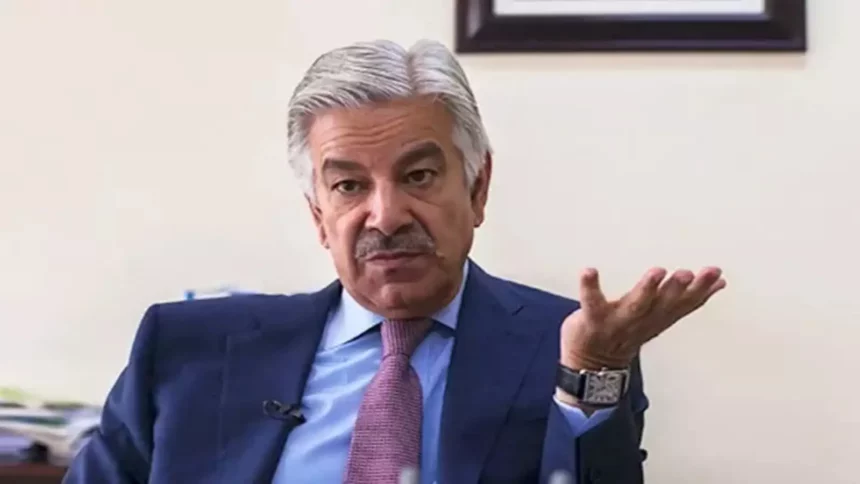
Pakistan’s Defence Minister Khawaja Asif has issued a grave warning, suggesting that India could strike along the Line of Control (LoC) in Kashmir at any time, following the deadly Pahalgam terrorist attack that claimed the lives of 26 individuals, including 25 Indians. His statement comes as relations between the two nuclear-armed neighbors have hit a new low, exacerbated by rising tensions over the tragic attack. This warning marks another instance where Pakistani officials have hinted at the possibility of military action from India, adding further uncertainty to the already volatile situation.
Asif’s remarks, made on Monday in Islamabad, were in response to the growing fear that India might retaliate for the Pahalgam attack, which took place on April 22. The attack, which targeted tourists, sparked immediate outrage in India and led to a series of punitive measures by the Indian government. Asif pointed out that there were reports suggesting India might strike at any point along the LoC and emphasized that Pakistan would retaliate with a “befitting reply” if such an action were to take place. The minister’s statement mirrors earlier comments made by Pakistan’s information minister, Atta Tarar, who had suggested that India might act within 24 to 36 hours following the attack. However, no military action from India materialized during that period.
Amid these rising tensions, Pakistan’s Prime Minister Shehbaz Sharif has also called for an international investigation into the Pahalgam attack, arguing that such an inquiry would help uncover the truth behind India’s allegations. Asif added that this probe would shed light on whether India or any internal Pakistani group might have been involved in the incident. Pakistan continues to question India’s narrative, accusing New Delhi of making baseless allegations.
India’s Response to the Attack
In retaliation to the Pahalgam terror attack, India has already implemented several significant punitive actions against Pakistan. These measures include suspending the Indus Waters Treaty, shutting down the only operational land border crossing at Attari, and downgrading diplomatic ties. Prime Minister Narendra Modi has promised “firm and decisive” action against terrorists and their backers, giving the Indian armed forces complete operational freedom to decide on the mode and timing of the country’s response. This strong stance from India reflects its commitment to taking actio