In the wake of heightened tensions between India and Pakistan following the April 22 terror attack in Pahalgam, which killed 26 civilians, the Union Ministry of Home Affairs (MHA) has directed all states and Union territories to conduct nationwide mock drills on May 7. This move comes as part of a broader strategy to bolster civil defence readiness amid what the Centre describes as “new and complex threats” in the current geopolitical environment.
Response to cross-border tension and missile tests
The decision follows a series of high-level security meetings chaired by Prime Minister Narendra Modi in Delhi, where India’s response to the Pahalgam massacre was discussed in depth. On the same day the directive was issued, Pakistan carried out its second missile test in two days under “Exercise INDUS”. Pakistani Prime Minister Shehbaz Sharif’s statement, calling the test a sign of Pakistan’s strong defence, has only escalated anxiety on both sides of the border.
The MHA’s directive, conveyed through the Directorate General of Fire Services, Civil Defence, and Home Guards, noted that due to the evolving security scenario, states must maintain optimal preparedness at all times. The exercise is to be conducted across 244 designated civil defence districts and aims to reach even the village level.
Key measures outlined for mock drills
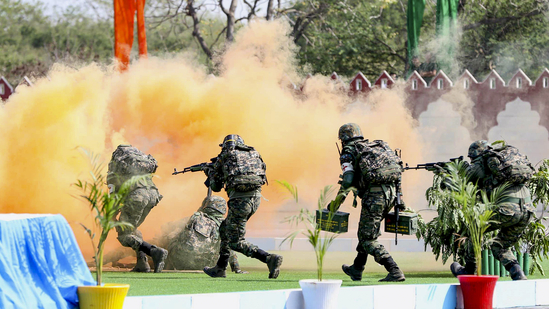
According to the order, the primary focus of the drills is to evaluate and enhance existing civil defence capabilities. This includes testing air raid warning systems, ensuring seamless communication links with the Indian Air Force, and checking the efficiency of control rooms and their shadow counterparts. There is also an emphasis on public training—particularly civilians, students, and volunteers—on how to act during a hostile attack.
The drills will further assess the provision of crash blackout protocols, the early camouflaging of critical infrastructure, and the responsiveness of civil defence teams in rescue operations, firefighting, and depot management. Evaluation of evacuation plans and their practical implementation is also part of the plan.
The MHA has called for widespread participation, including that of district controllers, civil defence wardens, home guards, NCC and NSS members, NYKS participants, and students. The objective is to strengthen grassroots-level response mechanisms and ensure comprehensive preparedness for any potential threat.